What’s the effect of Indian Parliament increasing lower house seats by 50%?
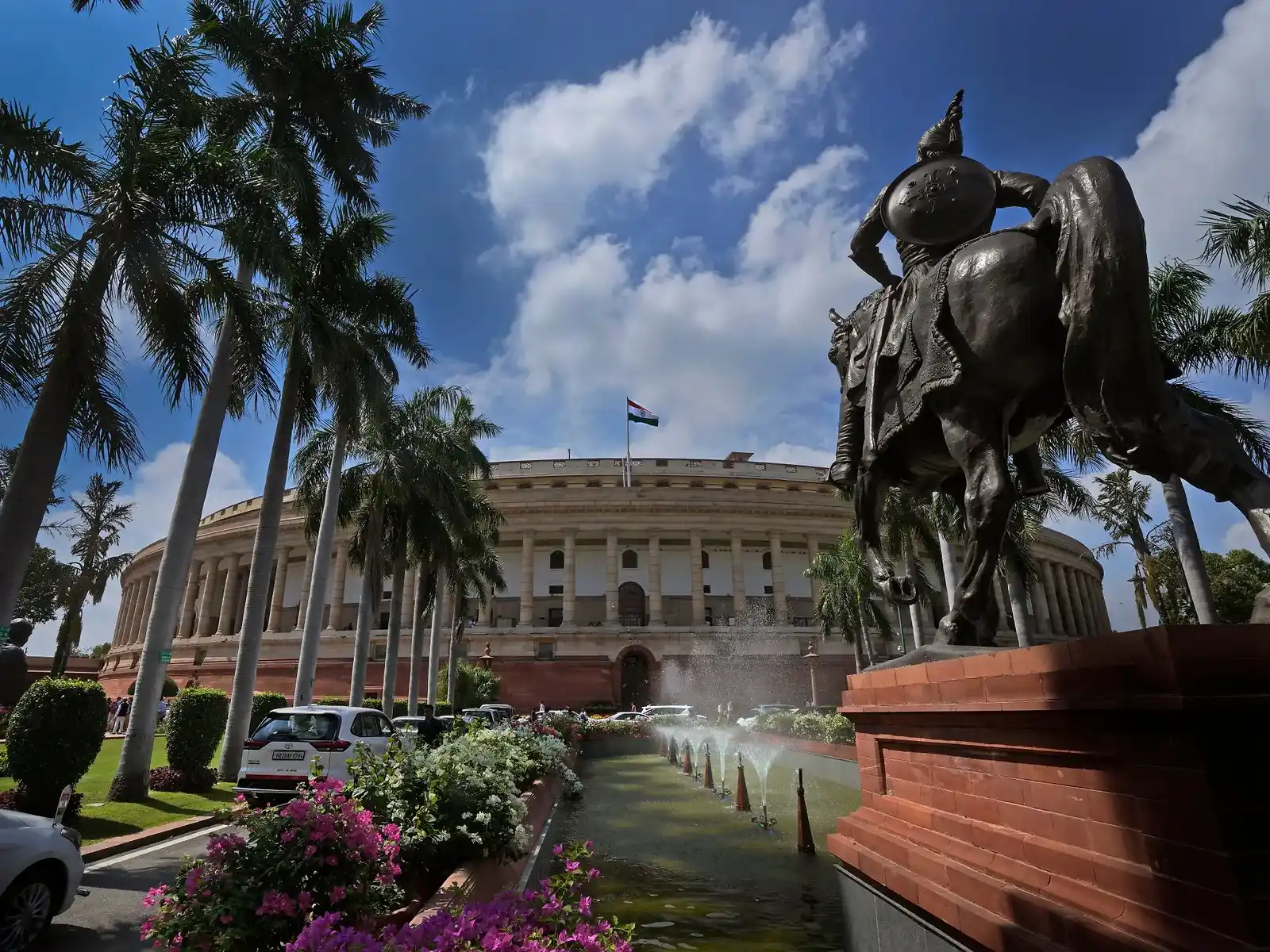
Seats in India’s lower house of Parliament, the Lok Sabha, will increase by 50 percent – from 543 to about 850 – since the government of Prime Minister Narendra Modi approved the Constitution Amendment Bill on Friday.
The government has also cleared the Delimitation Bill that will allow redrawing of Lok Sabha and assembly constituencies across the country. The delimitation exercise will provide for 33 percent reservation for women in Parliament and in state legislatures.
The bills will be introduced during a special sitting of Parliament on November 30.
But the country’s opposition parties have criticised the proposal by the ruling Bharatiya Janata Party (BJP) government, and called the delimitation move an attempt at “gerrymandering”.
Why is the proposal contentious, and what does it mean for India’s democracy under Prime Minister Modi?
Here’s what we know:
What do the new bills say?
On November 27, at a meeting chaired by Prime Minister Modi, the Cabinet approved the Constitution (132nd Amendment) Bill, 2026, which proposes to increase seats in the Lok Sabha by 50 percent, and a freeze on seats until 2051.
Right now, the legislative body has 543 seats – and a constitutional limit of 550 – to represent every state and union territory (federally-run territory) across India. If that limit increases by 50 percent, the maximum number of seats will grow to 850, with 815 going to the states and 35 to the union territories.
The increase in seats will require the redrawing of boundaries. The Delimitation (Second) Bill, 2026, aims to establish a Delimitation Commission, which will redraw boundaries using 2011 Census data. The Commission will allocate one-third of seats for women.
Delimitation is the exercise of fixing limits or boundaries of constituencies in a country or a state.
The ruling right-wing government also said it would seek to operationalise a 2023 law that reserves 33 percent of seats in Parliament and state assemblies for women. Currently, women account for 14 percent of the Lok Sabha members.
“The implementation of reservation of seats for women is linked to the constitutional scheme of readjustment in the allocation of seats in the House of the People and the Legislative Assemblies and re-drawing boundaries of territorial constituencies by the Delimitation Commission,” a statement of the government’s proposal says, according to local media reports.
The government had sought to pass the women’s reservation bill in April this year. But it did not secure Parliament’s required two-thirds majority to pass the Constitution (131st Amendment) Bill, 2026. The opposition argued that women’s reservation should not be linked to delimitation.
In a statement on X on Saturday, India’s ruling BJP Party, however, lauded the delimitation framework, saying it “marks a significant step towards reshaping India’s parliamentary landscape”.
“The people of India deserve representation that reflects their aspirations, and they are now set to receive it,” the political party said.
“This is more than a legislative reform; it is a decisive commitment to inclusive democracy and Nari Shakti’s [women’s power’s] rightful place in nation-building,” it added.
How have India’s opposition and youth groups reacted?
Opposition parties, student groups and the GenZ-led “Cockroach” movement have criticised the move.
“An expansion to 850 seats will finish democracy in India,” Rahul Gandhi, the leader of the opposition in the Lok Sabha, said in a statement on X on Saturday.
“It will give BJP-RSS unlimited space to redraw India’s entire electoral map to their advantage,” Gandhi said, referring to the Hindu supremacist organisation and BJP’s ideological parent, Rashtriya Swayamsevak Sangh (RSS).
Gandhi has been running a campaign against alleged voter roll manipulation under the current election commissioner, Gyanesh Kumar. India’s Election Commission has been facing questions after it struck off more than 130 million names from the country’s electoral roll. Kumar will be heading the Delimitation Commission.
“There are already serious questions about the impartiality of Chief Election Commissioner Gyanesh Kumar. If delimitation takes place under his supervision, what guarantee is there of its impartiality?” Congress Party President Mallikarjun Kharge said at a press conference on Saturday.
“When there are already such serious allegations of ‘vote theft’, it is only natural that questions should arise about the impartiality of delimitation.”
Kharge, a member of the Dalit (formerly “untouchable”) caste, also slammed the government for basing the seat hike on an old census rather than the new one scheduled to be released early next year.
“Article 330 of the Constitution says that seats should be reserved for SCs/STs [Scheduled Castes and Scheduled Tribes] in proportion to their population. When a new census is about to take place, why is it not waiting for those figures? Under the latest census, their seats should be determined in proportion to the SC/ST population,” he said.
Seats for SCs and STs are reserved in India’s Parliament and state assemblies to help improve their political representation.
The Cockroach Janta Party (CJP), an Indian youth-led political and protest movement that began in May this year, has also expressed concern after the government’s announcement and called it a case of gerrymandering.
“Without sufficient safeguards and independent scrutiny, the redrawing of constituency boundaries could be used to create a lasting electoral advantage for the Bharatiya Janata Party,” a statement from CJP said.
“CJP unequivocally supports women’s reservation, as every party and citizen should. However, women’s reservation has already been passed by Parliament and yet remains unimplemented. Using it as a cover to manipulate electoral boundaries is a cynical distraction from the real issue: the partisan redrawing of India’s constituencies,” the group’s statement added.
Critics have also accused the government of using women’s reservation as a political cover, as there is broad political support for the bill. At least constituents of the opposition alliance have backed the bills.
Why is the government’s announcement contentious?
Delimitation in India has taken place four times since independence from British colonial rule in 1947, with the previous exercise conducted in 2002.
But opposition leaders and regional politicians have warned that the ruling party might use the exercise to its advantage, as there is no guarantee that the process will be transparent. During his 12 years in office, Modi has been accused of undermining democratic institutions and turning the country into a Hindu majoritarian state.
Santosh Mehrotra, a development economist with India’s now-abolished Planning Commission, and currently a visiting professor at the Higher School of Economics in Moscow, said if the bills are passed, it would be “the end of democracy” in India.
“India’s Parliament already has a huge number of MPs. It is impossible to have any debate with 850 parliamentarians,” he told Al Jazeera, adding that new delimitation is an attempt at “gerrymandering”, which is the process of the partisan redrawing of voting districts. He accused the government of carrying out gerrymandering in Assam in 2023 and Jammu and Kashmir in 2019.
Southern Indian states protested when the bills were introduced in April.
Currently, the Indian Constitution links parliamentary seat allocation to population, and in its latest announcement, the government has said seats will be linked to the 2011 census.
Politicians in southern India have raised concerns that if delimitation is done purely based on the country’s population size, then northern India, where most of India’s population is located, will get outsized political representation. The bulk of representation in the Parliament of India already comes from the north.
But after the government’s recent announcement, some political parties like the Dravida Munnetra Kazhagam (DMK) from the southern Tamil Nadu state have changed their position.
Besides contention over a north-south divide, delimitation can also reduce the voting power of Parliament’s upper house – Rajya Sabha – whose seats are fixed at 250 members. This house has special powers over state-list legislation, as well as electoral, constitutional and judicial powers.
Lawyers and economists have also criticised the government for trying to link delimitation to the women’s reservation bill.
“The Women’s Reservation Bill is a Trojan horse to bring in Delimitation,” Karuna Nundy, Indian lawyer and senior advocate at the Supreme Court of India, said in a statement on X on Saturday.
“The main problem with Delimitation is not even the mayhem in Parliament, the cost to taxpayers, increased horsetrading, disproportionate dominance of Lok Sabha,” she noted.
Mehrotra said linking delimitation to women’s reservation is “a complete red herring” and is “a political ploy”.
“There is absolutely no reason to increase the number of the house size in order to implement the women’s reservation,” he said. “The reason why they are increasing it by 50 percent is because the 50 percent gives you exactly one third for women, so that all the men who are currently in place don’t get disturbed and they can remain where they are.”
What are the implications for India?
The government’s delimitation bill comes as Prime Minister Modi and India’s ruling party face pressure over their handling of youth employment, educational infrastructure, and the rising cost of living, alongside recent backlash over the Election Commission’s removal of voters from the electoral roll.
Rasheed Kidwai, a political analyst, noted that this has led to “a crisis of confidence” for the BJP, the party in power since 2014.
“So this delimitation bill, if passed in Parliament, will be seen as a major political victory for the BJP because over the last couple of months, it looked like the opposition had made a comeback,” he told Al Jazeera.
But he warned that expanding the size of Parliament will diminish actual governance, which can have a direct impact on civilians.
“Parliamentary democracy has two prime elements,” he said. “The first is lawmaking and deliberating, and the second involves exercising its executive power. So with delimitation, what we are going to see is more domination of the executive power and legislative work will diminish.”
Political analysts have warned that increasing Parliament’s size without necessary democratic reforms will hamper debates and dilute the legislative scrutiny of bills.