What to know about the port of Fujairah and its importance to the oil industry

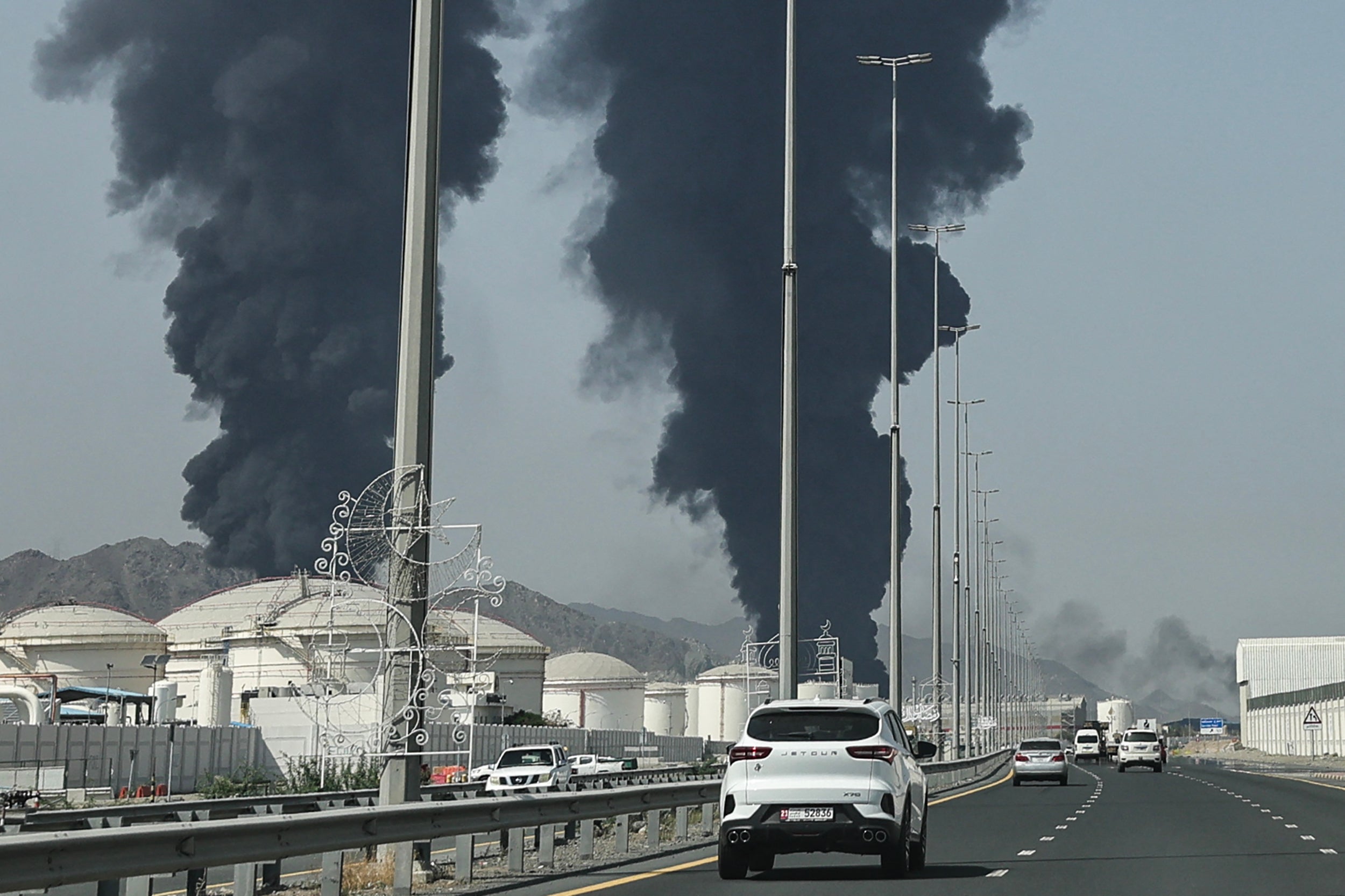
Some oil-loading operations have been suspended at Fujairah port in the United Arab Emirates' Fujairah port following a suspected Iranian drone attack and fire on Saturday.
Fujairah, a major global hub for refuelling ships and crude and fuel exports, was struck following Iranian threats to expand strikes on US allies.
Those followed a US strike on Iran’s Kharg Island, a vital hub for its oil industry.
President Donald Trump claimed that the US had "totally obliterated every military target in Iran’s crown jewel" on Kharg Island.
Here is what to know about Fujairah and its importance to the fuel market.
How important is Fujairah globally?
In 2025, Fujairah exported over 1.7 million barrels per day of crude oil and refined fuels, according to Kpler data, representing approximately 1.7 per cent of daily world demand.
Its location on the Gulf of Oman, approximately 70 nautical miles from the Strait of Hormuz, amplifies its importance. With the Strait of Hormuz effectively closed due to the Iran war, Fujairah's flows are increasingly vital to the global market.
In 2025, it sold 7.4 million cubic metres (about 7.33 million metric tons) of marine fuels, making it the world's fourth largest after Singapore, Rotterdam, and China's Zhoushan.
Why does the port matter to the United Arab Emirates?
The UAE, which before the war began produced more than 3.4 million bpd of crude, operates a 1.5 million bpd pipeline that can transport some crude to bypass the Strait of Hormuz.
The Abu Dhabi Crude Oil Pipeline (ADCOP), also known as the Habshan–Fujairah Pipeline, transports oil from Abu Dhabi’s fields to Fujairah. The port loads the UAE crude grade Murban, sold mostly to buyers in Asia.
With Hormuz largely shut to exports, significant disruptions at Fujairah would force OPEC’s third‑largest crude producer to shut down more production.
How much does it matter to crude and fuel markets?
The port has a storage capacity of 18 million cubic metres, making it one of the world's top hubs for storing crude and fuels as well as blending operations.
Blending in the oil industry is the process of mixing different petroleum components to create finished products such as gasoline and bunker fuels that meet specific standards.
Major global storage companies operate at the port, including VTTI, Vitol, ADNOC, Vopak, and others.
The Fujairah Oil Industry Zone hosts the Middle East’s largest commercial storage capacity for refined products.