What to know about the Israeli elections as Netanyahu faces a battle for survival


After three years of navigating war, crisis and global outcry, Israeli Prime Minister Benjamin Netanyahu is facing one of the most significant electoral tests of his decades-long political career.
TEL AVIV — After three years of navigating war, crisis and global outcry, Israeli Prime Minister Benjamin Netanyahu is facing one of the most significant electoral tests of his decades-long political career.
As Israelis go to the polls on Tuesday, Netanyahu’s party is neck and neck with former Israel Defense Forces Chief of Staff Gadi Eisenkot, who has emerged as his strongest rival in a campaign that has revolved around everything from Israel’s security and military conscription to bread-and-butter issues like the economy.
Why is this election so important?
This is the first nationwide election in Israel since the Oct. 7, 2023, Hamas-led attacks, the deadliest day in the country’s history.
The attacks, which saw 1,195 people killed and 251 taken into Gaza as hostages, triggered a major security crisis that led to three years of war on multiple fronts. There are few households in Israel that haven’t been affected in some way by the events that have played out since, leaving a sense of profound grief and insecurity that lingers across Israeli society.
For most Israelis, the man who has defined the continuing legacy of October 7 is Netanyahu. Many of his opponents believe he has repeatedly evaded responsibility for the intelligence failures leading up to the attacks and what is widely seen as the security forces’ inadequate response.
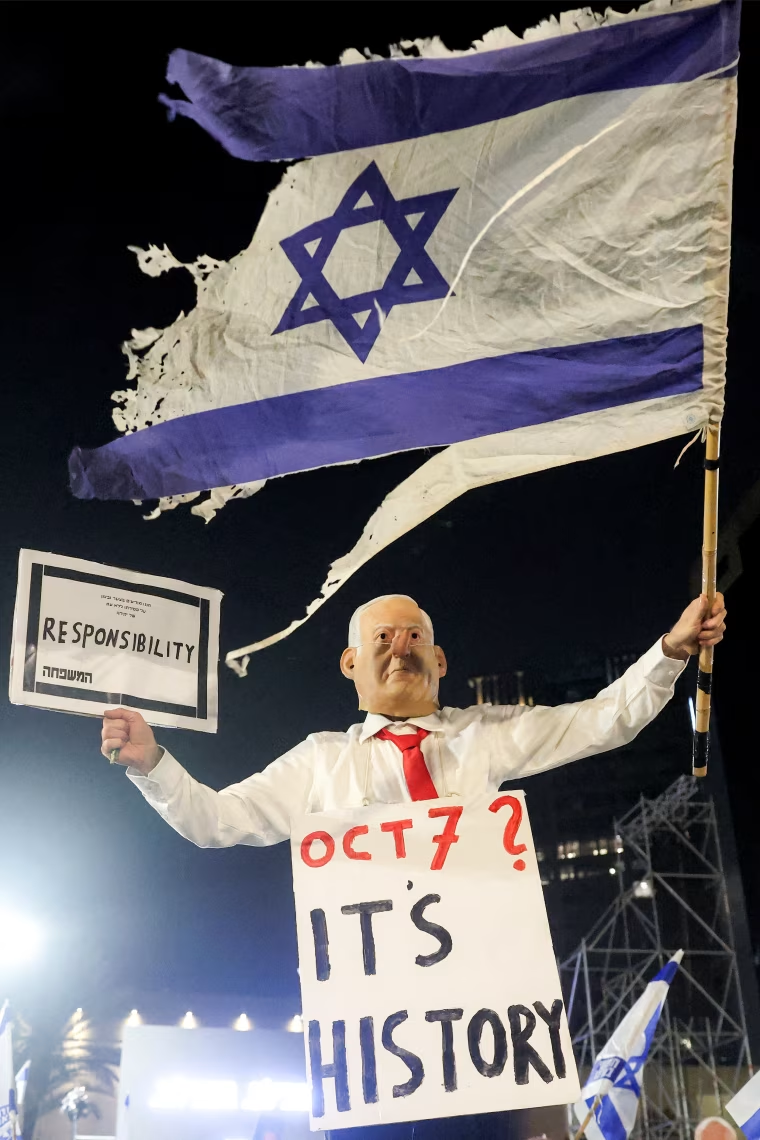
Bibi, as he’s commonly called, has led Israel for nearly 19 of the past 30 years, with security for many years a core part of his pitch to voters. The 77-year-old has survived political defeats before, only to come back stronger, but a groundswell of opposition could make this one of the most formidable challenges of his political career.
The election is about more than just political survival for Netanyahu — it’s also about his personal freedom. Netanyahu is seeking re-election while also facing long-running criminal cases domestically on charges of fraud, breach of trust and bribery, allegations he has dismissed as a politically motivated witch-hunt.
His grip on power affords him political privileges that have allowed him to drag out those cases, but that could change if he is voted out of power. Critics have derisively accused him of running to stay out of jail.
What issues are at play?
Netanyahu goes into the election as both the leading candidate and one of the biggest issues dividing voters. His actions before, during and after the Oct. 7 attacks have driven much of the debate.
Netanyahu’s opponents — particularly his strongest rival, Eisenkot, 66 — have rallied around calls for an independent commission of inquiry to investigate the attacks, which Netanyahu has opposed.
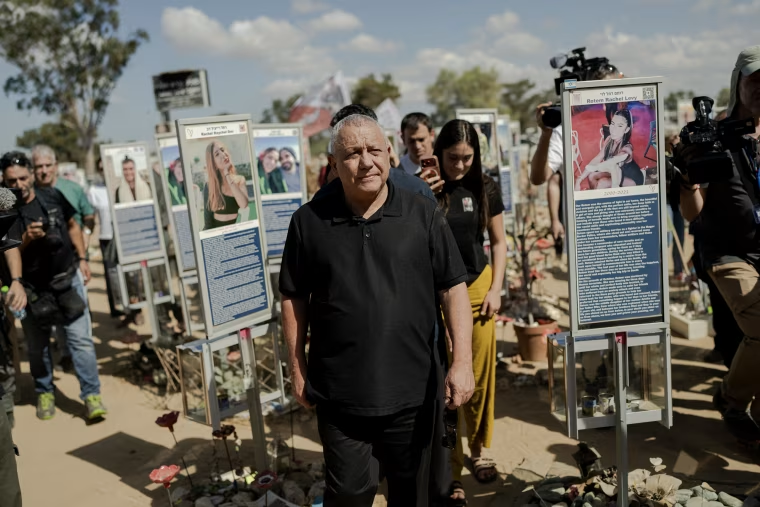
Various critics accuse Netanyahu of helping to keep Hamas in power in Gaza in the years before Oct. 7, of prioritizing the fight against Hamas over rescuing Israeli hostages in the wake of the attacks, and of alienating Israel from much of the world with his actions since. Last month, he threatened to sue Israeli newspaper Haaretz over a report that he had been warned about Oct. 7 ahead of time.
“This is the first chance Israelis will have to vote in what is becoming a referendum on what Netanyahu has come to represent following Oct. 7,” said Dahlia Sheindlin, an Israeli American political analyst.
“For his supporters, he is the strong prime minister who fought back and was able to expand the war to other fronts to defend Israel,” she said. “And to his detractors or critics, people supporting parties of the opposition, he’s the prime minister who led to the failures of the government to detect or prevent Oct. 7 and has refused to take accountability for it.”
Netanyahu has staunchly defended his conduct and the war in Gaza, which has left about 74,500 people dead since Oct. 7, according to figures from the Palestinian Ministry of Health. He goes into the election facing an arrest warrant from the International Criminal Court on charges of war crimes and crimes against humanity, and having vehemently rejected allegations of perpetrating a genocide from a United Nations commission.
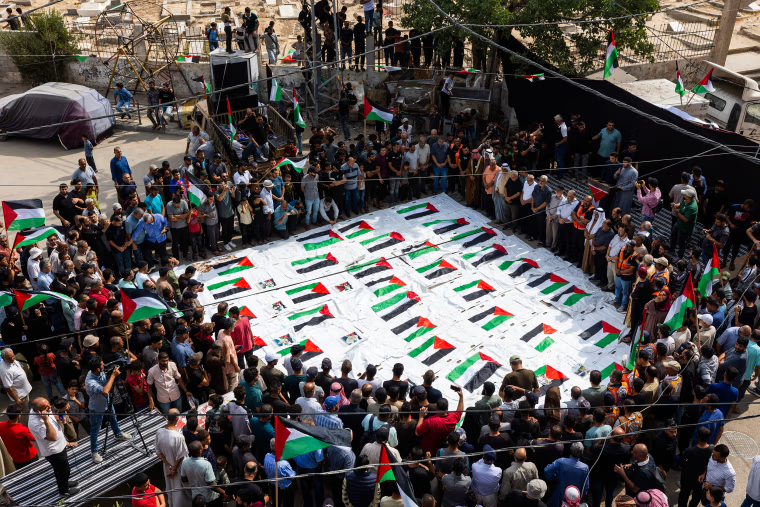
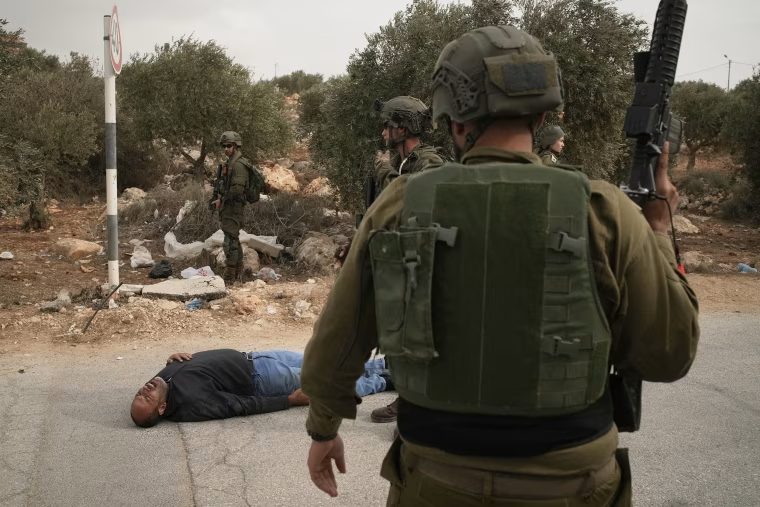
But while Israel’s conduct in Gaza has provoked strong international opposition, opinions within Israel remain highly supportive of Israel’s conflicts in Gaza, Lebanon, the West Bank and Iran, with a broad surge in support for right-wing parties and a greater emphasis on Israeli security. Eisenkot, who served in Netanyahu’s war cabinet in the opening months of the war, has criticized strategic failures and supports a long-term ceasefire. He has vowed to remove Hamas from power within 18 months of taking office.
Palestinian-led parties, which largely enjoy support from Palestinian-Israeli citizens who make up 20% of Israel’s population, go into the election as the loudest voices calling for restraint when dealing with Palestinians in the West Bank and the Gaza Strip.
But Palestinian-Israeli voters in Israel will also cast votes with an eye on the rising scourge of organized crime in their communities that has caused a spike in violent deaths over the past few years.
The vast majority of Palestinians in the West Bank and the Gaza Strip are not Israeli citizens and are not able to vote in the election.
A key dividing line ahead of the election has been the compulsory conscription of the strictly orthodox Haredi Jews into the Israeli military. For generations, Israeli law has given leave to Haredi mento study scripture instead of military service, which is mandatory for other 18-year-olds. Many Israelis now want to end the exemption for a group that now accounts for nearly 15% of Israel’s population.
While the tumultuous events of the last few years have dominated the headlines, many Israelis also will vote on bread-and-butter issues that Americans will find familiar: education, healthcare, crime, transportation and, above all, inflation. Israel’s still-thriving tech boom has left out huge portions of the population, particularly the young, who are being squeezed by soaring prices.
What do the polls say?
No one Israeli party can expect to earn a majority of the Israeli Knesset’s 120 seats — that’s never happened in Israeli history. Israel’s leadership will instead be decided by negotiations to build a governing coalition.
For much of the past few months, the two top coalitions have been neck and neck. But the latest polling by Israel’s Wala news shows Eisenkot’s party, Yashar, pushing ahead, winning 23 seats compared to Netanyahu’s Likud winning 19.
Behind the two front-runner parties is an alliance of two center-right former prime ministers who joined forces to form their own party called B’Yachad, or Together. The latest polls have Together winning 14 seats.
The Democrats, the largest political party representing what remains of Israel’s leftist political current, is projected to win nine seats.
Most of the remaining vote will go to a menagerie of smaller right-wing parties representing more niche religious and ethnic identities: Yisrael Beytenu, Otzma Yehudit, Shas, Religious Zionism and United Torah Judaism are each expected to win six to eight seats, according to Wala’s research.
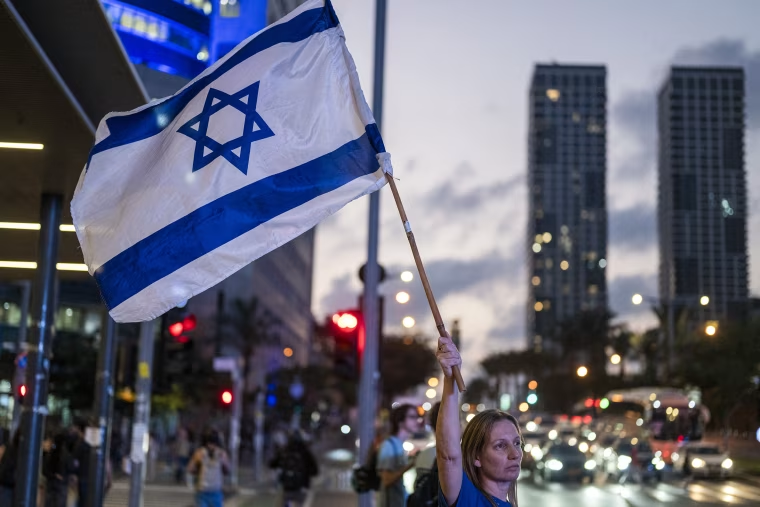
Palestinian-Israeli political parties like Ra’am and the Joint List are likely to get similar numbers, but will split the Palestinian-Israeli vote.
How will the vote be conducted?
The elections for the 26th Knesset will take place on Tuesday, with 7,331,981 Israeli citizens eligible to vote, and no fewer than 35 parties running candidates.
Each voter will cast a ballot for one party in a nationwide poll. There are no separate geographic constituencies and voters do not cast ballots directly for named politicians — every ballot is cast only for a political party and is counted among the full national pool.
Polls will open at 7 a.m. at more than 12,000 polling stations across the country, mostly schools, hospitals, prisons and other public buildings. The voting places will close at 10 p.m., at which point major news outlets will release their own exit polling data as polling officials begin counting the ballots.
A complex vote apportioning system calculates the share of seats each party receives for its votes based on the total voter turnout. Parties that receive fewer than 3.25% of the vote will win no seats — a fate that at least two-thirds of the parties can probably expect.
What happens next?
The official results are required to be published within eight days of the vote, though the rough seat counts should be known well before then.
But even those official results will be far from the last word on who will govern. Days and maybe weeks of horse-trading will follow, as the parties jockey to form a governing coalition with support from at least 61 of the 120 elected Knesset members.
This step gives outsized influence to smaller parties, which can emerge as kingmakers able to press for concessions and ministerial posts in the government and can influence which coalitions get to form a government, or even attempt to string together enough support to try and govern by themselves.
Approximately one week after the official results are published, President Isaac Herzog will task a member of the Knesset with forming a government. Herzog can pick whichever member’s proposed coalition he finds most promising — and is not required to choose the member with the largest party or the coalition.
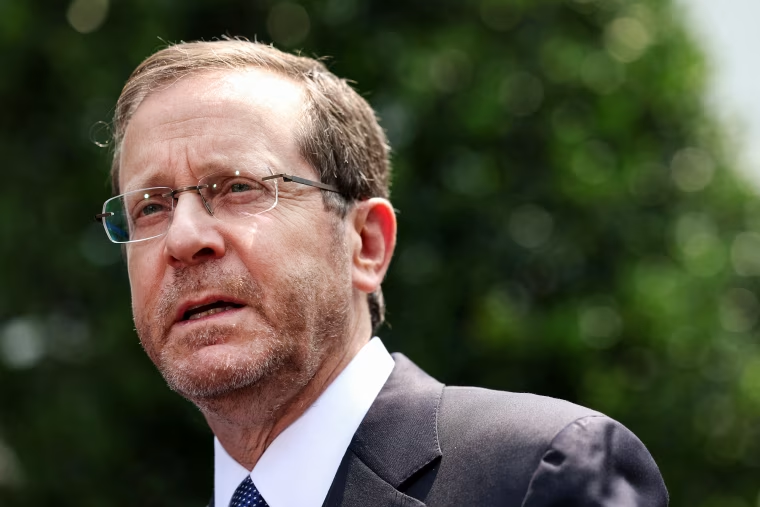
The member has a maximum of seven weeks to convene a ruling coalition before all lawmakers must vote on whether to accept it. That could allow for a minority government and give weaker coalitions a shot at leadership if they can rally the support of the full legislature.
If that member cannot form a coalition able to win majority support in the Knesset, the president appoints another member to form a coalition. If that attempt fails as well, and the Knesset remains gridlocked, the president can dissolve the Knesset, with new elections taking place within 90 days.
Such an impasse can drag on for years: Israelis went to the polls five times during the three years between 2019 and 2022.
The outcome of those years of electoral discord: Netanyahu, the great survivor of Israeli politics, returned to office. Next week, he will be hoping his luck has not yet run out.