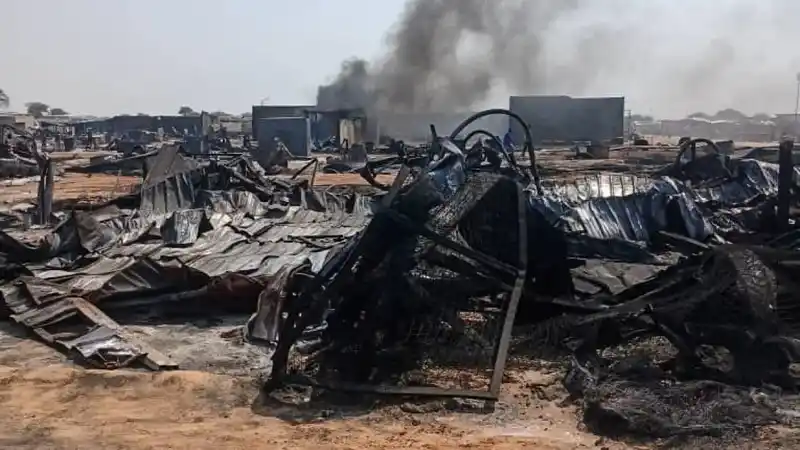
What is happening in Sudan? The civil war the world forgot


The conflict in Sudan has been described as a war on civilians – and the facts are devastating
Since April 2023, Sudan has been in the grip of one of the deadliest civil wars in a generation. As many as 150,000 people are believed to have been killed and millions displaced.
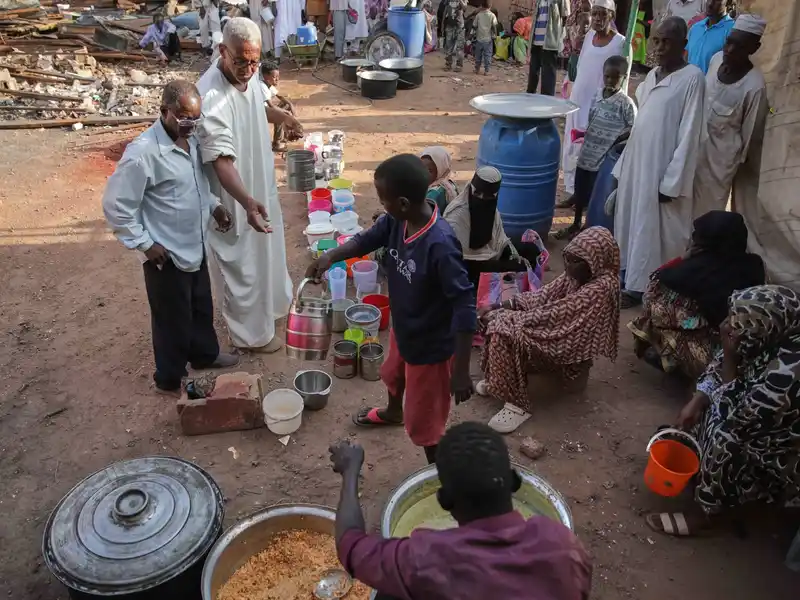
Right now it is the largest humanitarian crisis, the largest displacement crisis and the largest hunger crisis in the world.
The UN has warned that attacks in Darfur bear the “hallmarks of genocide” and the brutality and widespread use of rape as a weapon of war is unprecedented.
There are no signs of an immediate ceasefire or an end to the conflict, which has been described by humanitarians and Sudanese families as a war on civilians.
How did the war start?
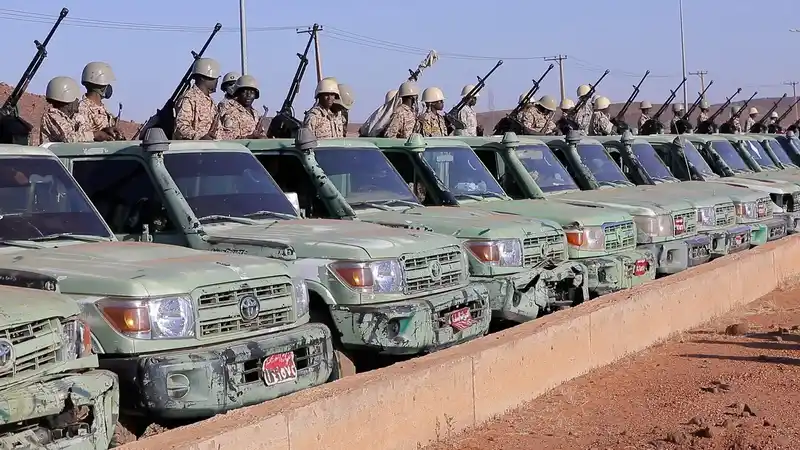
Sudan’s war broke out in April 2023. A vicious power struggle between Sudanese army chief General Abdel Fattah al-Burhan and General Mohamed Hamdan Dagalo, or “Hemedti”, head of the powerful paramilitary Rapid Support Forces (RSF), exploded into open fighting across the country.
The two generals had once been uneasy allies. They joined forces after the 2019 popular uprising unseated the country’s longterm autocrat Omar al-Bashir, forming a joint government with a civilian prime minister.
At the time there were concerns about a deadly military crackdown on protesters and the involvement of the RSF, that with its precursor the Janjaweed – had already been accused of committing crimes, atrocities, and ethnic cleansing in Darfur, targeting non-Arab communities. (Both sides denied all accusations).
By 2021, the two generals staged a coup. But their power struggle reached breaking point in April 2023, mainly over plans to bring the 100,000-strong RSF under army command.
Fighting first erupted in the capital, Khartoum, and quickly spread across the country, morphing into an international proxy conflict.
Rights groups including Human Rights Watch have said there is mounting evidence that the UAE has bankrolled the RSF in breach of arms embargoes, which the Emirates denies. The RSF in turn accuses the army of being backed by Egypt and Iran.
Where is the fighting now?
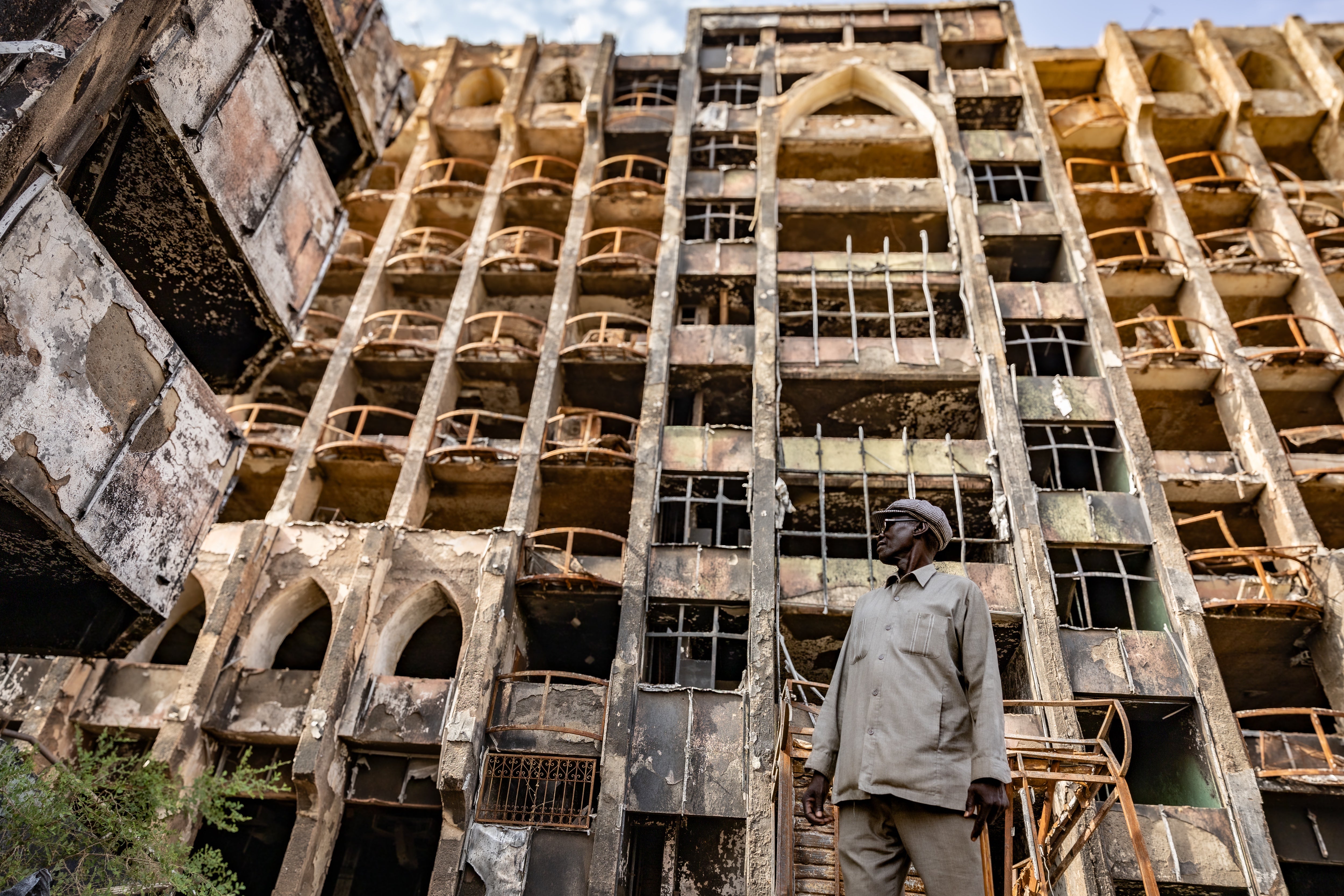
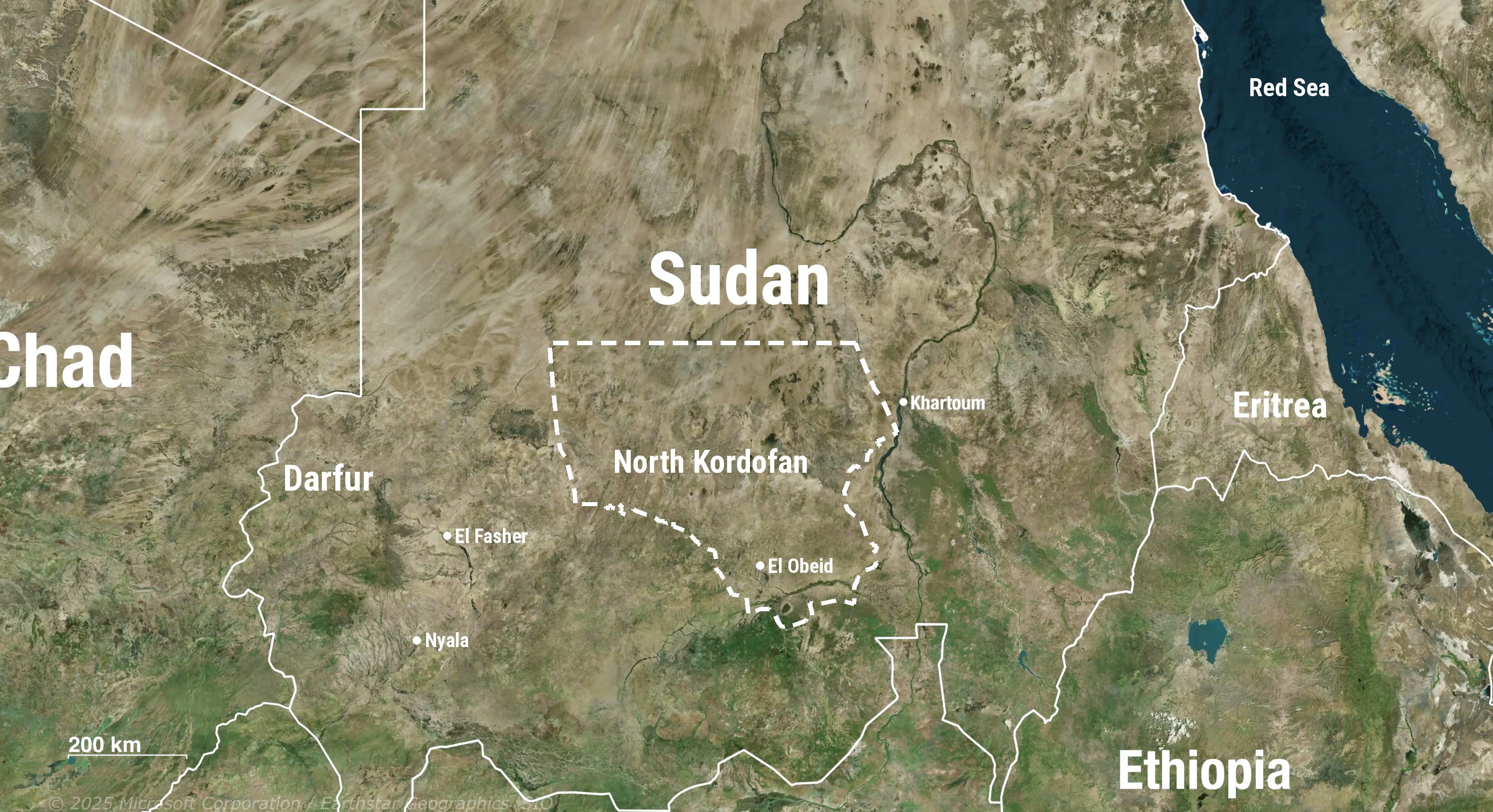
The front lines have shifted dramatically. After losing control of Khartoum to the RSF, the army retook the capital in March 2025. But by October 2025, in the west, the RSF had captured El Fasher, the army’s last stronghold in Darfur, after an 18-month siege and slaughter.
This year, a UN independent fact-finding mission for Sudan said the RSF’s ethnically targeted killings, widespread sexual violence and enforced disappearances bore the “hallmarks of genocide”.
The SAF (Sudan Armed Forces) and its affiliated militias have also been accused of atrocities by UN investigators, which the SAF also denies.
Since then, the war’s centre of gravity has moved to the Kordofan region, which links Darfur to central Sudan.
El Obeid: the new front line
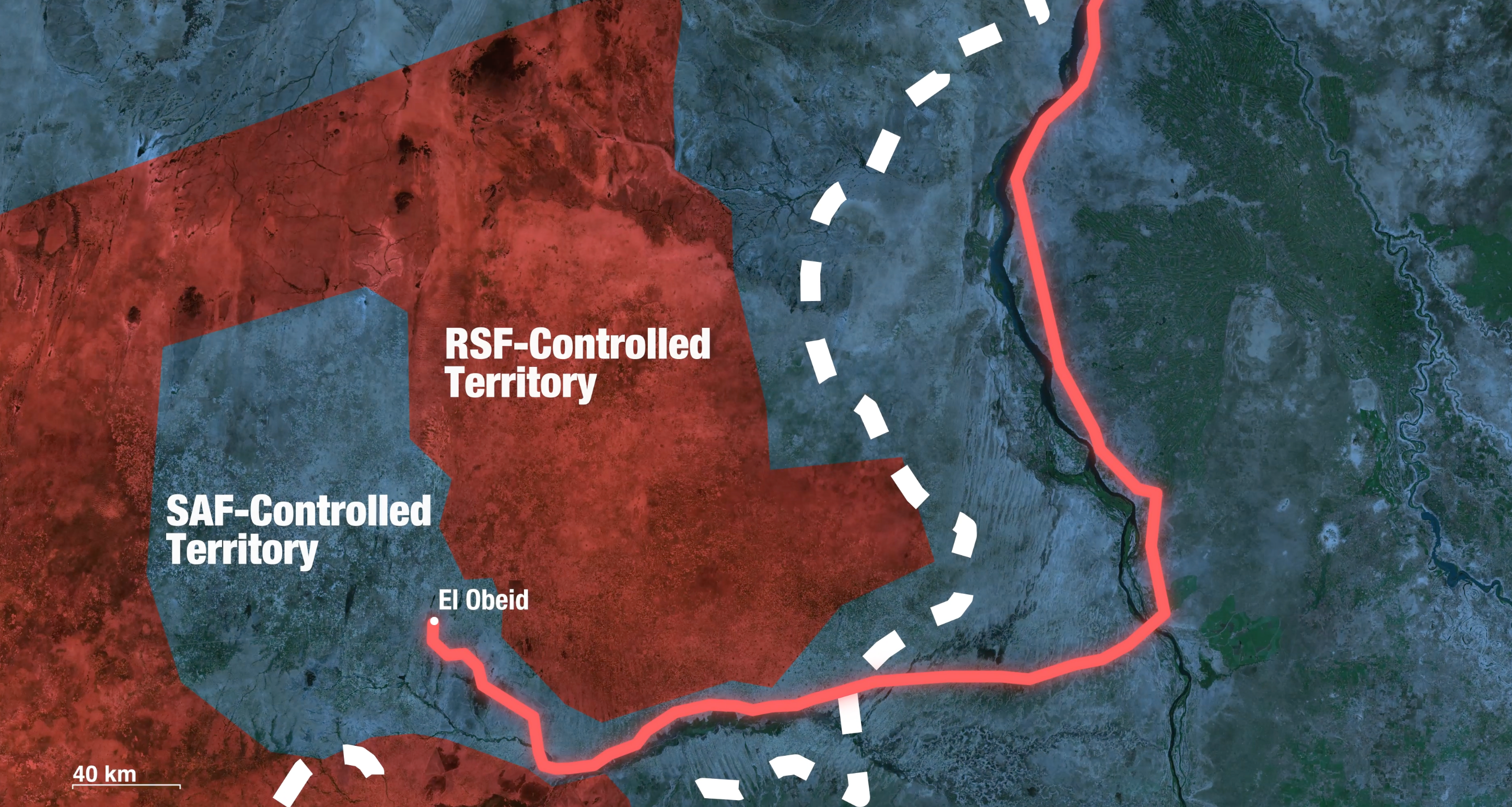
El Obeid, the capital of North Kordofan state, is now one of the most important battlegrounds of the war. Its position at a crossroads linking the country’s central and western regions makes it strategic. Until very recently, it was almost completely surrounded by RSF fighters and under partial siege.
The city of around half a million people is also now home to an estimated 100,000 displaced people. But it offers little safety. It has been under intense drone strikes. The UN has warned that the patterns of violence seen in El Fasher are now emerging in El Obeid.
Key facts and figures
- Death toll: There is no official death toll. Conflict monitor Acled says it has verified nearly 60,000 dead, although other estimates say as many as 150,000 have been killed
- Humanitarian crisis: Nearly 34 million people across Sudan need aid, while 21 million lack health services; this has led to Sudan becoming the largest humanitarian crisis in the world, according to the WHO
- Displacement: At least 14 million people have been forced from their homes, a quarter of the population, making it the world’s largest displacement crisis. Neighbouring countries host over 4.4 million Sudanese refugees
- Sexual violence: Conflict-related sexual violence in Sudan is unprecedented in terms of the scale, prevalence and brutality of its widespread use as a weapon of war, according to the UN’s human rights office
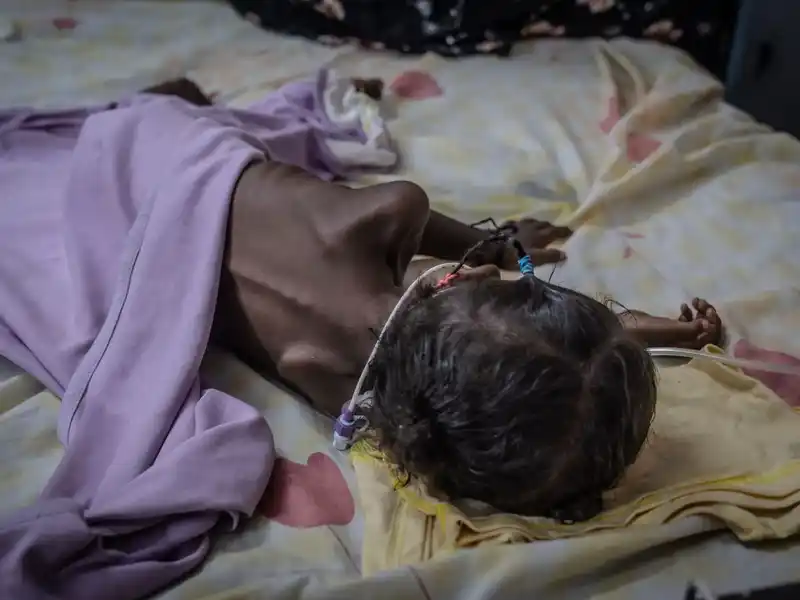
- Children: An estimated 825,000 children under five are expected to suffer from severe acute malnutrition in 2026. Unicef has documented the rape of children as young as one year old
- Famine: Around 20 million people or 40 per cent of the population face high levels of acute food insecurity, according to the IPC, the UN-backed global hunger monitor. Famine was confirmed in El Fasher in 2024 and in Kadugli, South Kordofan, in September 2025. Sudan is also the world’s largest hunger crisis right now.
- Drought: The IPC warned in October that Super El Niño-induced drought is compounding conflict and driving a growing risk of famine in Darfur and Kordofan. It also found that the drought now covers more than half of the country
- Healthcare: The WHO has verified 217 attacks on healthcare since April 2023, resulting in thousands of deaths. In 2026, 37 per cent of health facilities were reported to be non-functional
- Aid: As of 8 October, the UN’s $2.9bn appeal for Sudan is 40 per cent unfunded
- Genocide: In February 2026, a UN fact-finding mission said RSF atrocities in El Fasher bore the “hallmarks of genocide” against non-Arab communities
This article has been produced as part of The Independent’s Rethinking Global Aid project