Vatican gives fresh Pope Leo health update ahead of intense South America trip


Pope Leo will depart for the first stop of his South America trip on Friday
Vatican officials confirmed on Tuesday that Pope Leo is in good health and prepared to embark on a demanding three-nation visit to South America this week, less than four weeks after surgery for lung cancer.
The 71-year-old pontiff will depart on Friday for a 12-day journey taking in Uruguay, Argentina and Peru, marking one of the most rigorous papal itineraries in recent decades. The trip follows an operation on 13 October to excise the lower lobe of his right lung.
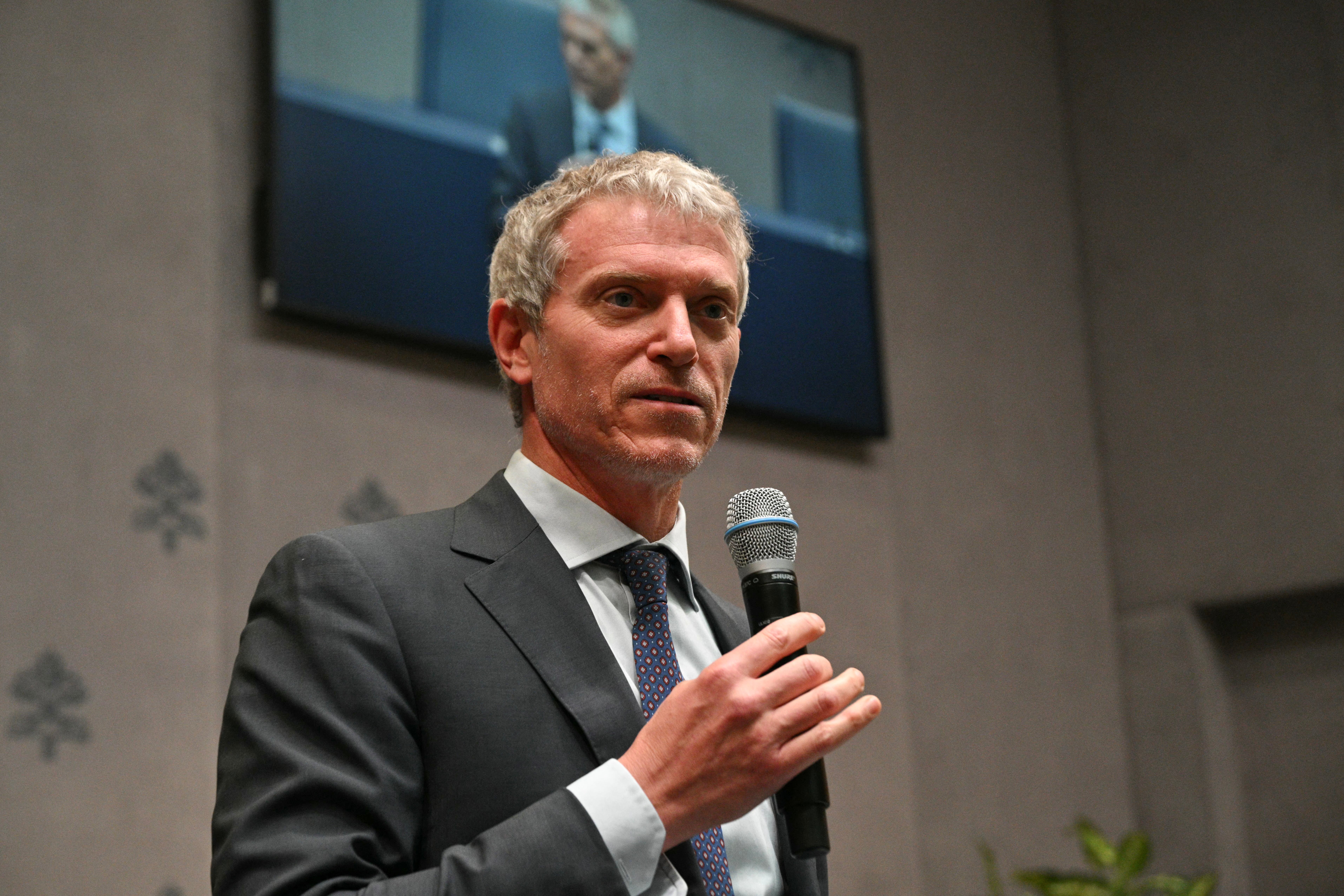
Speaking at a press briefing, Vatican spokesperson Matteo Bruni stated: "The pope is in good health. We're not talking of a permanent condition. We're talking about something that you heal from, because it is surgery."
Leo’s diagnosis with cancer came as a shock after he assumed the papacy in May 2025, prompting debate regarding how his health might impact the direction of his leadership.
Last week, the Vatican's foreign minister, Archbishop Paul Gallagher, observed that the diagnosis proved "a bit of a game changer" in public perceptions concerning Leo’s health and the papacy’s future.
The pope received treatment for lung adenocarcinoma, which represents the most widespread variant of lung cancer. Surgeons confirmed following tissue analysis that the condition remained localised, meaning further medical interventions were unnecessary.
Bruni explained that the pope's recovery had progressed sufficiently so that special medical provisions would not be needed while travelling.
Standard medical staff who routinely accompany the pope during overseas trips will join the delegation as normal, accompanied by the customary convoy ambulances.
"There's always doctors, there's always nurses, there's always certain basic conditions," Bruni added. "I am not going to go into greater detail because the situation does not require it."
Addressing reporters, Maria Montserrat Alvarado, recently appointed head of communications for the Vatican, praised the pontiff’s energy, describing his stamina as "fantastic."
"I would have no fear," Alvarado remarked. "His doctors are very confident."
Running from 6 to 17 November, the schedule will see Leo travel roughly 31,000 km (19,300 miles), visiting 10 cities and delivering 36 addresses.
Vatican officials confirmed the original schedule remains entirely unaltered, encompassing 12 flights alongside two helicopter journeys.
The itinerary includes a stop in Cusco, Peru, situated in the Andes at an elevation of 3,399 metres (11,152 feet) above sea level, where visitors frequently face altitude sickness or require additional oxygen support.
Independent medical specialists noted that clearance for air travel suggests a low probability of post-surgical complications, full re-expansion of the remaining lung tissue, and healthy healing of surgical incisions.
"I don't think the pope will face any particular risks or need to take any specific precautions for his trip," noted Dr. Serena Ricciardi, a specialist in lung cancer at San Camillo Forlanini Hospital in Rome.
Dr. Antonio Passaro, thoracic oncology chief at Milan's European Institute of Oncology, observed that the surgical operation "is not, in itself, an obstacle to air travel or to resuming strenuous activity."
Passaro added: "What matters is not only the procedure itself, but above all the quality of the recovery and the person's functional condition."
Given the demanding schedule and high-altitude locations, Passaro suggested physicians will likely recommend structured rest and available oxygen supplementation.
"Naturally, a complex trip involving numerous flights and time spent at high altitude requires certain precautions, particularly regarding oxygenation, fatigue management, and the need for adequate rest periods," Passaro said.