US and Iran exchange fresh wave of strikes as Tehran says diplomacy has proven ‘futile’
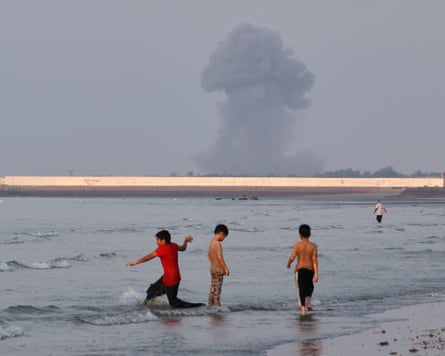
US and Iranian military forces exchanged missile and drone strikes over the weekend and into Monday, as Tehran targeted US bases in the region and announced it was denying passage of ships through the strait of Hormuz.
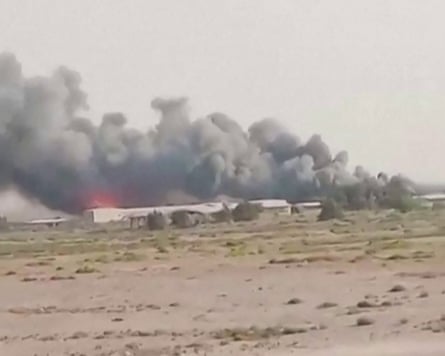
Iran’s Islamic Revolutionary Guard Corps (IRGC) said it had targeted US military facilities in Bahrain and Kuwait, destroyed radar systems in Oman and hit fuel tanks and ammunition depots at Prince Hassan airbase in Jordan in response to the American strikes.
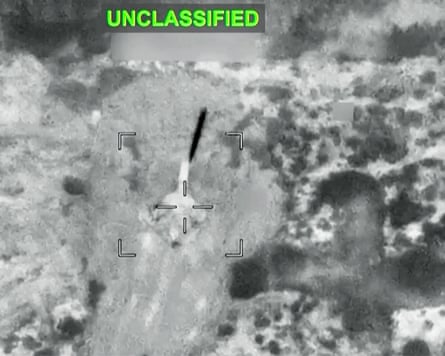
The US military said it had struck Iranian air defence systems, coastal radar sites, missile and drone capabilities and small boats on Sunday, using aircraft, naval vessels and drones. Loud explosions were heard on Monday morning on Iran’s Qeshm Island and in the port city of Bandar Abbas.
Donald Trump said on Monday the US would probably take over the strait and should be reimbursed for controlling the vital waterway. The US president has made numerous claims and threats over the months of the war – including frequent claims of victory – many of which have had little basis in reality.
“We’re going to keep the strait, and we’ll probably run it,” Trump said in a phone interview on Fox News. “We’ll become the guardian of the strait. Maybe we’ll call it the guardian angel of the strait. And we should be reimbursed for that.”
The exchanges marked an escalation in the pace and geographic scope of attacks over the past week after the near total collapse of an interim ceasefire.
Trump earlier said the US was “beating up” Iran, while also apparently leaving a door open for yet another round of talks. His administration has struggled to get a grip on the Middle East crisis triggered by the US and Israel’s attack on Iran earlier this year.
Iran’s top negotiator, Mohammad Baqer Qalibaf, posted on social media on Sunday: “The era of one-sided deals is OVER. We told you: keep your word or pay the price. Reality is knocking.”
Brent crude oil prices rose more than 3% on Monday, although they remained well below peaks reached earlier in the conflict.
Iran and the US are – in theory – nearly at the midway point of the 60-day period of an interim deal that was supposed to set up talks for a permanent end to the war, which began in February with the assassination of Iran’s then supreme leader, Ayatollah Ali Khamenei, in US-Israeli airstrikes.
In reality, that deal has devolved into a series of attacks over the strait of Hormuz and the future of the important shipping channel, worrying world leaders that the Iran war could fully resume.
“A return to full-scale hostilities would have catastrophic consequences,” the UN secretary general, António Guterres, said.
The war has spread across the region, with Iran attacking US bases in multiple countries. Thousands of people have been killed, mainly in Iran and Lebanon.
Iran’s strikes on Sunday extended to Qatar, a mediator in ceasefire talks that had not come under attack since April. The United Arab Emirates, which had not been targeted since early May, said its air defences had engaged missiles and drones from Iran.
The conflict has caused global economic shockwaves since it began in late February, driving energy prices higher and fuelling global inflation. Higher prices – especially for petrol – are politically sensitive for Trump in the run-up to November’s US congressional elections.
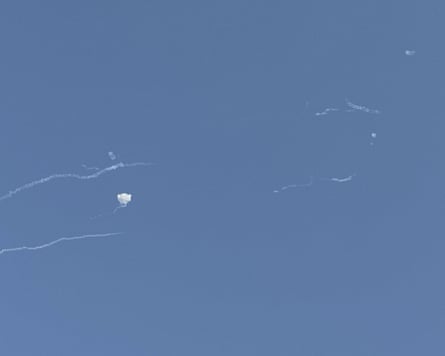
Iran condemned the latest wave of US attacks, the foreign ministry saying they had “rendered futile all efforts of the past few months to reduce tension and establish peace in the west Asian region”.
It added: “The US regime has also caused the return of insecurity in the strait of Hormuz and disruption of international commercial shipping by openly interfering in the process of Iran implementing the necessary arrangements in the strait of Hormuz.”
The ministry said talks between Iran and Oman on Saturday – which focused on arrangements for managing the strait and transit routes – were unable to reach a result of “overt and covert” US pressure on Muscat.
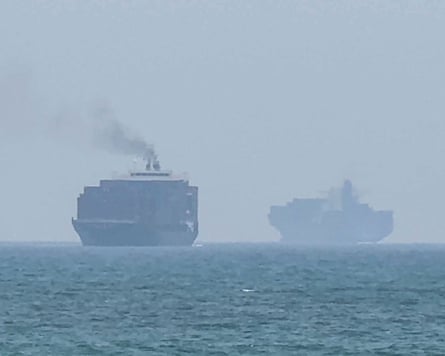
Iran has sought to establish a permanent system for collecting fees in the strait, through which a fifth of the world’s oil and liquefied natural gas shipments transited before the war, and has warned vessels not to sail without its authorisation.
Its recently created Persian Gulf Strait Authority said on Sunday that passage through the strait was not currently possible because of what it called recent illegal US military movements in the region. Permits would be issued “as soon as stability and calm are restored”, it said.
The US, which revoked the licence authorising the sale of Iranian crude oil on Tuesday after earlier attacks on shipping, said its forces were positioned to safeguard freedom of navigation, despite what it described as “aggression, harassment, threats and arbitrary declarations” from Iran.
The US Navy-led Joint Maritime Information Center reiterated guidance that despite a severe security threat, an “expanded” southern route near Oman was available for two-way traffic.
With Agence France-Presse, Reuters and Associated Press