Trump says FBI is investigating Nvidia CEO Jensen Huang’s relationship with alleged Chinese spy


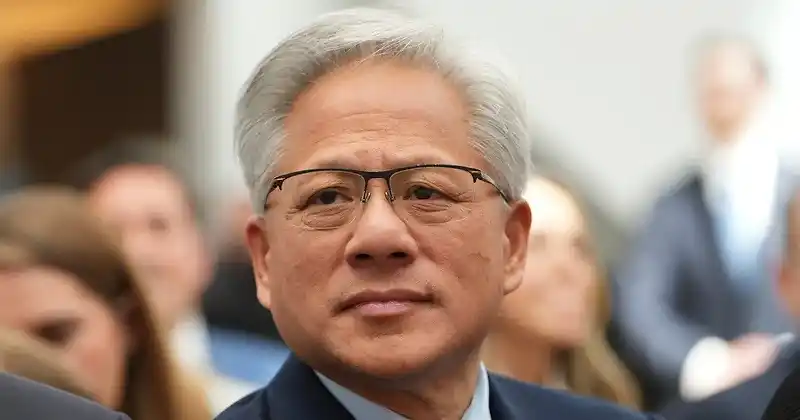
President Donald Trump said he spoke to Nvidia CEO Jensen Huang after the company revealed it launched a probe of his affair with an alleged Chinese spy.
President Donald Trump said he had spoken to Nvidia CEO Jensen Huang earlier Monday after Nvidia revealed late Sunday that it had launched an investigation into his extramarital affair with an alleged Chinese spy.
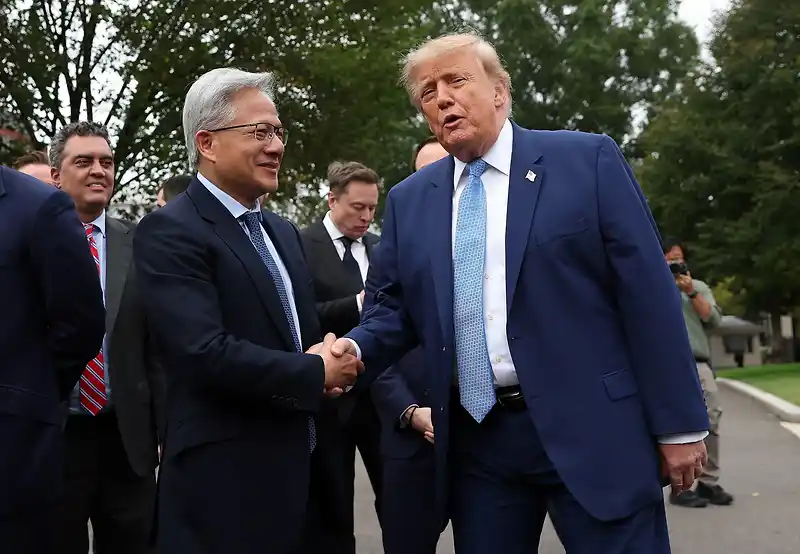
Trump called Huang “to see if he’s feeling all right,” the president said at an impromptu news briefing.
“He had absolutely no idea that the person in question was a spy,” Trump said of Huang, adding, “I really believe him.”
“We’ll look into it,” said the president. “I know the FBI is looking into it, in terms of something else, and I think that he’ll be in good shape.”
The Justice Department is conducting a criminal investigation into Megaspeed, the Singaporean company suspected of smuggling Nvidia’s AI chips into China, according to a source familiar with the matter who spoke to NBC News.
Megaspeed is the data center company at the center of the controversy involving Huang, who is said to have had a relationship with Megaspeed executive Alice Huang, the woman who U.S. intelligence officials now believe to be a Chinese spy. Jensen Huang and Alice Huang are not related.
The investigation is focused on the role of Megaspeed in allegedly shipping Nvidia artificial intelligence computer chips to customers in China, which would violate strict U.S. export controls on those chips.
In addition to Megaspeed, the probe is looking at people tied to the company like Alice Huang, and at whether she was recruited by China to spy and assist the smuggling of the AI chips into China.
The investigation is being led by the department’s National Security Division, in conjunction with the FBI and the Bureau of Industry and Security, the investigative division of the Commerce Department.
On Sunday, the Nvidia board announced it was “initiating an independent investigation in light of recent reporting that founder and CEO Jensen Huang has been the target of a foreign intelligence effort.”
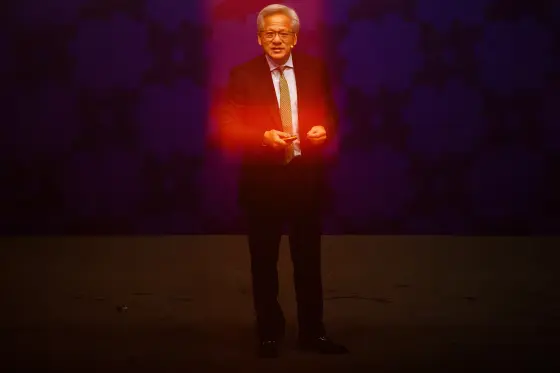
At the same time, Jensen Huang announced that he had been “unfaithful to my wife,” while also apologizing to Nvidia employees.
“I was amazed, because I view him as a very high-quality person,” Trump told reporters at the White House. “He’s an amazing guy. I hope there’s no problem.”
Trump indicated for the second time in as many days that he wanted Huang to remain the leader of Nvidia, the second-largest public company in the world. “I hope there’s no problem. If there is a problem, we’ll let you know about it. But I hope there’s no problem.”
Nvidia spokespeople did not immediately reply to a request for comment Monday following Trump’s remarks. Nvidia previously said Huang would remain CEO, despite the revelations.
The Justice Department also declined to comment on the matter.
Chinese Foreign Ministry Spokesperson Guo Jiakun said Monday that “the so-called Chinese spy allegation is unsubstantiated. It is nothing but smears against China.”
Shares of Nvidia closed down 4.2% in Monday’s trading, bucking overall market momentum. The stock was the worst-performing company in the Dow and the Nasdaq.
The news surrounding Nvidia and Huang has also drawn intense congressional scrutiny.
House Minority Leader Hakeem Jeffries, D-N.Y., on Monday called for “a full briefing” on the issues engulfing Nvidia. Jeffries is likely to be elected the next speaker of the House in January.
Sens. Elizabeth Warren, D-Mass., and Jim Banks, R-Ind., also said in a joint statement that Congress should “take decisive action” regarding oversight of AI-linked companies.
The disclosures by Nvidia and Huang “makes these national security concerns even more urgent and raises important questions NVIDIA must answer,” Warren and Banks wrote.
Caroline Kenny, Brennan Leach and Janis Mackey Frayer contributed.Related Articles
- World News
Trump says FBI probing Nvidia CEO Huang’s affair with alleged spy
- World News
Trump says FBI investigating Nvidia boss's affair with alleged Chinese spy
- Stock Markets News
Trump says Nvidia CEO told him he did not know the woman linked to him was a spy
- World News
Nvidia opens investigation after CEO Jensen Huang’s affair with alleged Chinese spy
- World News
Nvidia launches probe after CEO Jensen Huang admits to affair with suspected spy