Federal court clears way for army to detonate bomb-making chemicals in Iowa
Trump, on social media, tried to push responsibility of ‘any and all death or destruction’ on Democratic governor-elect The US army can proceed with detonating several tons of degraded bomb-making chemicals in Iowa, a federal appeals court ruled on Monday. The order came after a day of uncertainty that saw Donald Trump attempt to foist responsibility “for any and all death or destruction” on...
The US army can proceed with detonating several tons of degraded bomb-making chemicals in Iowa, a federal appeals court ruled on Monday. The order came after a day of uncertainty that saw Donald Trump attempt to foist responsibility “for any and all death or destruction” on Iowa’s Democratic governor-elect Rob Sands.
The detonation of 68 barrels containing nearly 9,500lb of lead azide was initially planned for Friday, but the army has since changed the date three times after an outpouring of public concern about potential health and environmental effects.
In a social media post hours before the eighth circuit panel ruling, Trump wrote that he preferred to take care of the volatile material as soon as possible and that a controlled detonation would be much safer, but that he was “making this decision fully subject to the incoming Governor Elect, Rob Sand, agreeing to the operation”.
“If he or the Courts do not agree, we will have no choice but to not proceed with the controlled removal of these hazardous materials, and be forced to hold the incoming Governor responsible for any and all death or destruction caused by this very unfortunate, and longterm, situation,” Trump added.
Sand, who does not take office until January, called for more transparency from the federal government in a statement on Monday. “Everyday Iowans are entitled to know how Middletown came to this situation, and learn why the administration believes this is the best path forward,” he wrote on social media, noting that he has been receiving briefings on the operation from the administration. “I’ve asked the federal government to share that information with the public as soon as possible.”
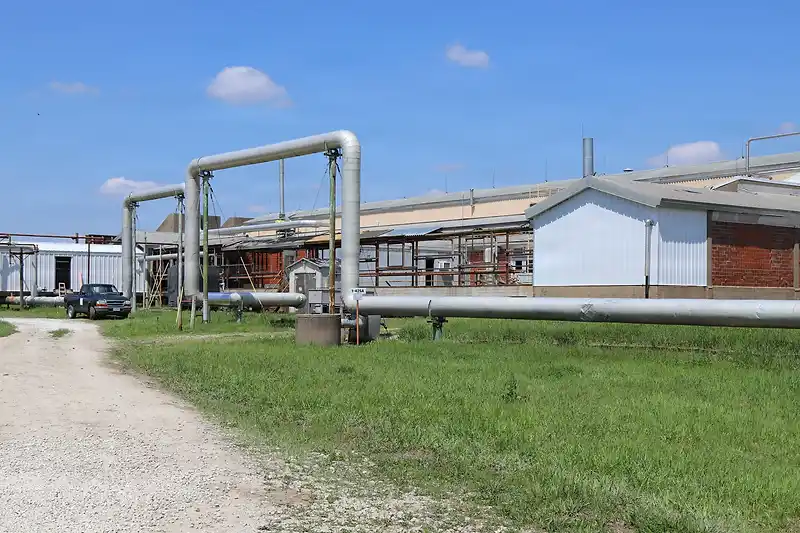
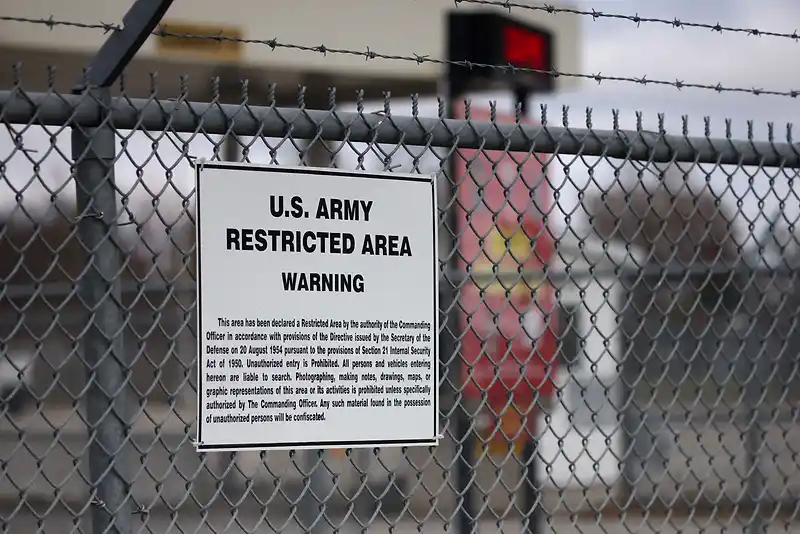
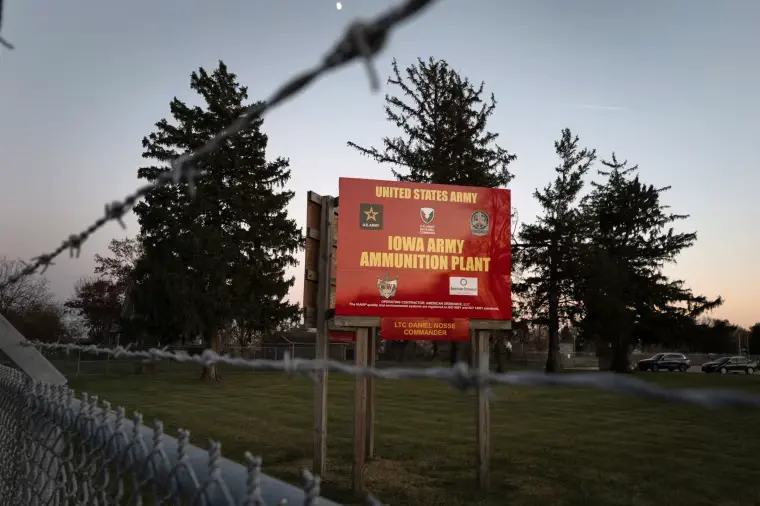
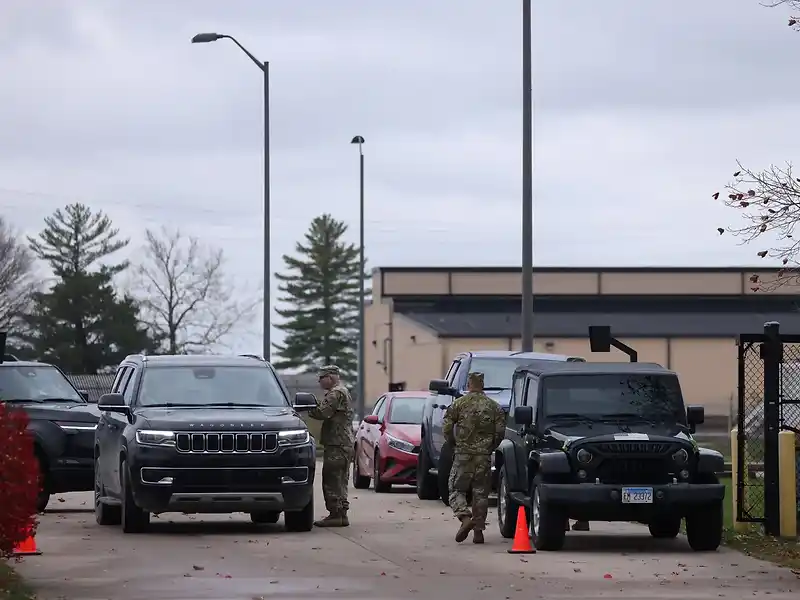
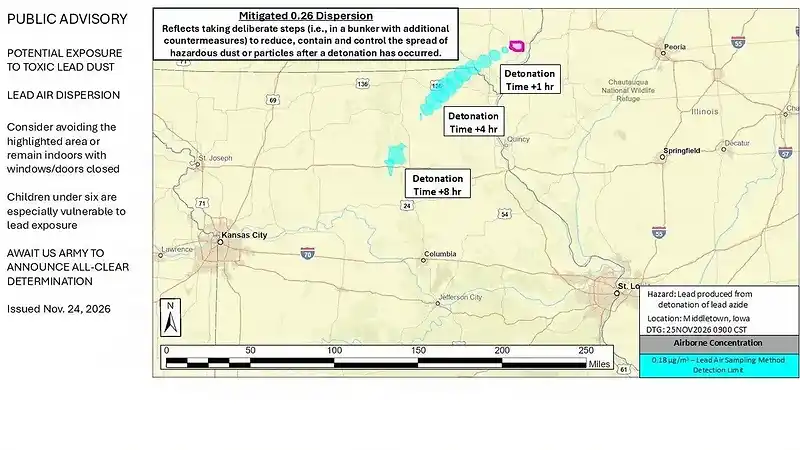
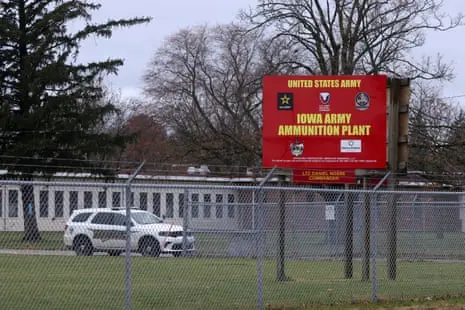
Nearly 400 people live in Middletown, a small town in south-eastern Iowa, where the plant is situated. The army has warned that the blast could release a plume of toxic lead dust extending up to 100 miles northeast, possibly reaching cities such as Wapello and New Boston, Illinois.
On Friday, current Iowa governor Kim Reynolds, a Republican, activated the state emergency management office, and the state created a website for information about the detonation.
Republican Chuck Grassley, the long-serving Iowa senator, echoed Sand’s call for “increased communication and transparency to the public” but said he supported “a controlled, safe removal” over “a spontaneous catastrophe”.
In his social media post, Trump blamed the existence of the lead azide barrels at the Iowa Army Ammunition Plant on the Obama administration, which he said “improperly stored a vast number of explosives” there in 2009.
According to the Des Moines Register, the filing said that the lead azide, an explosive made of lead and nitrogen used primarily in detonators and blasting caps, has been left vulnerable to temperature swings because the blast doors to bunkers containing the compound had been removed and could not be replaced.
In a court filing, the US Department of Justice notified the appeals court that the army would invoke an emergency exception to go ahead with the explosion. But that was challenged in court by the Iowa Environmental Council and the Sierra Club’s Iowa chapter, arguing that the Environmental Protection Agency had skipped necessary permitting steps.
The court then put an administrative stay on the permit so that it could review the emergency motion. In response, the government said there is “an immediate risk” that the lead will explode as temperatures drop below 30 degrees in the upcoming days.
On Monday, a three-judge panel of the eighth circuit court of appeals said the EPA adequately incorporated safeguards in an emergency permit to minimize the dispersal of dust.
Officials acknowledge that lead is toxic and have recommended that people stay indoors whenever the detonation happens and clean off outdoor surfaces with water afterward to limit exposure to any lead particles.
The leaders of states bordering Iowa have expressed concern about the detonation. Mike Kehoe, the Missouri Republican governor, said state agencies are working to establish additional monitoring of air and water quality, public health and agriculture resources, but emphasized “this is a federal operation” and “the states of Iowa, Missouri and Illinois do not have a say on when this is conducted”.
Tammy Baldwin, the Wisconsin Democratic governor, sent a letter on Monday to Adam Telle, the army secretary, expressing “alarm and disapproval” over the handling of the lead azide.
The army initially scheduled the demolition for 20 November, but over the weekend moved it to allow for “more optimal weather conditions and all mitigation measures to be emplaced”.
Environmentalists sued last week in an effort to stop the detonation, winning a stay from the appeals court pending a decision on the validity of an emergency permit approved by the US Environmental Protection Agency that cleared the way for the operation.
Associated Press contributed reporting