Trump critic Lula wins reelection in Brazil, securing fourth presidential term


The veteran leader secured his non-consecutive fourth term, with his next term scheduled to begin on Jan. 5, 2027.
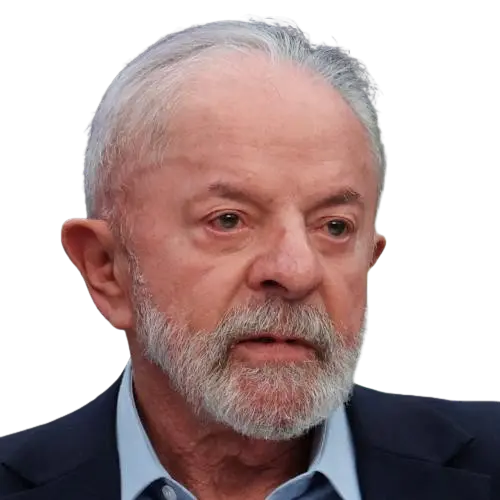
RIO DE JANEIRO — Brazil’s President Luiz Inácio Lula da Silva, a vocal critic of US President Donald Trump, was reelected Sunday in a result that provides relief to critics of Trump and keeps some distance between Latin America’s biggest economy and Washington.
With 100% of the vote counted, Brazil’s electoral court announced that the soon to be 81-year-old Lula held an unassailable lead. The announcement capped an evening of chaos at polling places across Brazil, following a last-minute decision to extend voting by two hours. That decision by a Supreme Court justice may trigger legal action by opponent Flávio Bolsonaro.

His triumph bucks a trend in Latin America where increasing numbers of right-of-center presidental candidates allied with Trump have been winning, further extending the United States’ influence in the region. Lula’s victory leaves Mexico and Brazil, Latin America’s two most populous nations, with left-of-center leaders. It also positions Latin America’s largest economy, with a GDP of $2.6 trillion per year, to remain independent of the US, despite the pressure of increased tariffs imposed by Trump.
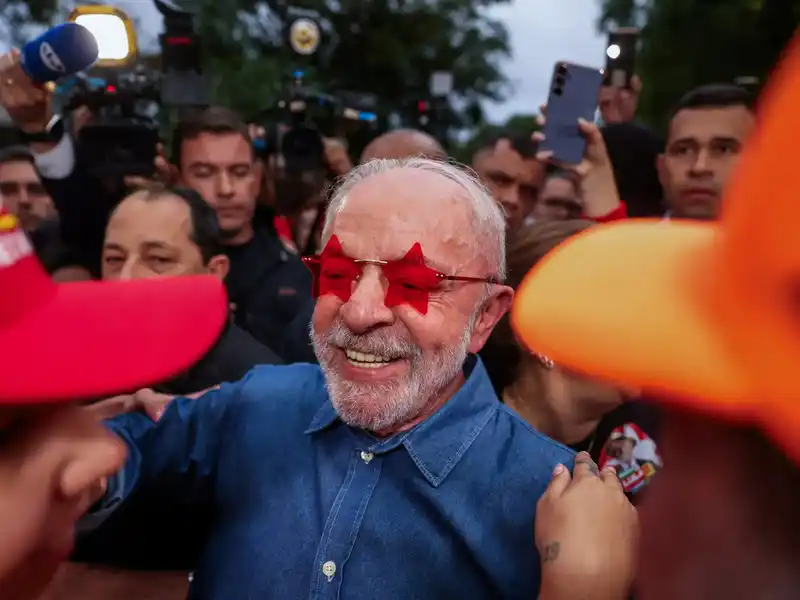
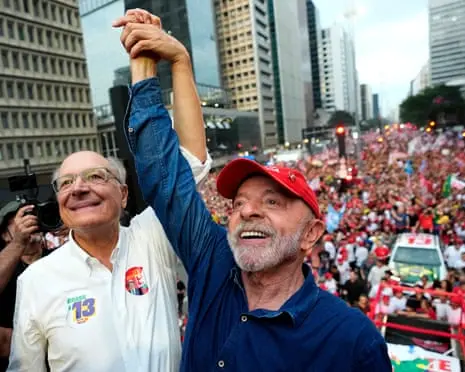
The announcement kicked off a celebration of supporters in and out the Sao Paulo hotel where Lula watched the count with First Lady Rosângela da Silva, allies, and friends.
Lula’s victory, if confirmed by electoral authorities, will give him his non-consecutive fourth term as president. The next term begins on Jan. 5, 2027.
It is the first time since Brazil’s military dictatorship ended in 1985 that the second-highest vote getter in the first-round elections won the presidency. Bolsonaro had 47% of the vote in the first round to Lula’s 45%, a difference of 2.2 million votes.
Lula and Sen. Bolsonaro have yet to address their supporters.

Sunday’s victory will likely be the last of the veteran leader’s political career. Lula began his political career in the 1970s as a union leader. He then helped found the Workers’ Party, which he represented as a presidential candidate three times until he finally won it in 2002. He was reelected four years later and was succeeded by one of his cabinet ministers, Dilma Rousseff, in 2010. She was reelected in 2014.
Rousseff was impeached for accounting maneuvering in 2016 amid a sprawling corruption probe, which also ensnared Lula. He tried to run for president again in 2018 but was jailed in March after being convicted.

Lula was released from prison after 580 days and saw Brazil’s Supreme Court annul his sentence after police found messages that showed the judge who convicted him was biased. He quickly became one of former President Jair Bolsonaro’s biggest critics and narrowly beat him in 2022.
Lula admitted in 2024, two years into the job, that his administration had done little that far to earn the support of his voters.
Since he lost the first round, Lula reorganized his campaign, appealed to young voters, put millions of Brazilians on the streets to defend democratic values and his legacy, raised fears of another Bolsonaro administration and boosted several government initiatives.
Lula also defended Brazil’s sovereignty and insisted that a Bolsonaro presidency would allow the US to exert control over Brazil.
He joins Trump and Nicaragua’s President Daniel Ortega — all age 80 — as the oldest presidents in the Americas.
Related Articles
- World News
Lula holds off far right with victory in Brazil presidential election
- World News
Lula wins fourth term as Brazil president after historic upset over far-right Flávio Bolsonaro
- World News
Conservative wave hits roadblock in Brazil as Lula holds off Bolsonaro challenge
- World News
Brazil election 2026: Full second round results as Lula wins comeback against Flávio Bolsonaro
- World News
Brazilians vote in presidential election runoff pitting leftist Lula against far-right Bolsonaro