Tinned food, loo roll and power banks: the Brits following advice to stockpile


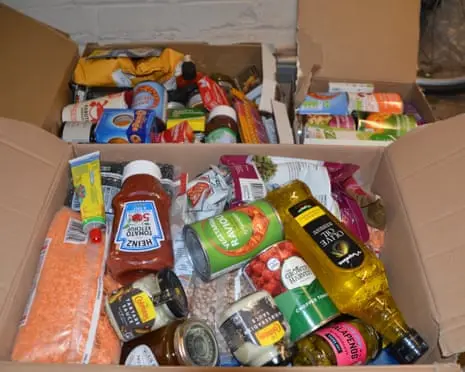
Government campaign recommends three days’ worth of stores for emergencies, but some are ahead of the game Dried foods, bottled water, medicine stocks and backup power banks: it could be the props cupboard on a disaster movie, but instead it is precisely what some UK residents are stockpiling amid official warnings about Russian “state-sponsored terrorism” and the impact of the climate crisis....
Dried foods, bottled water, medicine stocks and backup power banks: it could be the props cupboard on a disaster movie, but instead it is precisely what some UK residents are stockpiling amid official warnings about Russian “state-sponsored terrorism” and the impact of the climate crisis.
The government launched a campaign on Thursday advising people to set aside three days’ worth of stores to deal with a whole range of eventualities, and some are already well under way.

“I’m adding a few extra tinned foods and dried foods to each weekly shop to build up a stockpile over time,” said Lawrence Barratt, from Hythe in Hampshire. “Tinned beans, soups, chilli con carne. Dried noodles, pot noodles, rice. Foods I can cook with bottled water, which I’m also buying gradually – aiming to have enough for two people for three days.”
He added that he was also putting aside a first aid kit, a battery-powered FM radio and a torch. “I have a portable power bank that I’ve used when camping; that should give enough electricity to charge phones, run the TV, even a small fan heater.”
Barratt is not alone. Marco Camurri, from Greenwich in London, said he was collecting pasta, passata and stock cubes as well as tinned foods, bottled water and medicines. And toilet paper, he added. “We remember Covid.”
Camurri said that, with relatives in continental Europe, he and his family could flee temporarily if the UK “entered war and if there was a risk of direct attacks to London”, or if there were “extreme infrastructure failure that would put our jobs at risk”.
He said: “Although I live in London, I have some wood set aside in the back of our small garden in case we need to make fire on the barbecue to boil water. We have power banks that we keep charged, USB rechargeable flashlights, matches and lighters. Although gasoline is expensive, we try to keep the tank over 50% – about 300 miles.”

While the government launched its PR campaign on Thursday, ministers have been making similar noises for several months now – and it had already prompted some to start preparing.
Barratt said a combination of noticing government advice to stockpile online and having been in situations in the past where it would have been useful prompted him to begin about a fortnight ago.
“I took action, I suppose, because I thought back to how scary the initial few days just before and after the first lockdown in 2020 were – remember when you went to the shops and all the pasta, loo roll and tinned stuff would be gone.”
He said he had put that period out of his mind but the government’s Be Ready campaign website made him realise: “I’d be completely unprepared for anything. So I thought I’d better get started.”
Camurri has been setting things aside for himself and his family for much longer. “We started preparing a few months ago when news about potential disruptions to the supply chain caused by El Niño made it into the news. It was an easy decision as we usually eat everything we stocked up, so it was just like doing one extra week of shopping for staples. We are now starting a spreadsheet with the expiry date of all our ‘Doomsday Stash’ items so we can eat them and replace them before they go bad.”
Jack Davenport, from North Shields on the River Tyne, also cited El Niño as a motivation for beginning to stockpile. But he said it was “hard to judge the size” of the multiple threats facing the country.

“From El Niño and other climate-related disasters to Russian shadow threats and AI, as well as interest rate hikes due to energy insecurity. The fact is our physical and technological infrastructure is creaking and outdated.”
He said he thought the government’s goal in highlighting this advice now was to “reduce long-term panic by rolling the pitch that these events are a possibility, and that just because several generations in our country haven’t faced hardship that was common prewar doesn’t mean we won’t”.
But Deirdre O’Sullivan, from Leicester, was less convinced. “This daft advice takes me back to the 1970s when I recall being instructed to hide under the table in the event of a nuclear attack. I didn’t have a table, but somehow made it through.
“In the event of a real emergency, the advice seems totally inadequate. For example, if our drinking water becomes dangerous, I would hope that this could be anticipated a bit more precisely. And we would surely become aware of extreme food shortage within a much longer timeframe.
“The guidance looks like something Yes Minister would come up with to demonstrate that they have a policy in place, even if that policy is clearly totally useless.”
Related Articles
- Business News
What essentials to keep, what rubbish to get rid of? Burnham, Badenoch, Farage don’t know either | Robert Hutton
- World News
‘Realistic and reassuring’: UK public ‘responding calmly’ to Be Ready campaign
- World News
Millions around the world are starving. Here’s what the UK needs to be doing
- Business News
Fact check: Ofgem and National Gas plan will prevent tight supplies this winter
- Business News
How to heat your home without turning on the heating