The European cities facing protests as continent gripped by cost of living crisis


Mass protests over the rising cost of living and worsening standards have thrown Europe into turmoil
Violent protests have broken out across Europe amid growing frustration over the cost of living crisis, a lack of affordable housing and deteriorating conditions in schools.
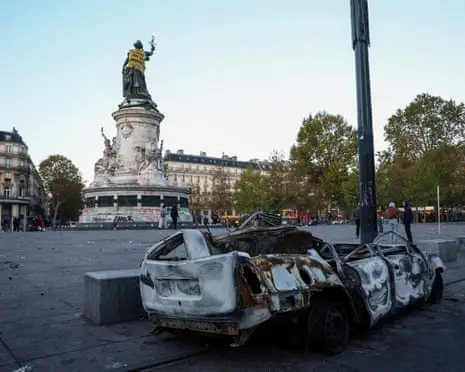
As many as 550,000 people turned out across France last Saturday, according to authorities, to demonstrate against declining public services. Protests turned violent in Paris as shops were looted and cars set on fire in some of the city’s worst violence in years.
France is now bracing for another weekend of unrest, despite curfews imposed across the country and an 11th hour meeting between president Emmanuel Macron and high school unions on Friday to hear out their concerns and demands.
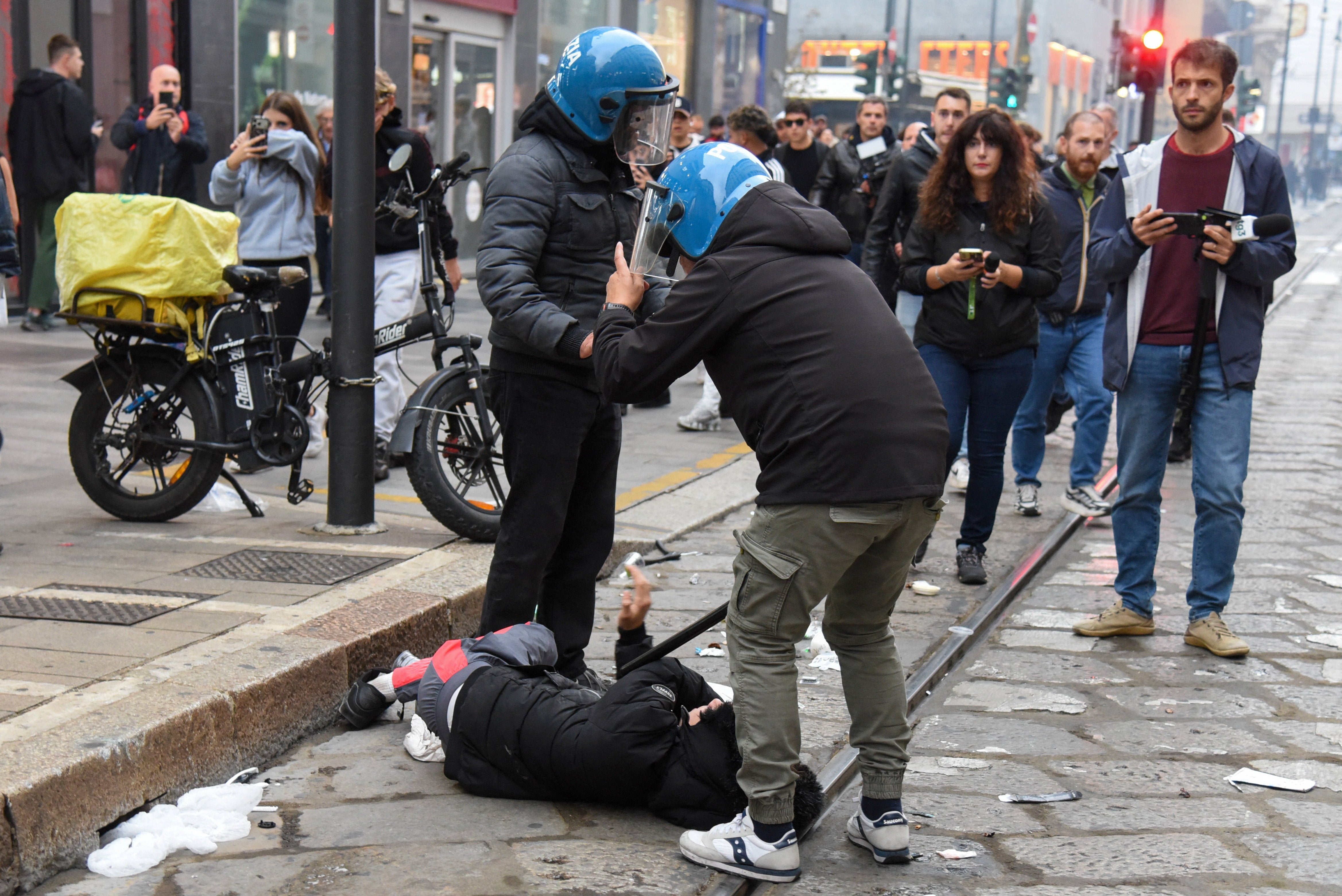
Italy has approved a raft of new security measures including a new offence of violent participation in a demonstration, tougher penalties for rioters, and financial liability for parents whose children take part in vandalism and looting, following tumult in Milan last weekend.
Gangs of mainly young people went on the rampage, smashing windows, robbing shops and attacking police in northern Italian cities. Police used water cannon and teargas to break up the crowds after some masked rioters clashed with authorities and set off fires.
Tens of thousands of people also marched through central Lisbon in protest of the soaring cost of living and a deepening housing crisis, echoing weeks of demonstrations in Spain that prompted prime minister Pedro Sanchez to call a snap general election.
More than a dozen people were injured in violent clashes between rioters and police in northern Spain this week as anti-fascist protests spiralled out of control, in the latest instance of civil unrest sweeping the continent.
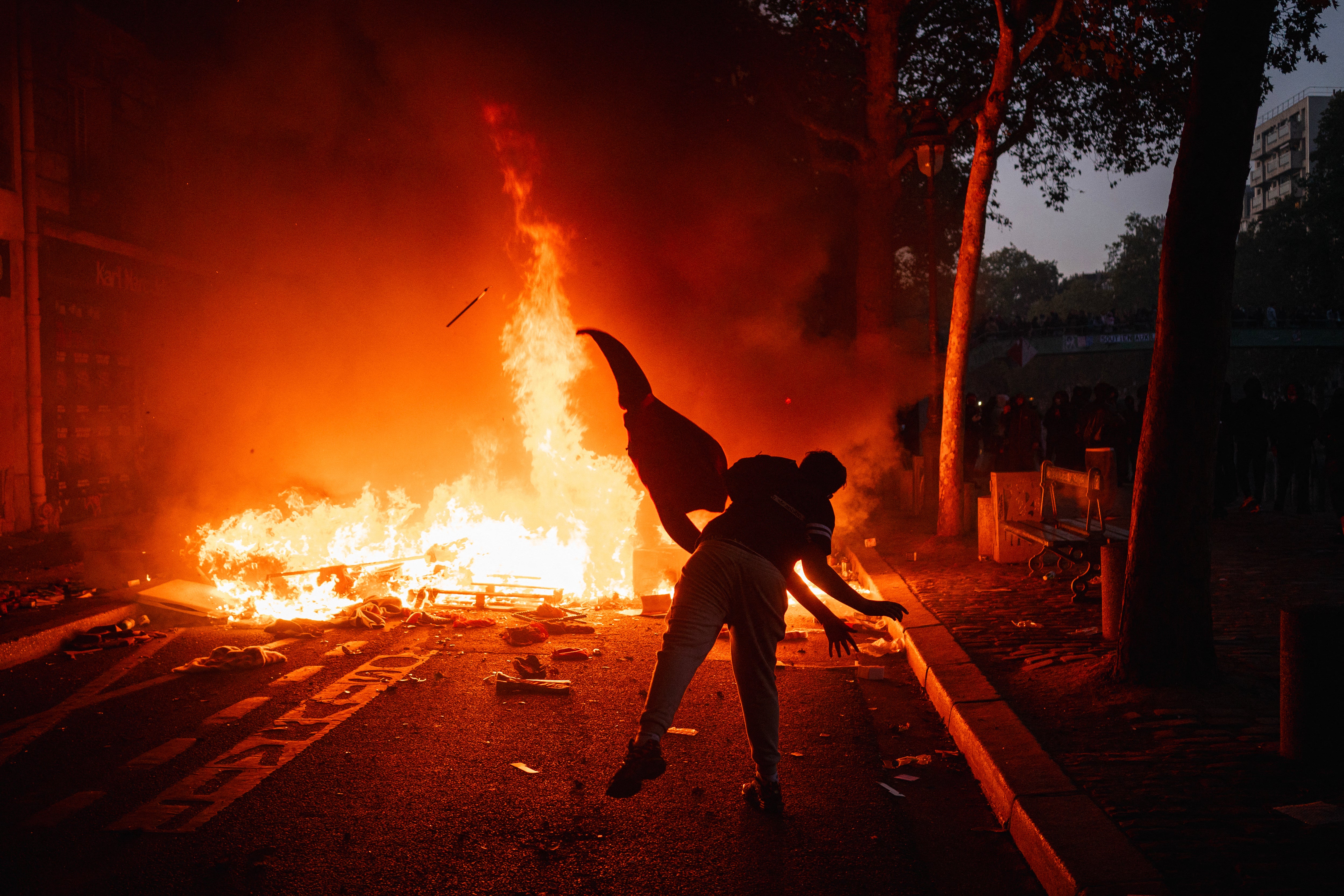
Here we look at the factors behind the protests sweeping the continent and the latest developments:
France
As many as 70,000 police and gendarmes will be mobilised throughout France to keep order on Saturday, with unions and political parties calling for renewed anti-government protests, after demonstrations last week led to curfews in several cities and thousands of arrests.
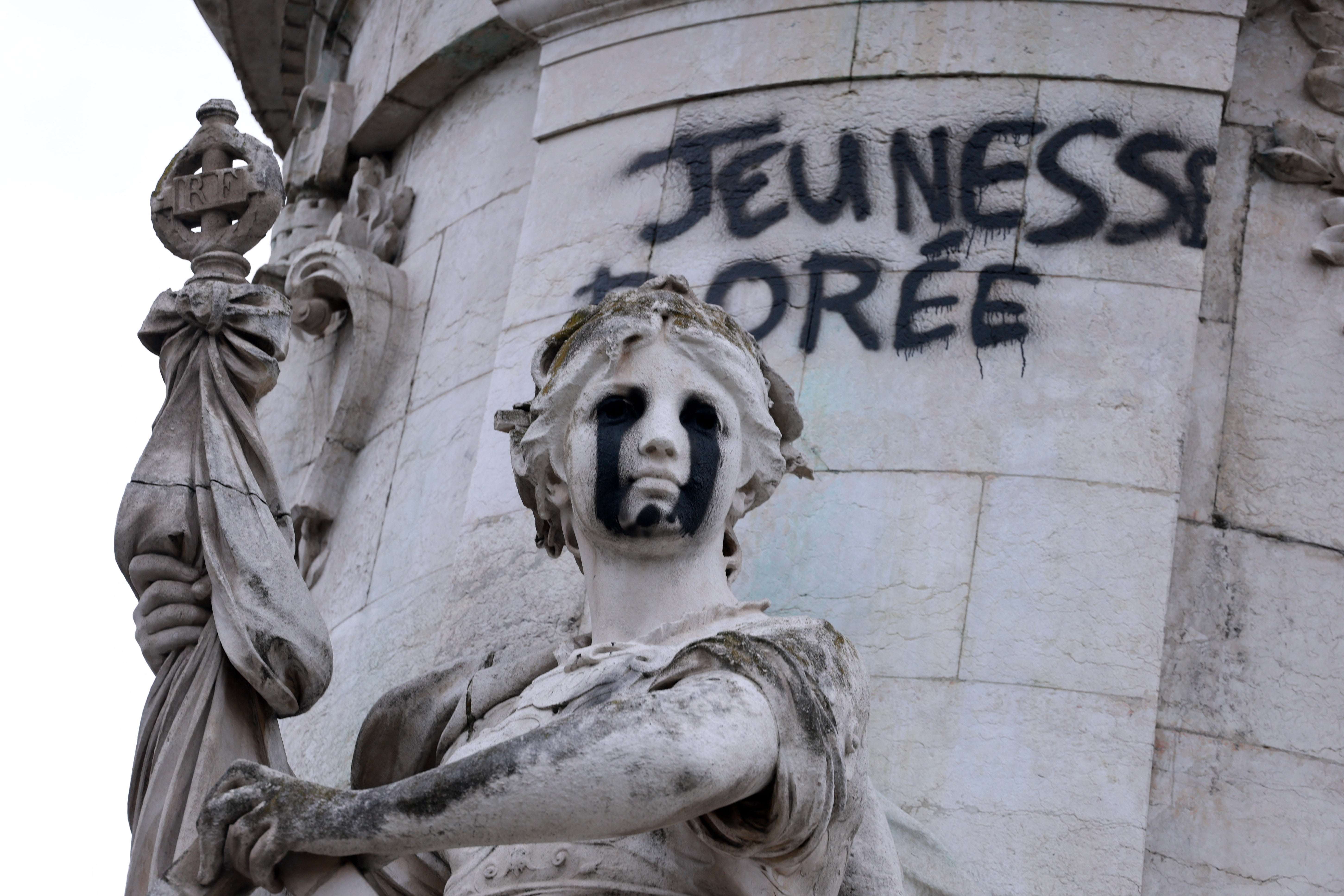
Protests erupted last month in response to the perceived state of decline in schools, with students aggrieved by teacher shortages, overcrowded classrooms and crumbling infrastructure. They have since ballooned into sweeping nationwide rallies, which last weekend descended into rioting, vandalism, arson and looting.
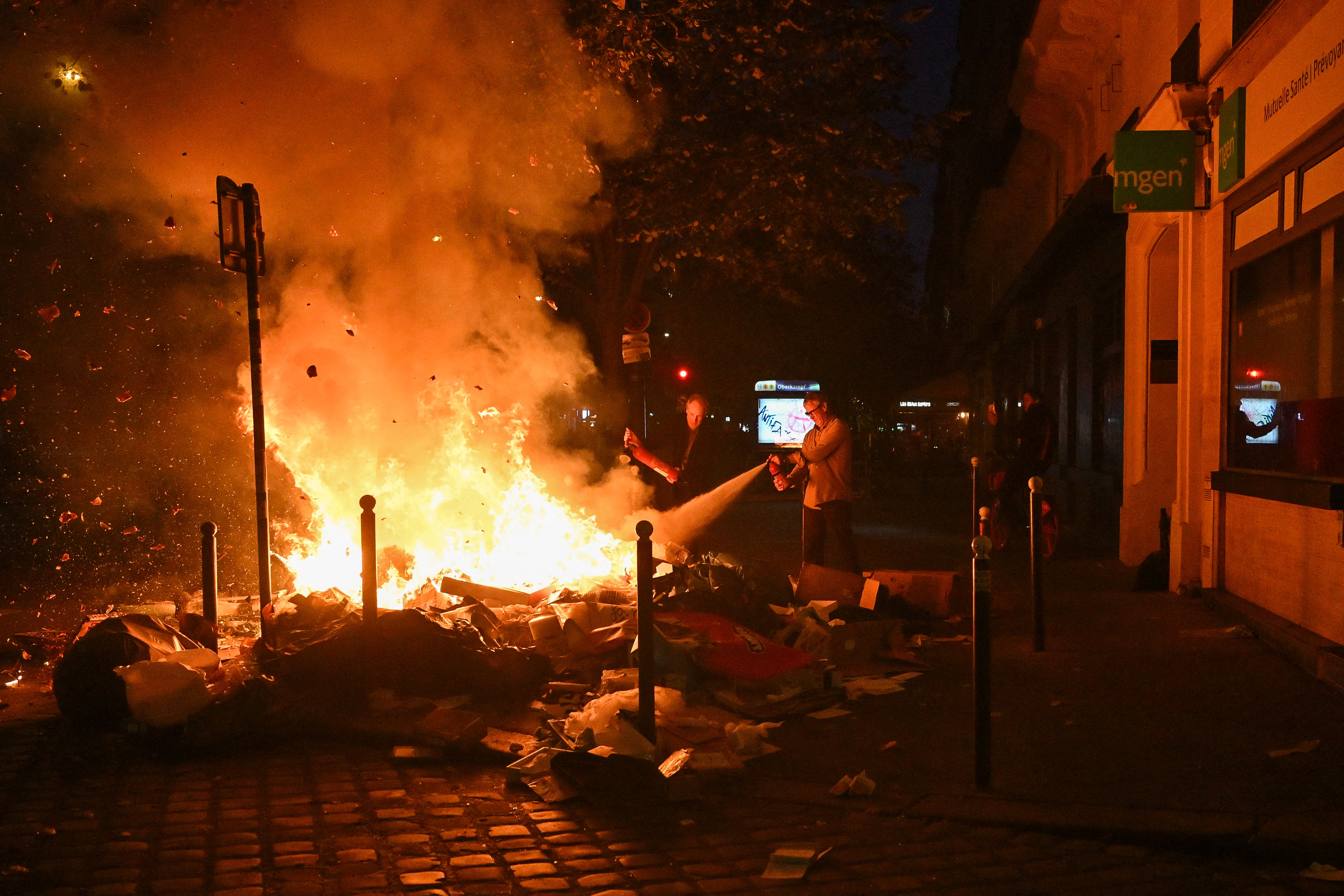
President Macron vowed on Thursday to ban all demonstrations not organised by unions, while Paris was to extend its nighttime curfew until Monday, but major events were still planned for the weekend.
France's justice minister Gerald Darmanin said on Thursday that 2,700 people have been taken into police custody since last Saturday in connection with riots and looting, as authorities respond to the ongoing unrest in France.
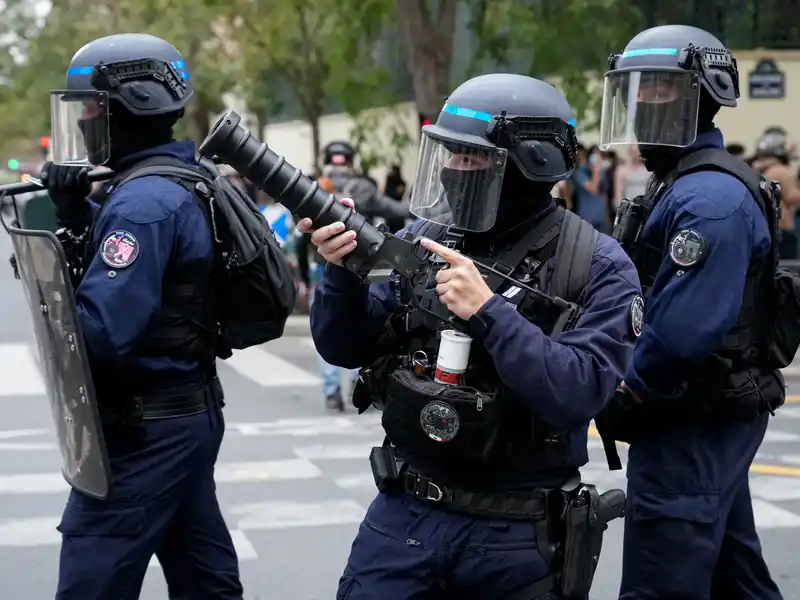
Police are under pressure to maintain security during further protests expected in some cities, while facing scrutiny over their riot-control tactics used during previous unrest that left some teenagers seriously injured.
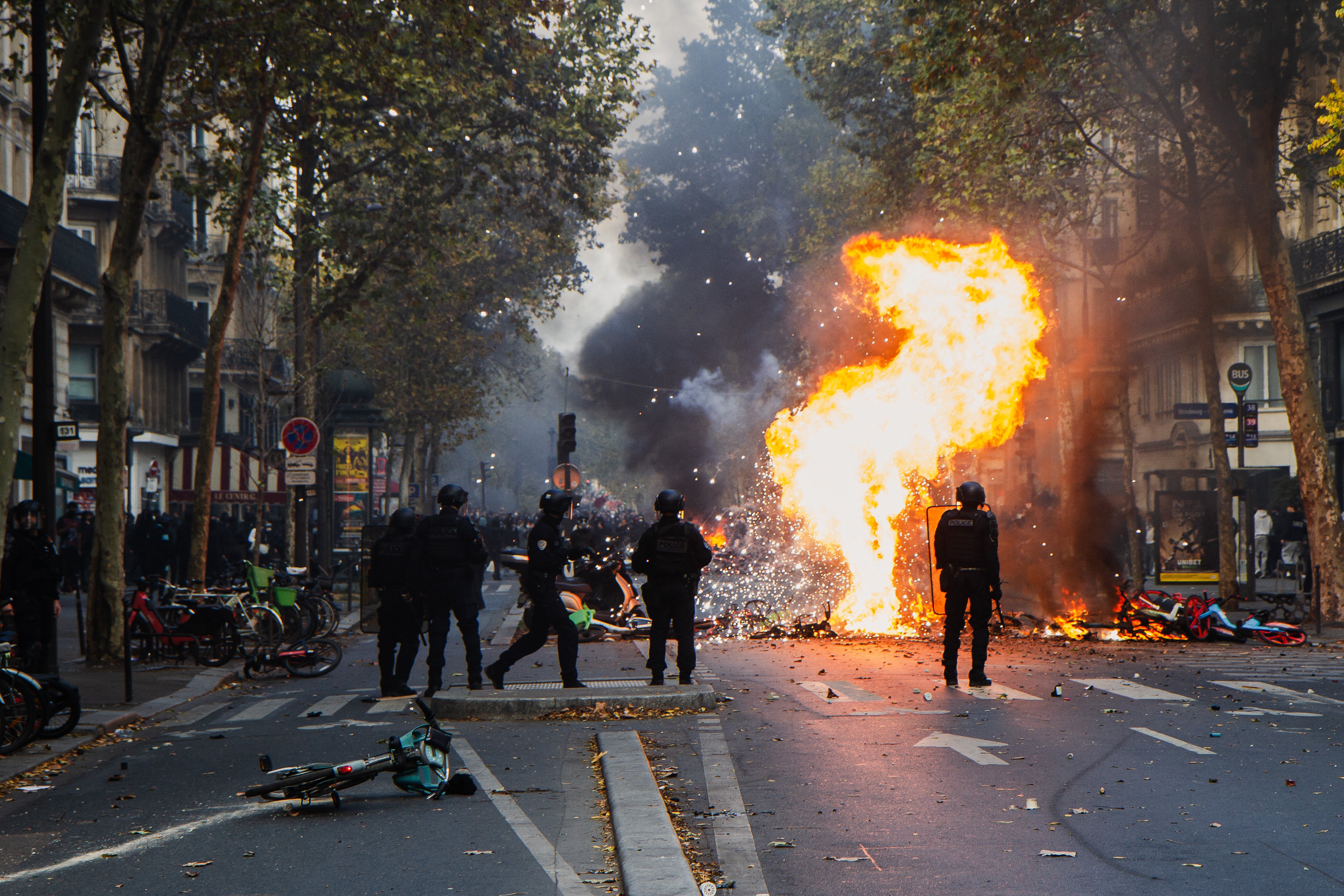
A 17-year-old girl lost an eye while participating in a protest in Mulhouse last Saturday, while a 17-year-old boy lost a hand in Saint-Etienne. Other teenagers have suffered disabling injuries during weeks of high school blockades and street demonstrations. One protester died after suffering a cardiac arrest during demonstrations in the capital.
Authorities said more than half a million people turned out to march last Saturday, including 110,000 in Paris alone. Organisers put the figure closer to 800,000. While hundreds of thousands protested peacefully across France on Saturday, violent fringe groups targeted public buildings, looted luxury boutiques and supermarkets, and attacked police vehicles and officers.
Spain
Tens of thousands of people have turned out across Spain in recent weeks following the eviction of 87-year-old Maria del Carmen Abascal, known as Maricarmen, from her Madrid home.
The pensioner was forcibly removed from her flat of 70 years after the property was bought by the investment firm Urbagestion, which tried to increase her rent by 230 per cent. She died suddenly in early October, two weeks after she was evicted.
Maricarmen’s death reinvigorated a movement long frustrated by home shortages and surging rents across the country.
Socialist prime minister Pedro Sanchez last month called a snap general election for 29 November after parliament rejected his government’s proposals to address a mounting housing crisis.
Several people who received eviction orders have taken their own lives in Spain in recent months.
Spain's minimum wage is €1,221 (£1,025), while the average monthly rent for an 80-square-meter apartment is around €1,130 (about £949), according to an analysis by the business newspaper Expansión.
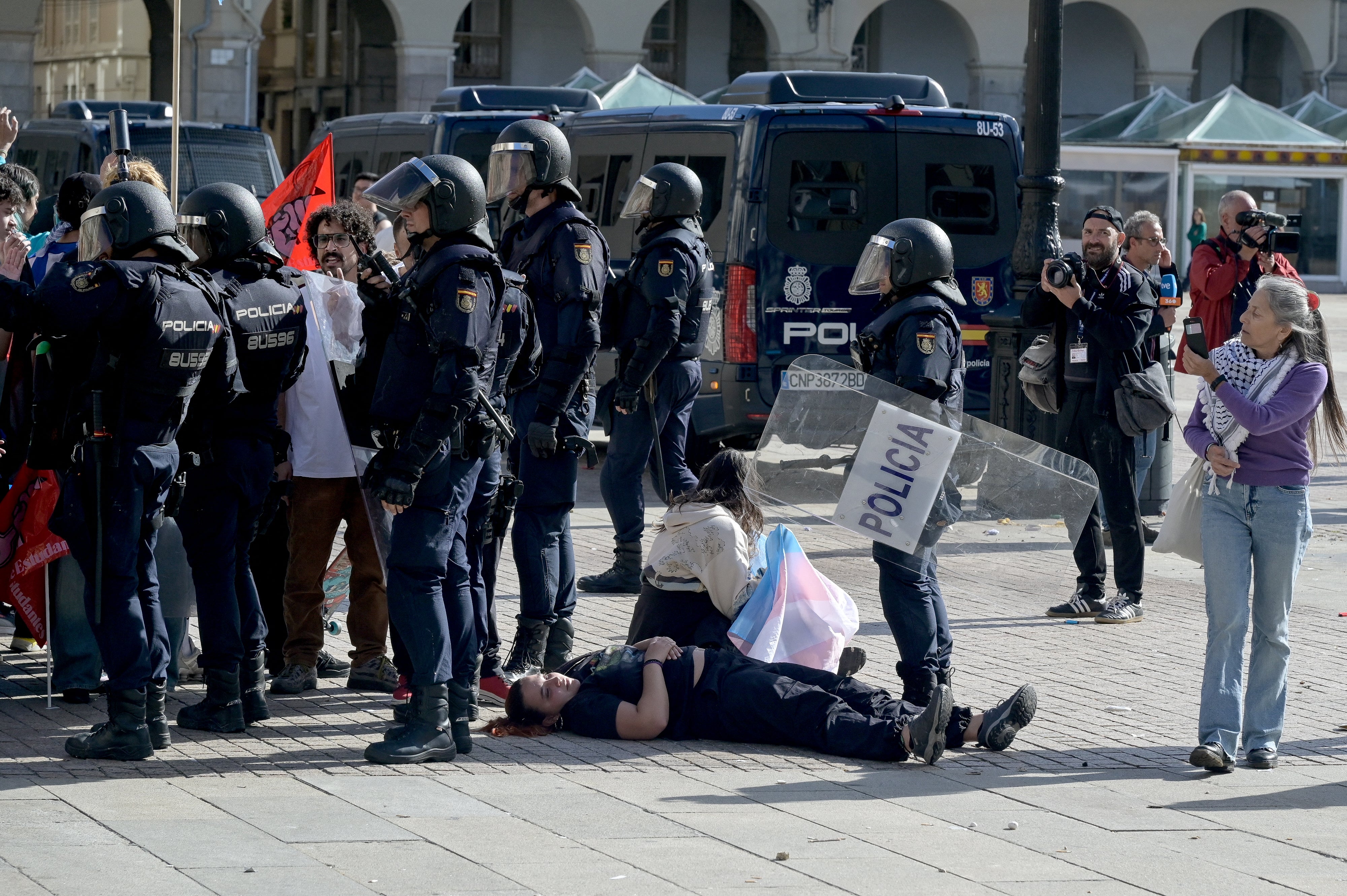
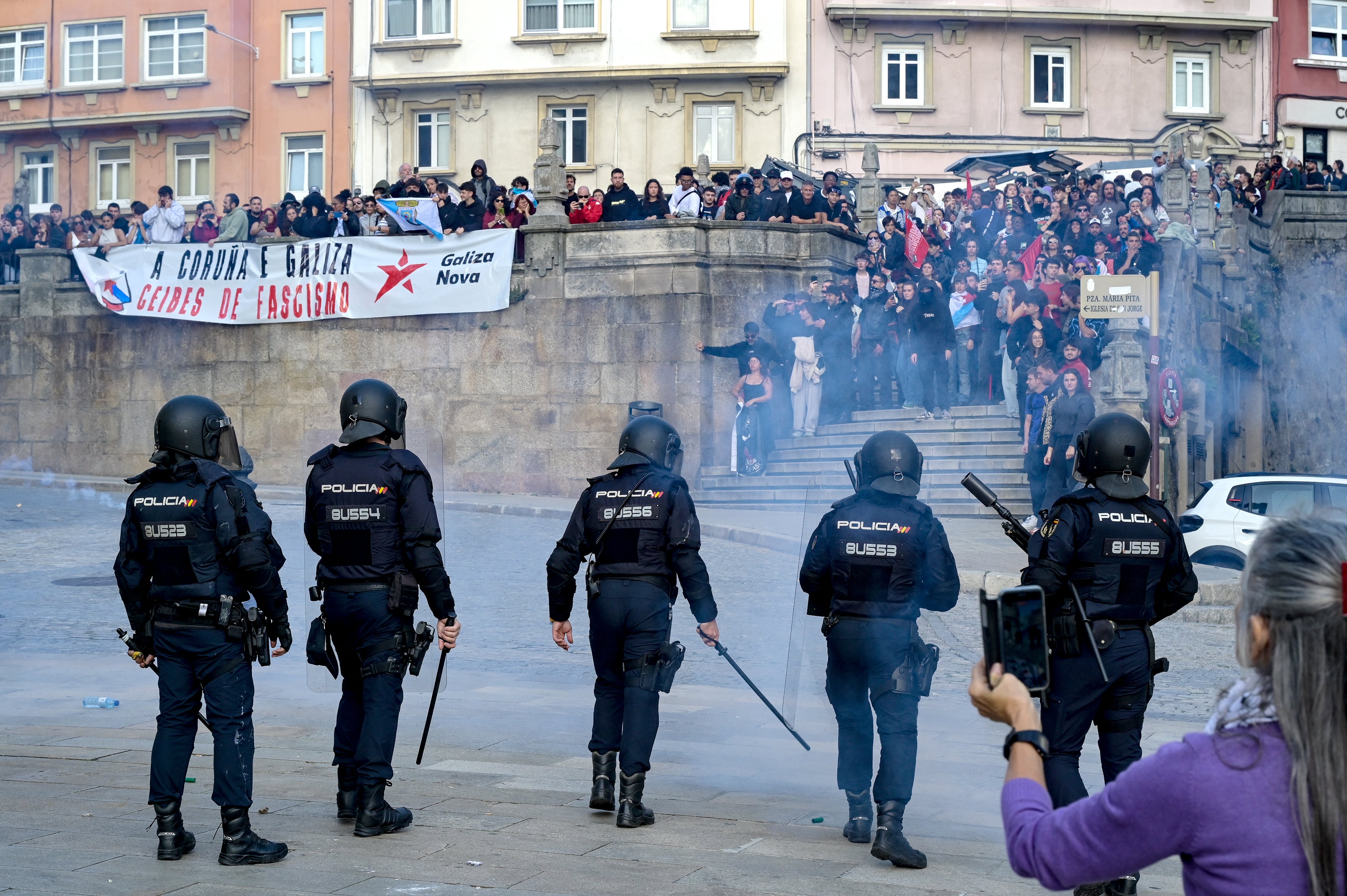
Unrelated clashes erupted in A Coruña, in Galicia, on Wednesday as thousands turned out to protest the visit of politician Santiago Abascal, the president of Spain’s far-right populist Vox party.
Tensions exploded towards the end of Abascal’s speech in the Plaza de María Pita as protesters threw eggs and police repeatedly charged in a bid to disperse the activists, some of whom threw stones and chairs back.
The fracas escalated as masked individuals near the Teatro Colón then began throwing flares and fireworks at police, who responded with a charge, according to La Voz de Galicia.
Italy
“Italia in Piazza,” or Italy in the Streets, has galvanized thousands of demonstrators against crumbling public services and the rising cost of living.
Milan police clashed on Sunday with protesters throwing stones and looting shops. Meanwhile, police in riot gear fired teargas and used water cannons after several hundred hooded protesters broke shop windows and set bins on fire in the area near central Piazza Duomo, sources told Reuters, adding that more than 60 protesters had been detained for checks.
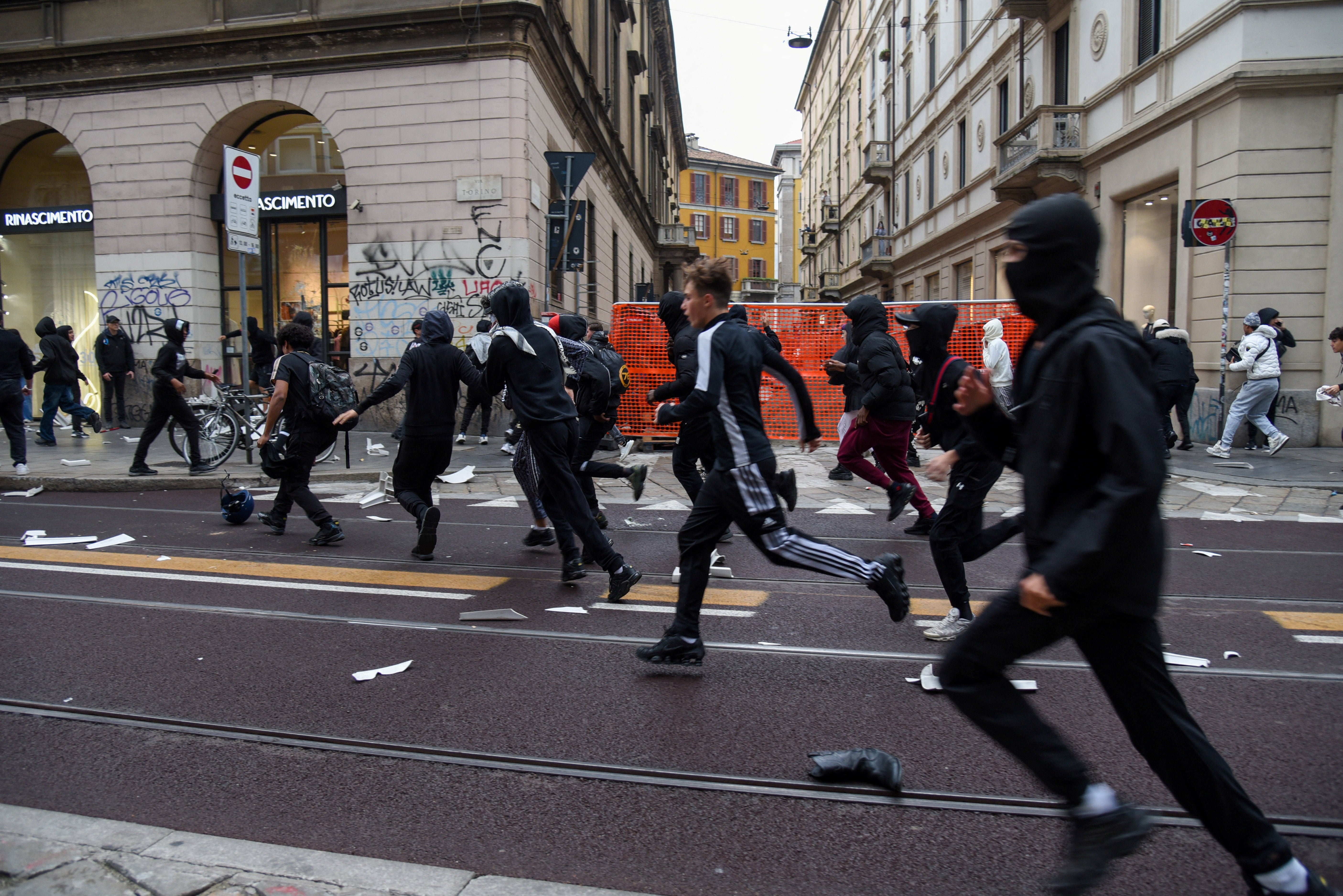
A total of 28 protesters were arrested after similar clashes erupted on Saturday in northern cities including Milan, Bologna, Brescia, Bergamo and Turin, according to a police report on Sunday.
Ms Meloni, facing an election next year, condemned the violence and announced a government meeting on Monday to discuss how to address the situation.
Now a newly formed group calling itself the “17 October Movement” has announced what it describes as a “permanent mobilization” to demonstrate every Saturday at 3 p.m. in cities across Italy.
Portugal
Fifty-five people were arrested as Portuguese police dismantled housing crisis protest camps in the central squares of Lisbon and Porto before dawn earlier this month.
Activists pitched roughly 200 tents in Lisbon’s Rossio square last Saturday, while Porto’s Dom Joao I square had been occupied for 10 days. Protesters say low wages are failing to keep pace with housing costs and the rising cost of living, leaving many people struggling to make ends meet.
Portugal faces an acute housing affordability crisis, where buying costs have more than doubled since 2017 and new lease rents have almost doubled.
Urban areas feel the greatest strain, compounded by backlash against excessive tourism and digital nomads. Activists want the centre-right government to drop a bill easing evictions and removing rent caps on new leases, which passed its first reading after the far-right Chega party abstained.
Tens of thousands of people also marched through central Lisbon on Saturday. Portugal's biggest union, CGTP, which called the rally, said “many tens of thousands” packed one of the capital's main avenues.
Portugal’s inflation hit 3.6 per cent in September, driven by rising food and fuel prices, the latter up 15 per cent year-on-year following an increase in tensions in the Middle East.
Albania
Anti-government protests have stretched over a week in Albania's capital of Tirana, with clashes escalating after high school and university students joined the broad anti-government “Flamingo” movement calling for Socialist Prime Minister Edi Rama to resign.
Rama has condemned the protesters as “ideologised and radicalised” by antifa, an umbrella term for loosely organised far-left militants in the United States, where President Donald Trump has designated the movement a terrorist organisation.
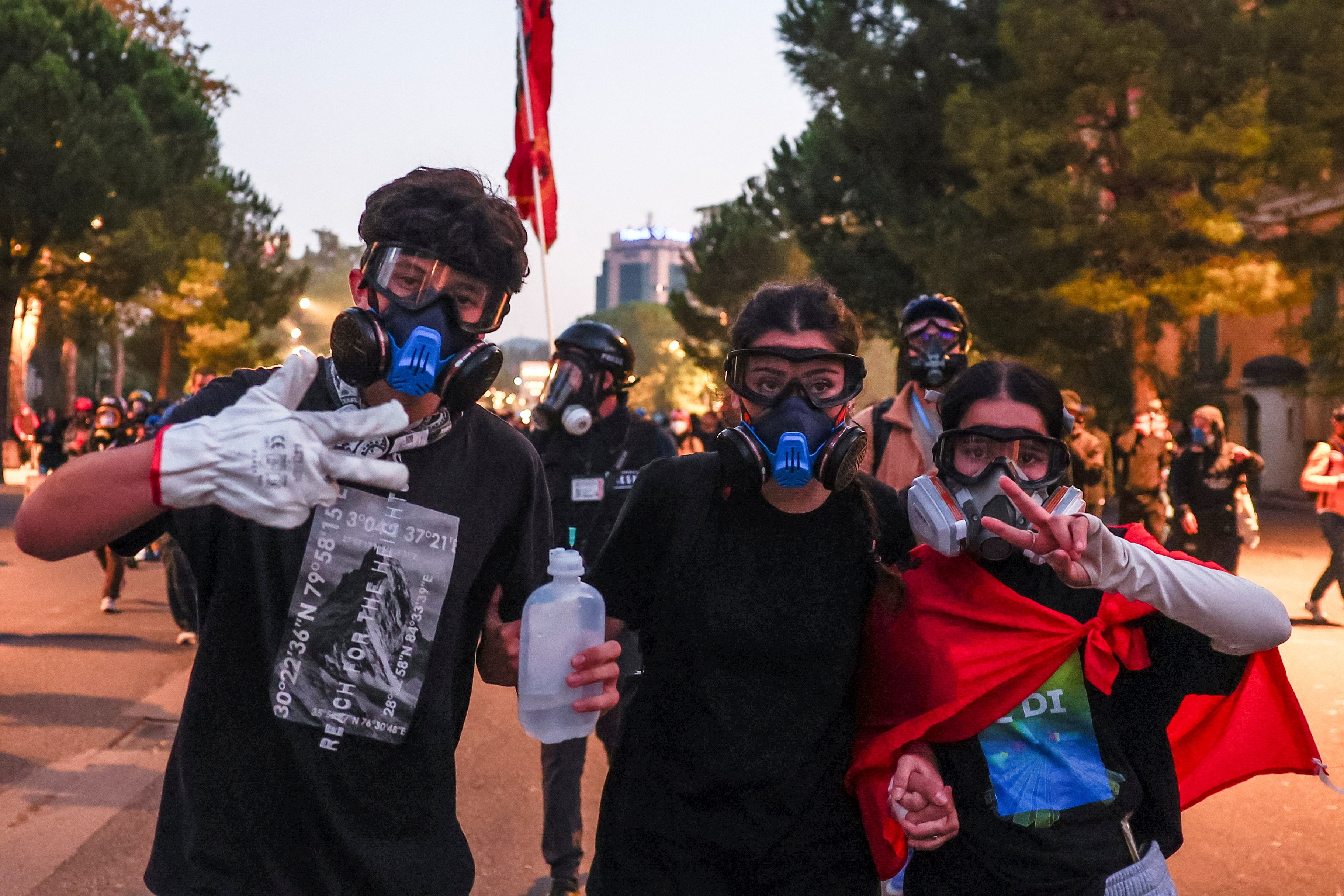
Ending corruption is a major demand of the movement, which was named for the natural habitat of flamingos in an area where Rama's government agreed to allow a major luxury tourism development linked to Jared Kushner, Trump's son-in-law. They also want protections for healthcare, education, and public pensions, according to its website.
Serbia
Tens of thousands of people are expected to march in Serbia’s capital Belgrade on Thursday as part of an election rally led by student activists.
For nearly two years, Serbian university students have driven mass anti-corruption protests. Now they share a broader aim: defeating the nation's powerful populist leader Aleksandar Vucic in this weekend's early parliamentary election.
Following the 25 October vote, the former authoritarian president is seeking a return as prime minister to extend his right-wing party's 14-year rule. Having previously rattled the populists during their demonstrations, Serbia's youth movement is the sole barrier in his way.
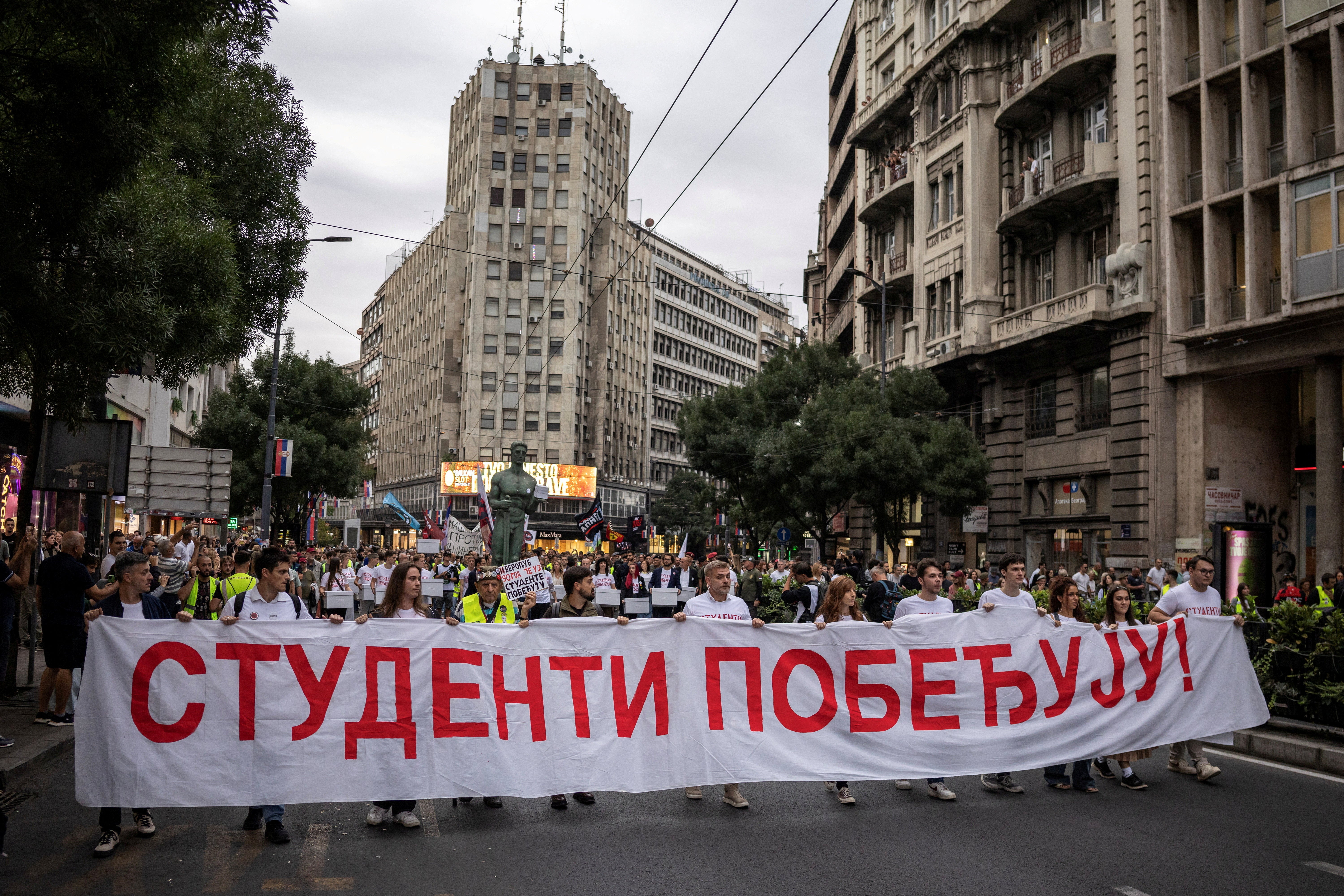
Unlike high school students in France who are rallying for better education, Serbia's student movement started out as a struggle for justice after a train station tragedy in the country's north killed 16 people in November 2024. The students' call for accountability for the deaths, which they blamed on rampant corruption, found widespread support. Protests spread, forcing a government collapse and rattling Vucic.
Much is uncertain ahead of Sunday's vote. Tensions remain high alongside the stakes. Vucic's Serbian Progressive Party, or SNS, and the student-supported Students' List are thought to be running close, leaving the outcome uncertain and raising fears of potential violence.
Related Articles
- World News
France to deploy 70,000 police on Saturday to prevent civil unrest
- World News
One person killed in suspected ‘Islamophobic’ shooting near Paris
- World News
France prepares for day of protest a week after nationwide riots
- Stock Markets News
France’s luxury stores board up windows ahead of fresh protests
- World News
France on edge with 70,000 police deployed for unrest as authorities probe suspected terror attack near Paris