Taiwan's opposition fends off Beijing critic to hold Taipei mayoralty

Taiwan's main opposition party held key mayoral seats in Taipei, but posted significant losses elsewhere in crucial local elections on Saturday.
Chiang Wan-an of the Kuomintang (KMT), which favours closer ties with China, won nearly 54% of the vote in Taipei's keenly watched race, beating the ruling party's Puma Shen, a former activist under sanctions by Beijing.
But Shen said the outcome was still a "victory for democracy", with his Democratic Progressive Party (DPP) winning in areas seen as KMT strongholds.
The results will not impact policy towards China, which claims Taiwan as its territory, but are seen as a gauge of party support ahead of presidential elections due in early 2028.
Chiang fended off a considerable challenge from the DPP's Shen, who leveraged social media to mount an innovative campaign focused on local issues, including affordable housing and public transport.
The DPP has not held the Taipei mayor position for nearly three decades, so a victory for Shen, a former civil defence activist, would have been a major upset.
Conceding defeat, he said: "There will be times we succeed, and there will be times we fail, but we will carry forward Taiwan's courage and spirit, it will not decline."
"It's a shame," one Shen supporter at his campaign rally told BBC Chinese. "But I think he has shown us a new way of doing politics."
In the run-up to the vote, Beijing had called Shen a "danger to stability" in the Taiwan Strait. The DPP was also repeatedly targeted with AI videos spreading false claims about Shen and the party leader, President Lai Ching-te, BBC Verify found.
Deepfakes appeared to show Shen using drugs, while others sought to undermine or ridicule politicians by showing them in children's clothing.
The Chinese Communist Party refuses to engage with the DPP, which it views as separatists.
Although bread-and-butter issues were the focus of local elections across Taiwan, they took place against a backdrop of persistent military pressure from Beijing, which routinely encircles the island with fighter jets and warships.
Beijing has "dodged their worst nightmare" of having Taipei run by the DPP and Puma Shen, said William Yang, Senior Northeast Asia Analyst at the International Crisis Group.
In its first statement since the vote, China's Taiwan Affairs Office said: "No matter how Taiwan's political landscape changes... It cannot stop the historical trend that the motherland must and will inevitably be reunified."
Speaking through tears at his own campaign event, Chiang said that the residents of Taipei had used their vote "to endorse the city government's performance".
He added that the result showed that a "silent majority" in Taipei wanted "stability, prosperity and practical solutions to problems, rather than political noise and division".
A Chiang supporter told BBC Chinese: "I feel really emotional... The last four years were only his first term, so we needed to get him re-elected so he can continue his policies."
However, Chiang triumphed with a much-reduced majority from his initial victory four years ago, when he won with more than 67% of the vote.
His reduced majority underscores a challenging picture for the KMT across Taiwan, which was defeated in areas historically considered strongholds for the party.
The party lost in the central city of Taichung, whose outgoing KMT mayor, Lu Shiow-yen, had served a maximum eight years in office and is considered a leading contender for her party's nomination for president.
Liu's inability to hand her Taichung mayor role to a KMT successor will jeopardise her chances of securing her party's nomination, as well as exacerbating party infighting, Yang said.
"Beijing will have to closely monitor the power struggle in the KMT in the coming months and then determine whether they need to recalibrate their approach toward dealing with the 2028 presidential election," Yang said.
Incumbent DPP president Lai Ching-te, who Beijing also views as a "separatist", is widely expected to run for a second term in the next presidential election scheduled for early 2028.
But Lev Nachman, an associate professor at National Taiwan University who researches Taiwanese politics, said the DPP not winning in Taipei does "take the wind out of [Lai Ching-te's] re-election sails".
"Interestingly, I think everyone is a little bit disappointed with the results," he said.
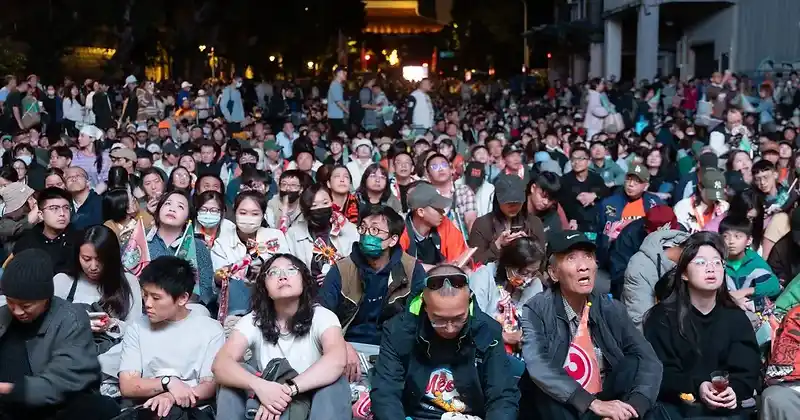
Taiwan opposition party wins re-election in Taipei mayoral race
Voters across Taiwan have cast ballots for mayors, council members and other local leaders.
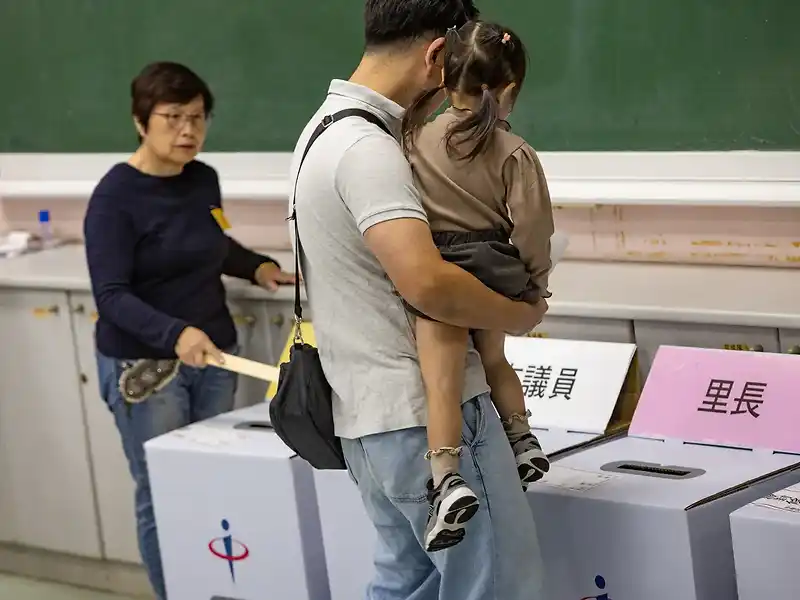
Taiwan votes in local elections to choose mayors, other leaders
Key mayoral race in Taipei, a stronghold of the opposition Kuomintang, tests the governing Democratic Progressive Party.

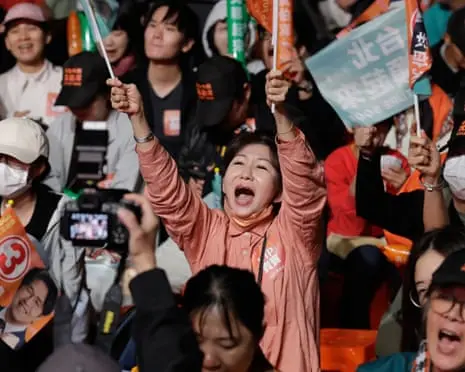
‘Victory for democracy’: Taiwan’s ruling party secures best result in a decade
DPP nearly doubles number of constituencies it controls, with outcome expected to anger Beijing Taiwan’s ruling party secured its best result in a decade in Saturday’s local elections, nearly doubling the number of constituencies it controls, in an outcome expected to anger Beijing. The Democratic Progressive party (DPP) won at least nine of Taiwan’s 22 mayoral and county magistrate races, up...