Russia bombs humanitarian hub in Ukraine, killing at least 31 people


Other overnight strikes targeted power plants across Ukraine, damaged hospitals and wounded scores of people Russia has bombed a humanitarian hub in southern Ukraine, killing at least 31 people and leaving dozens missing, as part of a wave of strikes across the country. Other overnight Russian strikes targeted power plants across Ukraine, damaged hospitals and wounded scores of people, as...
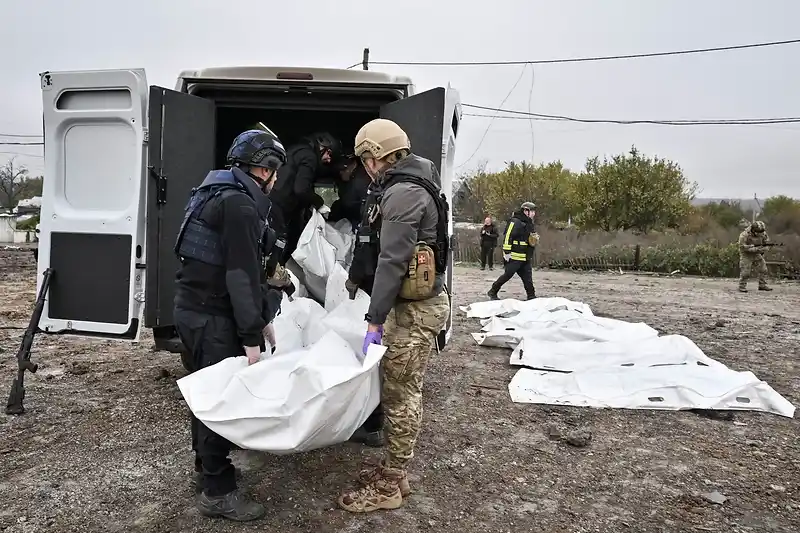
Russia has bombed a humanitarian hub in southern Ukraine, killing at least 31 people and leaving dozens missing, as part of a wave of strikes across the country.
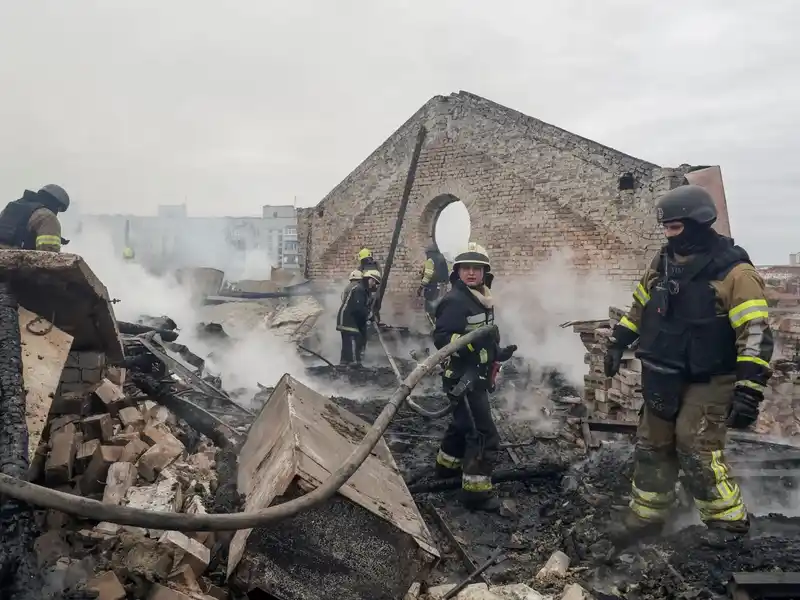
Other overnight Russian strikes targeted power plants across Ukraine, damaged hospitals and wounded scores of people, as Volodymyr Zelenskyy warned that the US was distracted by its midterm elections.
In total, Russia had launched 289 attack drones, 17 ballistic missiles and 59 cruise missiles across nine regions, triggering emergency power cuts, the Ukrainian president said in an online post.
“The Russians think America won’t notice this signal of theirs,” he said. “But we need to notice and stop such terror. We need to help Ukraine defend its skies; otherwise, Russia will never stop its missile strikes.”
The barrage came just a day after a rare local ceasefire in neighbouring Kherson ended, underscoring the limits of the temporary truce.
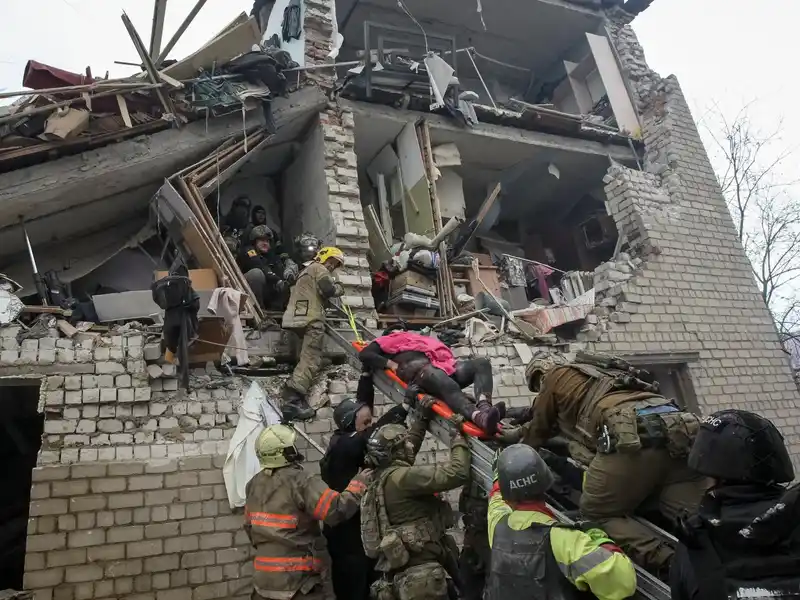
The deadliest guided-bomb attack first targeted a school building used to distribute humanitarian aid in Komyshuvakha, a village in Ukraine’s southern Zaporizhzhia region, and then took aim at a nearby shelter.
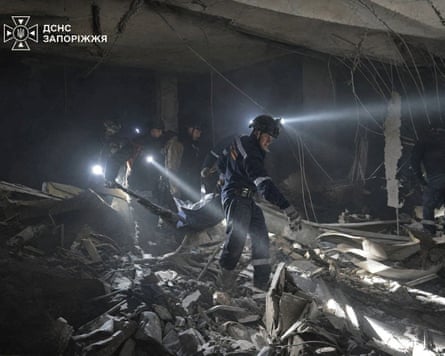
The dead included four police officers and two rescue workers, Mykhailo Semikin, acting head of the regional military administration, said on Tuesday. At least five people were hurt. Semikin said 48 people were considered missing.
As night fell in Komyshuvakha, emergency responders used torches to search through the rubble of collapsed buildings, according to photos and video posted online by local officials.
Efforts to rescue people on Monday evening were hindered as Russian drones launched additional attacks in the area that had been bombed, according to Mykhailo Semikin, a military official in Zaporizhzhia.
Zelenskyy said the Russians could not have been unaware that residents remaining in Komyshuvakha gathered each week to pick up humanitarian packages from the site.
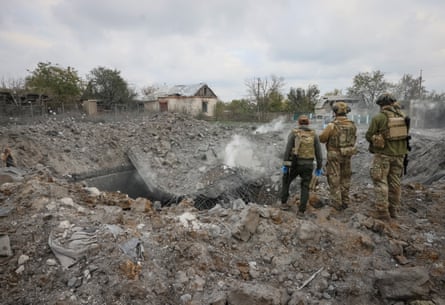
The attack, he said, had shown that Moscow was intent on killing people instead of building on the past week’s ceasefire in the embattled southern city of Oleshky, brokered by US first lady Melania Trump.
“Russians continue to demonstrate, time and again, their hatred of Ukraine and everything that exists here,” Zelenskyy said.
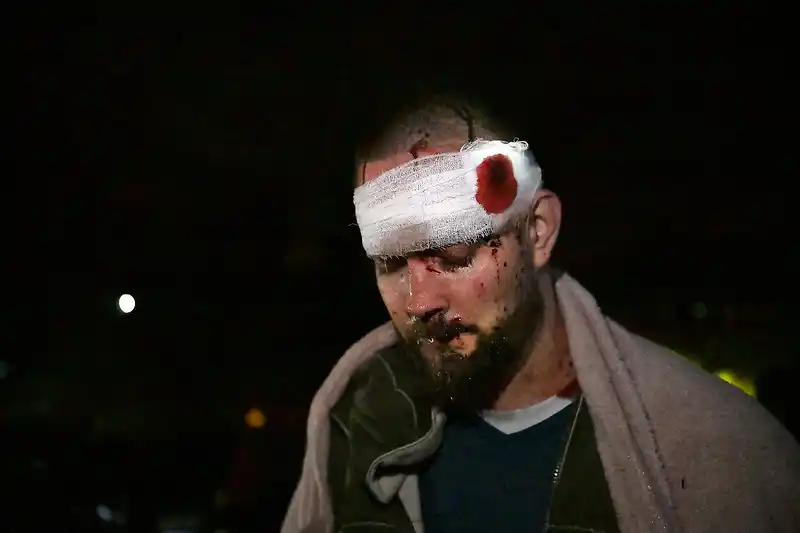
In the north-east region of Kharkiv, a combined Russian missile and drone attack had wounded at least 62 people, local authorities said. A strike damaged a medical facility in the Nemyshlianskyi district, shattered windows in four apartment buildings and damaged cars. More than 200 patients had been transferred to other medical facilities, said the head of the regional military administration, Oleh Syniehubov.
“If Russia genuinely wanted de-escalation, there was an opportunity following the situation in Oleshky to continue taking humanitarian steps. We proposed this. But Russia continues to kill people,” Zelenskyy said.
The ceasefire last week enabled an evacuation of the Russian-occupied Oleshky. It was the longest pause in fighting between the neighbours in the war, now in its fifth year, which has killed hundreds of thousands of people and displaced millions.
The Kremlin said that no other similar missions were being planned “at the moment”.
US-led talks between Russia and Ukraine were due to resume next week, the US special envoy Steve Witkoff said on Monday.
Donald Trump, who pledged during his election campaign to end the war in a single day, has repeatedly pushed for a settlement but has so far failed to secure a breakthrough.
The latest round of talks is scheduled for 10-11 November in Abu Dhabi, according to Witkoff, amid growing concerns in Kyiv and among its European allies over Trump’s increasingly close ties with Moscow and discussions of potential business deals between the US and Russia.
Russia announced on Tuesday that its delegation would be led by Vladimir Medinsky, a hardline former culture minister who has headed several previous rounds of negotiations with Ukraine.
Medinsky’s earlier appointment as chief negotiator was met with scepticism by Ukrainian officials and analysts, who questioned whether he had the authority to make meaningful concessions. A key architect of the historical revisionism used by Putin to justify his invasion of Ukraine, Medinsky has long promoted the Kremlin’s narrative that Ukraine is inseparable from Russia.
Zelenskyy, meanwhile, arrived in Berlin for talks with German chancellor Friedrich Merz. Germany has become Ukraine’s largest provider of military aid since Merz took office in May 2025, overtaking the US as American support has declined.
The Ukrainian president is also expected to attend this year’s Berlin Security Conference.
Reuters and Agence France-Presse contributed to this report
Related Articles
- World News
Russian strike on school kills at least 31 in Ukraine village
- World News
At least 73 injured as Russia bombs Ukrainian hospital and power plants
- World News
Putin targets civilians in barbaric ‘safari’ attacks as Trump turns blind eye
- World News
Russia drops cluster bombs on Ukraine as Kyiv consolidates front line
- World News
Melania Trump-brokered Ukraine cease-fire begins two days early