Race hate exploded in this Spanish town last year. Now its residents are bracing for more
Torre-Pacheco’s diverse communities are fearful that the far-right Vox party will enter government after Sunday’s election Sitting on a park bench, taking in the sunny day, Naima reflected on all that had seemingly changed since she moved to Spain three decades earlier. Back then, the Moroccan national had felt warmly welcomed by Spaniards. “I had never, at any point in my life, felt like there...
Sitting on a park bench, taking in the sunny day, Naima reflected on all that had seemingly changed since she moved to Spain three decades earlier.
Back then, the Moroccan national had felt warmly welcomed by Spaniards. “I had never, at any point in my life, felt like there was racism,” she said. “But now things are changing. And the blame lies with rightwing politics.”
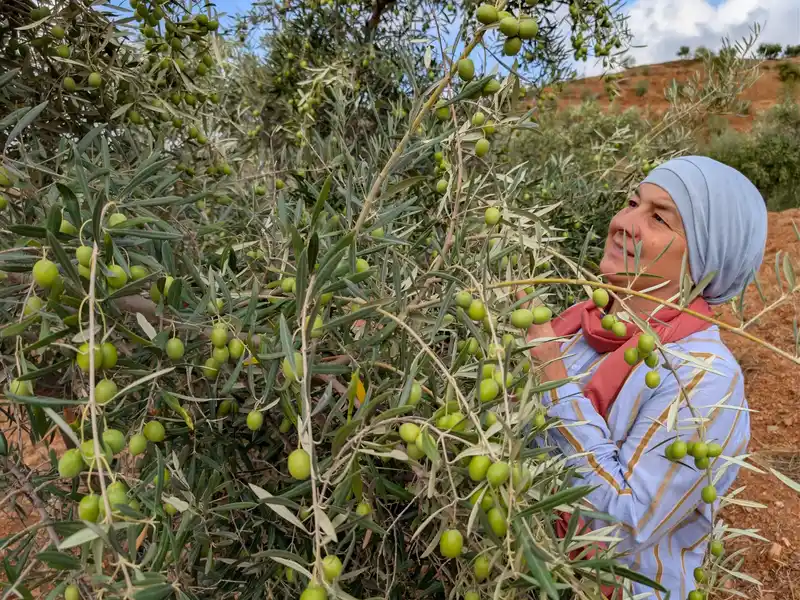
Over the years, she has steadily watched as a growing crop of politicians sought to win votes by demonising migrants, minorities and Muslims. The impact reverberated deeply in places such as Torre-Pacheco, whose fertile fields and constant demand for farmhands has long attracted workers from around the world.
“They peddle racism, and lots of people end up suffering,” said Naima, 53. “Here everyone knows me, but others speak of being treated differently, looked at in a certain way, or having gestures made at them.”
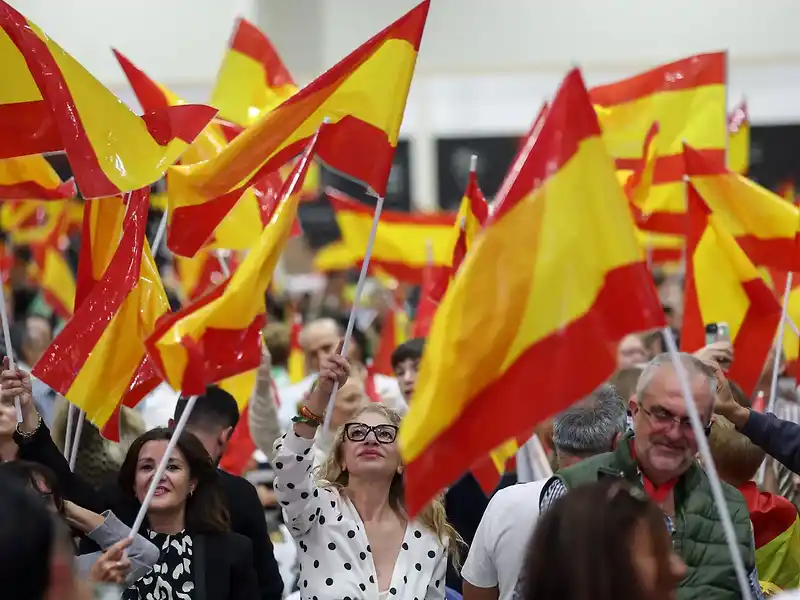
On Sunday, Spain is set to gain a glimpse of how deeply engrained these divisions have become as voters cast their ballots in a snap general election.
Most polls suggest the government of the Socialist leader, Pedro Sánchez, will be replaced by a rightwing coalition led by the conservative People’s party (PP) and supported by the far-right, anti-immigration Vox party. If so, it will be the first time that a far-right party has governed Spain since the return to democracy after the death of General Franco.
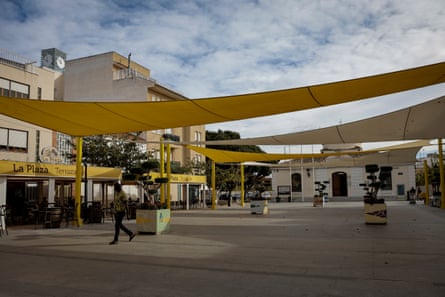
The possibility has left many in Torre-Pacheco, where migrants make up at least 30% of the 42,000 residents, worried about what comes next, according to cafe owner Allal Abourayane. “A lot of people are afraid of Vox,” he said. “They’re worried about what the party will mean for their children’s futures.”
In the lead-up to Sunday’s vote, the far-right party has pointedly targeted people from north African countries, announcing plans that include revising the nationalisation of more than 300,000 people of Moroccan origin and limiting the number of pupils from “other cultures or with insufficient command of Spanish” in classrooms.
Other Vox initiatives have more broadly targeted all migrants, such as a promise to impose a tax on remittances similar to the one launched last year in the US by Donald Trump’s administration. Last year, a party official briefly floated the idea of deporting up to 8 million people of foreign origin, including the children of immigrants, before the party backtracked. In September, another official reportedly told the country’s major corporations of plans to lower the cost of housing by expelling 1.5 million migrants.
The PP has responded by hardening its discourse, with promises to bar the burqa and niqab in public spaces and expand the process of residency renewal to include Spanish language tests and constitutional knowledge questions. This sparked wider questions as to what this could mean for some British or American pensioners and digital nomads living in Spain.
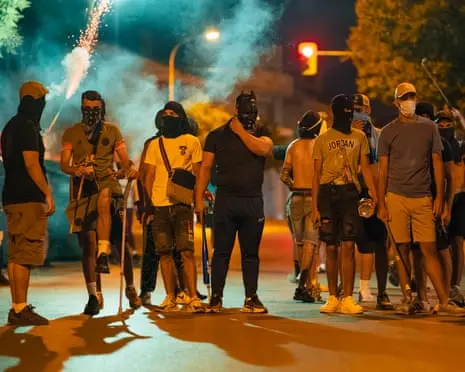
On the tree-lined streets of Torre-Pacheco, many were swift to point to the risks of this discourse. They speak from first-hand experience: the Murcian town made headlines last year when extremists from across Spain arrived, intent on exacting revenge after reports of an assault on an elderly man.
The pensioner had told local media he believed his attacker was of north African origin. This sent racist messaging on social media rocketing by 1,500%, according to tracking by the central government.
In Torre-Pacheco, locals watched in shock as the hatred leapt off social media platforms and on to their streets. As baton-wielding groups roamed the town for two nights, determined to “hunt” down people with foreign origins, the mayor called on migrants to stay indoors. Some refused, leading to clashes between the extremists and small groups of residents, at times carrying Moroccan flags.
At least 10 people were arrested, including three young men of north African background who were linked to the attack on the elderly man. Six Spaniards and a Moroccan national were also detained on accusations including assault, public disorder and hate crimes.

More than 16 months later, many are still coming to grips with those events. “The hatred came from the outside,” said Antonio León, a politician with the Independent party and mayor of the city from 2015 to 2023. “We’ve always lived together peacefully. People here didn’t take part in what happened, they understand the social and cultural diversity we have in this town.”
Even so, Torre-Pacheco had now become synonymous with extreme hate, he said. “The name Torre-Pacheco has been tainted. Everywhere I go in Spain, I say I’m from here, and they associate me with what happened.”
The Socialist-led central government was unequivocal in linking the events to the discourse of the far right. Its representative in Murcia, Mariola Guevara, said at the time: “We are normalising and giving space in institutions to radicalised, xenophobic, racist political organisations that constantly incite hatred and associate any kind of crime with immigration.”
As the blame game played out, those who had been targeted were left with lingering scars, said Abourayane. “Something has shifted here,” he said. “There are people who are still fearful or who don’t feel as comfortable here as they used to.”
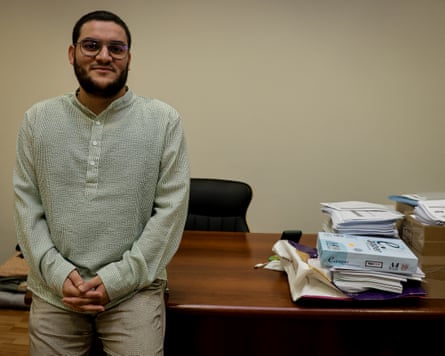
It was a hint of how things could play out if Vox ends up securing a role in Spain’s central government, said Ousama Alalo, a political scientist from Torre-Pacheco.
The region of Murcia, whose economy is deeply reliant on migrant labour to sustain its global exports of fruit and vegetables, burst into the spotlight in the 2019 general elections after Vox emerged as the most popular party there. It soon became a prominent force in the region, transforming Murcia into what analysts have described as a “laboratory” for anti-migrant policies.
“The People’s party doesn’t have the necessary majorities to govern, so they look to Vox,” said Alalo. “So then what happens? Migrants become an easy bargaining chip.”
The result was a series of measures that have targeted Muslims and migrants in Murcia, from a ban on religious gatherings in sports centres that mainly affected Muslims in Jumilla to the scrapping of an extracurricular scheme that had allowed 350 children to learn Arabic and about Moroccan culture.
“They’ve been trying and testing things again and again – everything works here in Murcia,” said Alalo, who is among a group that has sought to counter these initiatives with the launch of the Platform for the Rights of the Muslim Community in Murcia. “To them we’re an easy target, we’re vulnerable and don’t have political power.”
The discrimination coming from the top levels of the regional government has added to the challenges for a population that was already deeply marginalised, Alalo added. “Right now we’re in the neighbourhood of San Antonio, where about 60% of the population hails from abroad and the average income is €10,600,” he said – less than half the average salary in the region.
“Many of them live in deteriorating houses, there’s a lot of school absenteeism and young people who can’t see a future for themselves, all while they’re being discriminated against.”
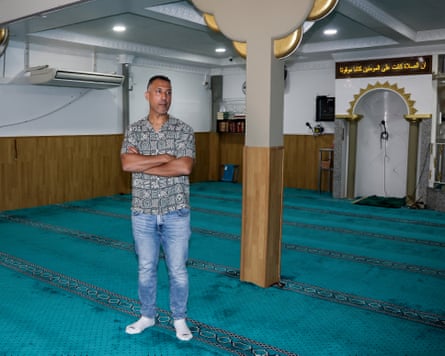
The result had left some migrants feeling as though they are waging battle on multiple fronts, according to Nabil Moreno, the president of the Al Manar Islamic Community in Torre-Pacheco.
Many were grappling with issues common across Spain, such as the soaring cost of housing, but with the added burden of being demonised by rightwing forces who seize on every conflict and every issue involving them, he said. “We’ve been in this city for 30 to 40 years, we have families, we contribute to the economy. Many of us have helped to grow the economy of this town. But of course, nobody talks about this.”
The view was echoed by Naima, who said the far right would probably do little to curb migration once in power. “We work in their homes, we work in their fields, we work in everything, they’re never going to throw us out,” she said.
Instead, she felt racism was being used to rally people behind a platform that would ultimately prove disastrous to many in Spain. “If the rightwing forces win the election, the middle class will be screwed. Retirees, schoolchildren – people will see their rights rolled back,” she said. “They’re not only going after foreigners. Hopefully people won’t be taken in by all of this.”