More than 1000 arrested as protesters clash with police in Paris


France’s interior ministry says 410,000 individuals joined demonstrations nationwide as trade unions claim the turnout was double that figure
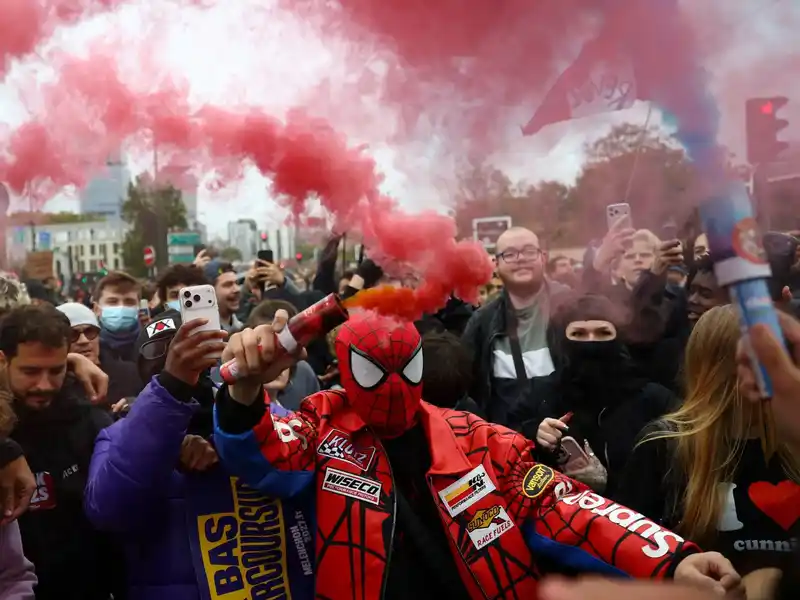
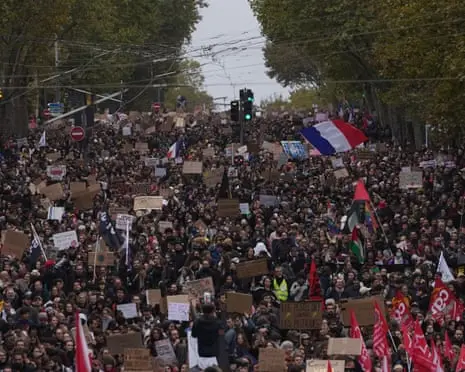
Mass rallies drew hundreds of thousands of protesters across France on Saturday, with predominantly peaceful demonstrations giving way to evening skirmishes in Paris and Marseille despite an extensive security strategy deployed to head off a repeat of the previous week's unrest.
According to the interior ministry, 410,000 individuals joined demonstrations nationwide, though trade unions claimed the actual turnout was double that figure.
The main demonstration happened on the southeastern fringes of Paris, where at least 110,000 people turned out to denounce rising living costs and growing inequality.
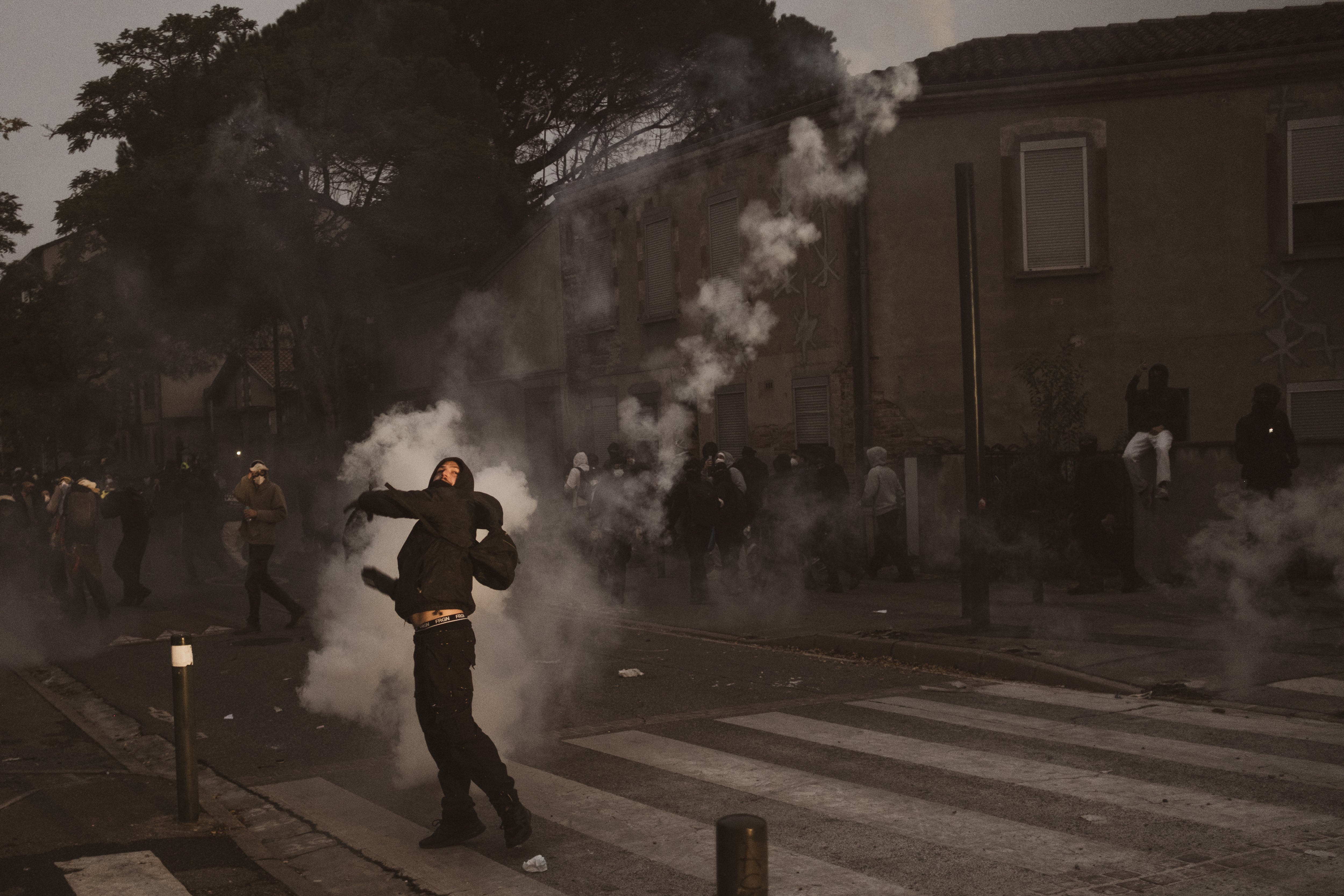
Nearly 1,000 people were arrested as officers faced "an extremely elevated level of violence" from black-clad "ultra-left" people, interior minister Laurent Nunez claimed.
Two people were “seriously” injured, Mr Nunez said, with one man injured in Toulouse, who reportedly had fingers blown off, and another person in Clermont-Ferrand. He did not give details of either case.
The protests began in mid-September, when secondary school pupils took to the streets over staff shortages, deteriorating school buildings and overcrowded classrooms. The movement has since grown into a broader challenge to Emmanuel Macron’s government, drawing in teachers, parents and trade unions.
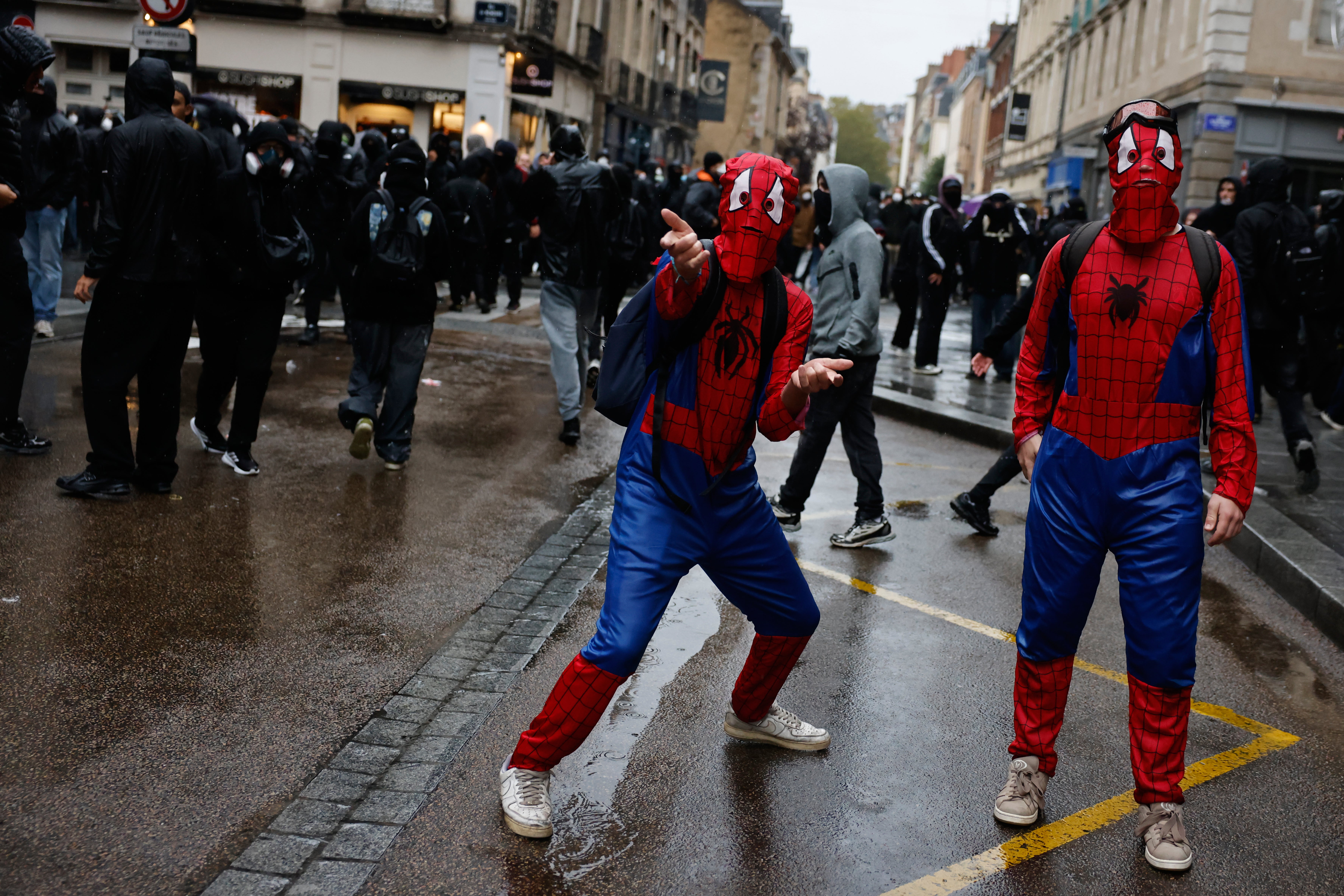
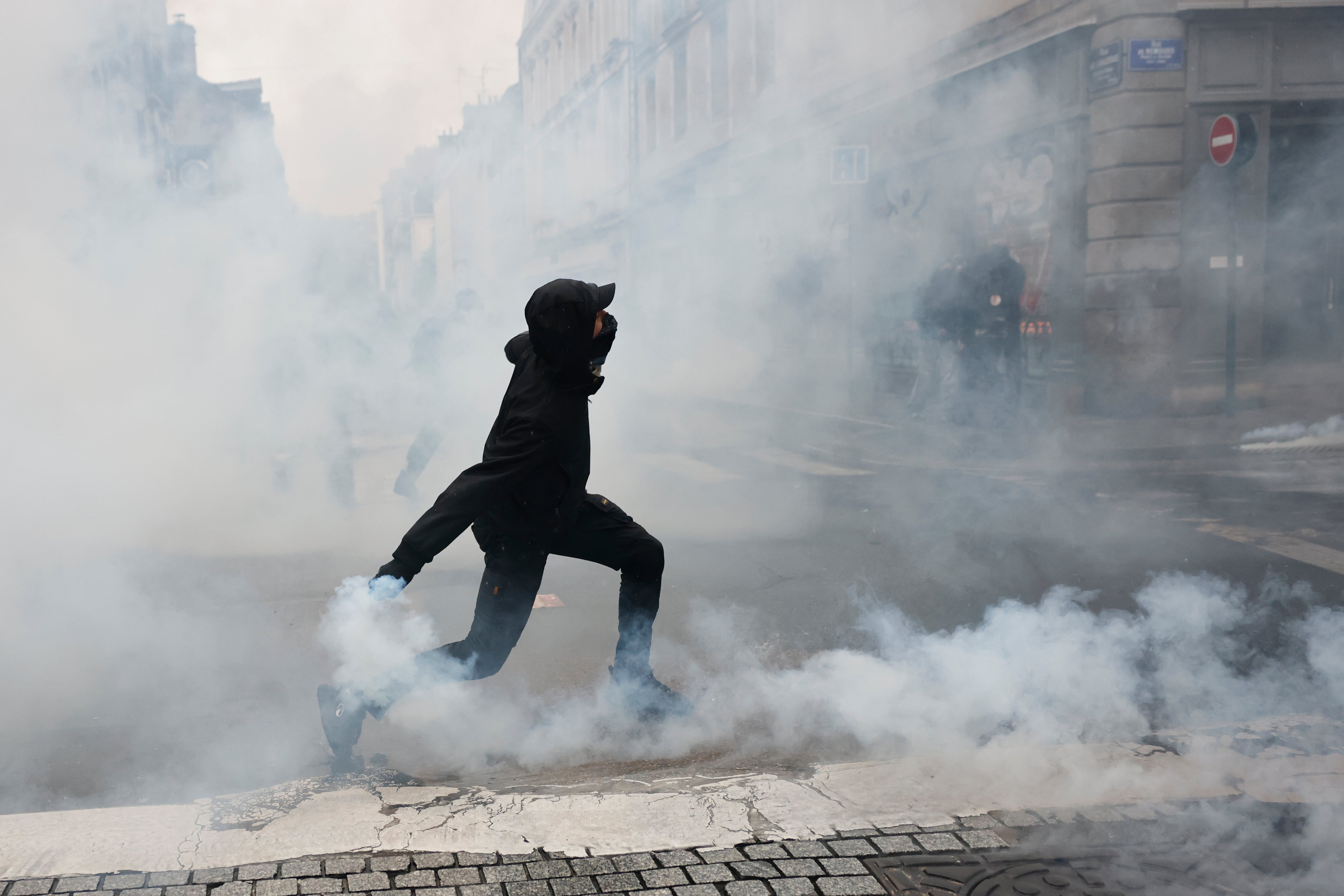
Conditions turned hostile following the conclusion of the rally on Saturday. Riot police deployed tear gas and water cannon against a crowd of roughly 500 masked youths, who eventually dispersed in the cold, wet conditions.
In Marseille, France's second city, young protesters set fire to rubbish bins to obstruct roads and threw stones and bottles at security officers. Police reported that several businesses, including two jewellery shops, were looted.
Confrontations were also reported in Lyon, Bordeaux, Grenoble, Clermont-Ferrand, Lille, Rennes, Nantes and Toulouse.
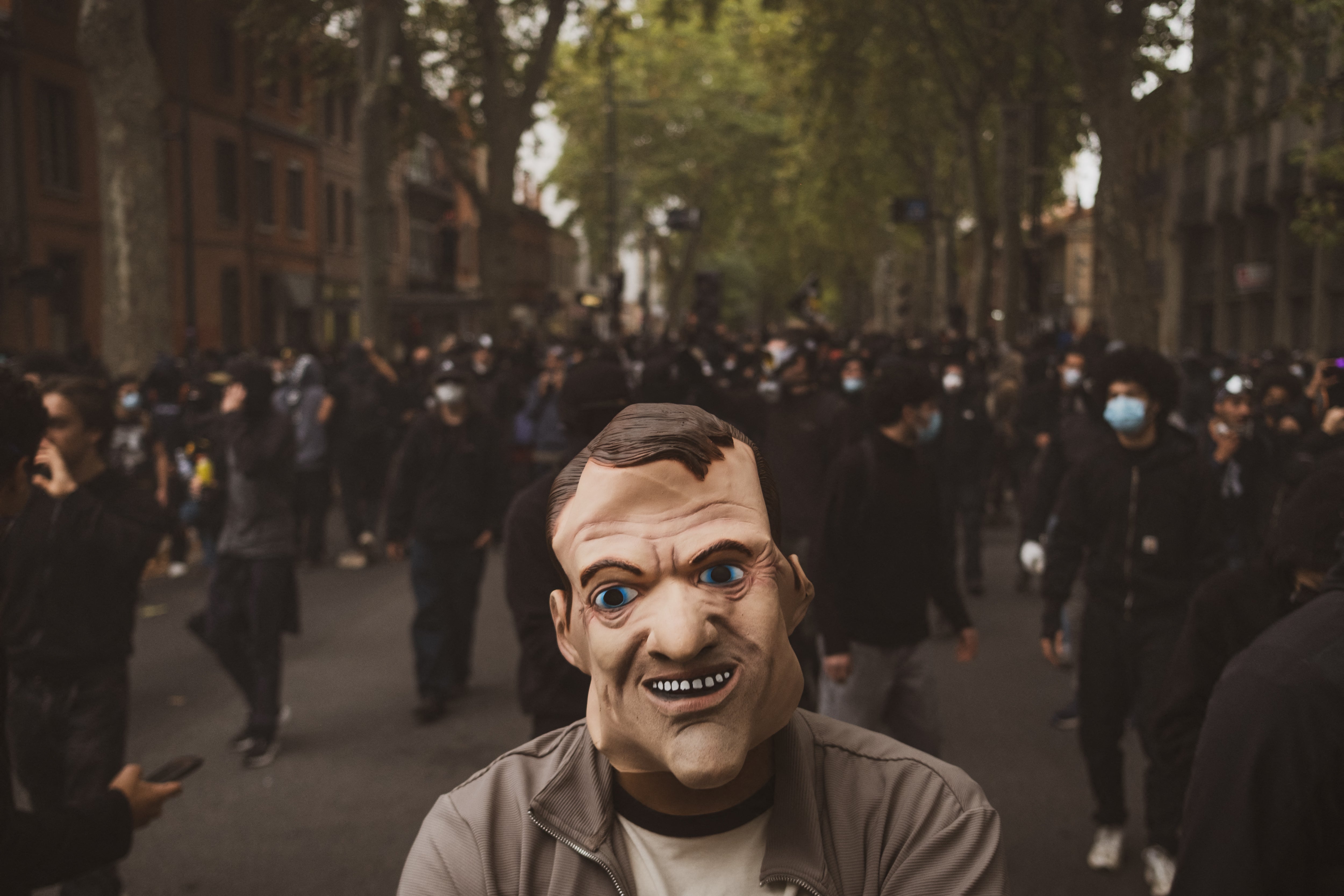
"In almost every march we saw the formation of these high-risk groups. They broke away from the main body and sought to commit acts of violence," said Mr Nunez, who blamed far-left activists and organised criminal groups for provoking the unrest.
Mr Nunez said 135 people had been arrested before the main marches began, with police seizing an assortment of weapons, including metal balls, lead pellets, fireworks, slingshots, improvised weapons, a katana sword and airsoft guns. Paris police later reported that 65 people had been arrested in the capital.
The demonstrations come as Macron approaches the final months of his presidency, with the growing movement exposing wider anger over living costs, public services and the government's handling of dissent.
Security measures in the capital
A total of 70,000 police officers and gendarmes were deployed by authorities – 10,000 more than the preceding week – after officials admitted they had underestimated the extent of the unrest on 17 October.
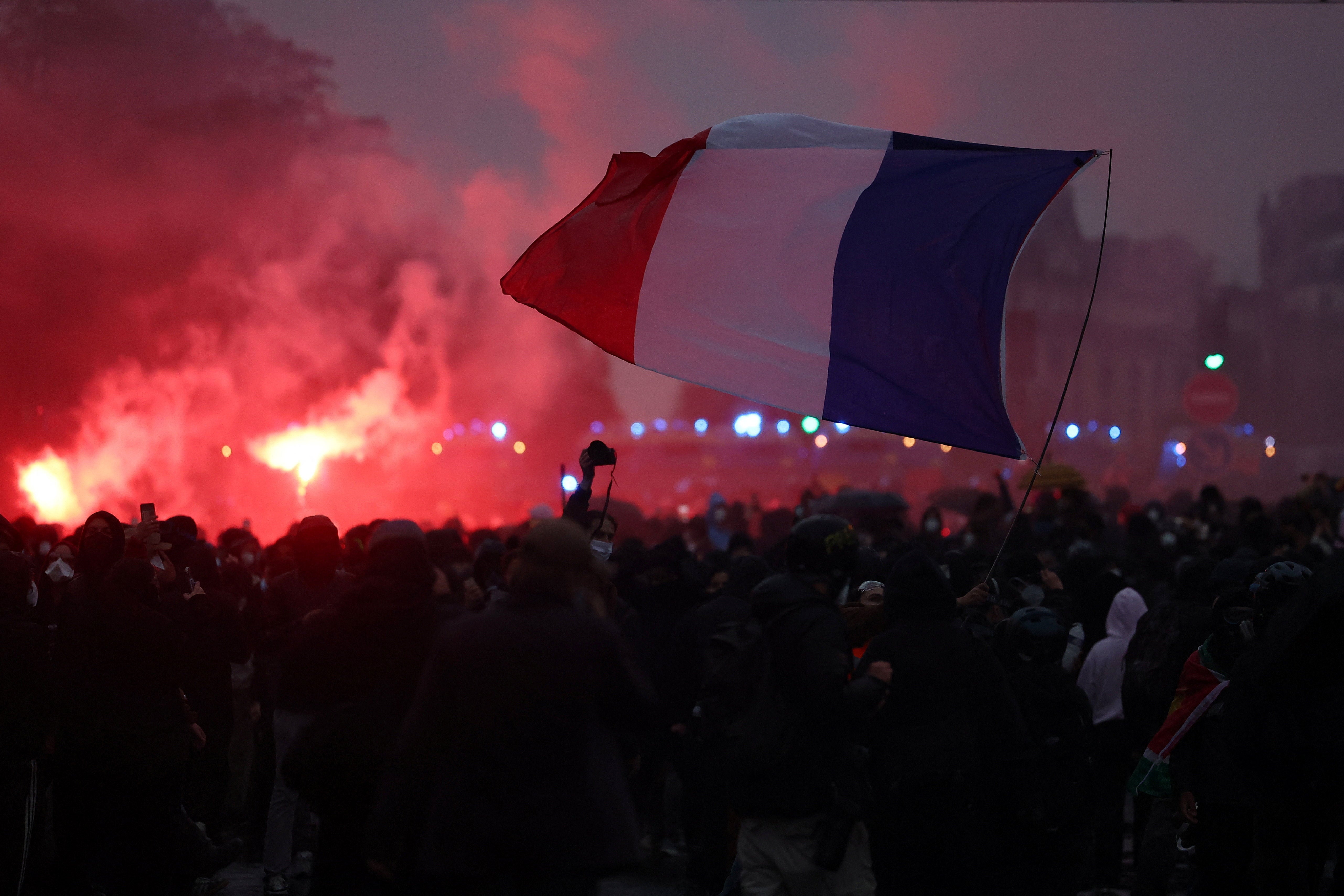
Mr Nunez stated to reporters that the violence was less severe than the previous week, when vandals and looters engaged in widespread destruction. "What changed was anticipation," he said.
He added that far-right activists had attempted to confront leftist groups in the southern cities of Nice and Montpellier, creating a potential new dimension to the disorder.
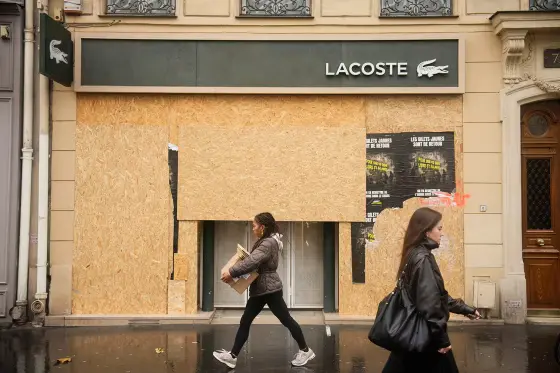
Large parts of central Paris resembled a city under lockdown, with business owners shuttering premises, museums closing and more than 20 metro stations suspended.
Trade associations urged shopkeepers to keep their doors closed following damage or looting at thousands of commercial premises across France the previous weekend.
"There are hardly any customers, so it's not really worth staying open," said Oskar, manager of a Kiton boutique in Paris.
A number of the capital's prominent cultural locations, such as the Louvre, the Musee d'Orsay and the Paris Opera, opted to close as a preventative measure, leaving visitors disappointed.
"Everything's boarded up and we're not quite sure where we should be," said Xavier Dolliole, a tourist from the US city of New Orleans.
Protest movement spreads
The countrywide movement originated from minor student demonstrations in the Paris suburbs last month over school conditions. It quickly expanded into broader opposition to government economic policies, prompting similar rallies in neighbouring European nations.
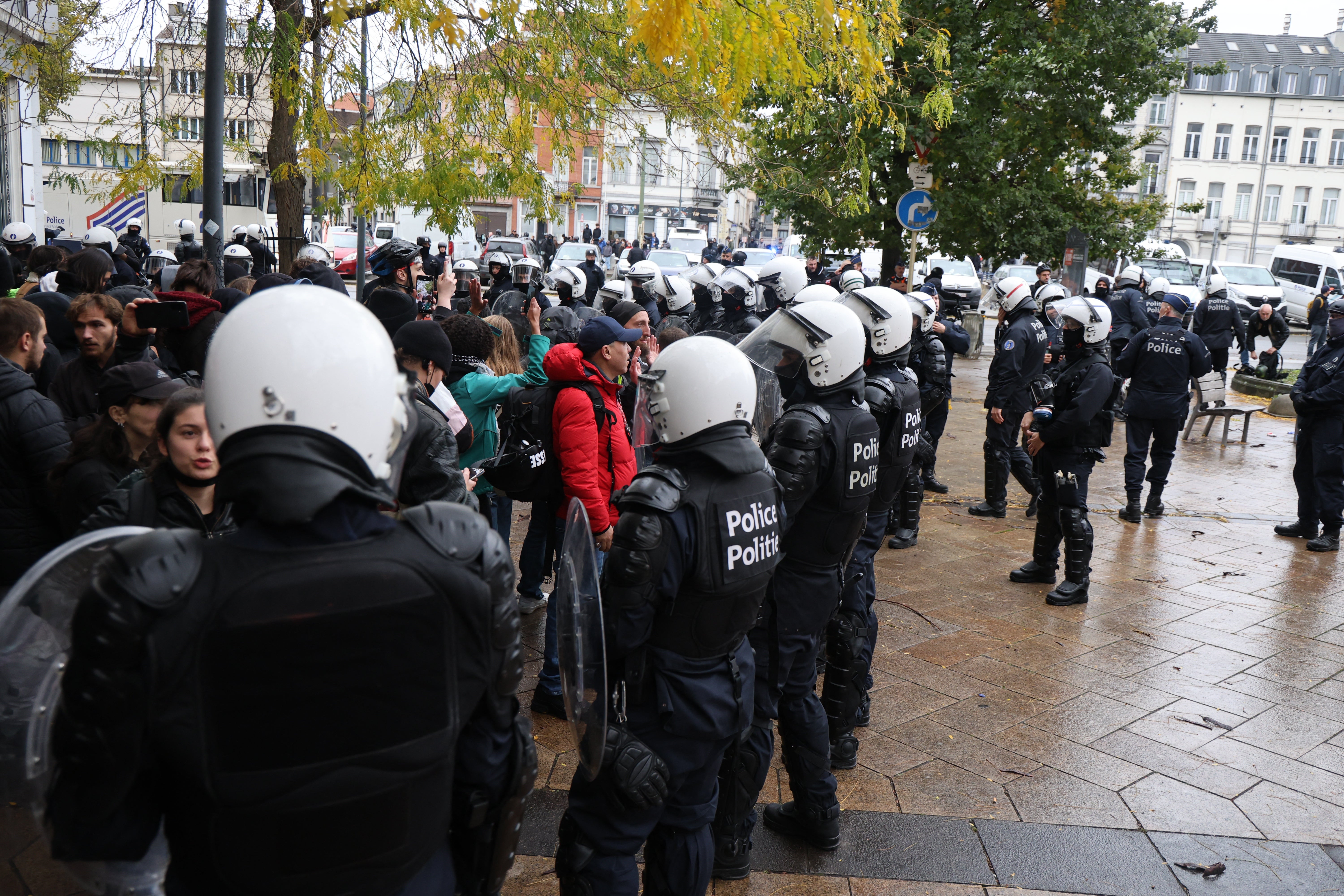
Belgian police used pepper spray and tear gas during confrontations in Brussels with anti-government protesters on Saturday, while demonstrations also took place across several Italian cities for a second consecutive weekend, as well as in Albania.
Hard-left leader Jean-Luc Mélenchon, who attended the Paris demonstration, suggested that rallies would persist until President Emmanuel Macron, whose term ends next year, addresses social discontent in France, one of the world's wealthiest nations.
"Given the current situation, I think he will come to understand that this will happen again every week. There is still time for (Macron) to give in. After that, the only thing left to him will be the exit door," Melenchon told reporters.
Far-right event underway
Numerous protesters accused the administration of an excessive response to the prior week's disruption, noting that military personnel were assigned to patrol the Champs-Elysees, a famous boulevard featuring high-end shops and restaurants.
"We shed tears for shops, not for the people who are being impoverished all year round," said Clara Lebbadi, a 22-year-old arts student.
"My friend and I almost didn't come because we were scared, but we came precisely because it's important not to let repression win," she added.
The day's initial approved march proceeded without incident in Orléans, roughly 120 km (75 miles) south of Paris, where marchers gathered to oppose Marine Le Pen's far-right National Rally as it held a party congress in the city.
Tensions were heightened by a shooting west of Paris on Friday, in which a gunman suspected of acting out of Islamophobic hatred killed one individual and injured four others, including a 12-year-old girl.
"We have come to tell the far right, face-to-face, that we are not afraid," said Bally Bagayoko, the mayor of Saint-Denis and a member of Melenchon's France Unbowed party.
Related Articles
- World News
Nearly 1,000 arrested across France as police find potential weapons on protesters: officials
- World News
Photos: Clashes erupt in France during protests over rising living costs
- World News
Hundreds of thousands march across France in protests over schools and policing
- World News
More than 1,300 arrested as clashes follow another day of mass protests across France
- World News
Mass protests challenge Macron as French police use tear gas and water cannons