Pope Leo to head home to Latin America for his longest and farthest trip yet
The 12-day, three-nation tour comes just three weeks after he underwent lung cancer surgery
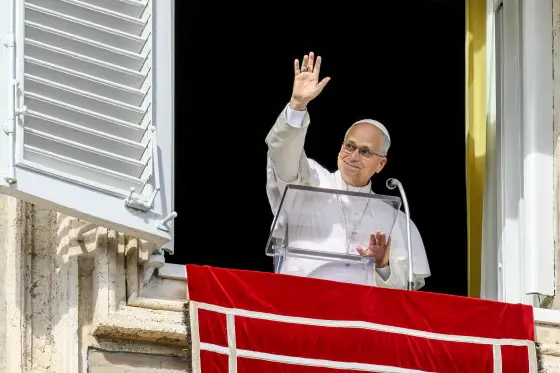
Pope Leo XIV is embarking on the longest and farthest trip of his pontificate: a 12-day, three-nation tour of Latin America.
The gruelling November 6 to 17 trip, which includes a dozen flights and two helicopter rides covering 31,000km (19,000 miles), comes just three weeks after he underwent surgery on October 13 to remove a cancerous tumour from his lung.
While popes always travel with ample medical care, the Vatican said no special or additional provisions are planned for Leo, including when the 71-year-old travels to Cusco, Peru, at an altitude of 3,400 meters (11,200 feet).
“We’re not talking of a permanent condition,” said Vatican spokesperson Matteo Bruni. “We’re talking about something that you heal from, because it is surgery.”
Leo will start his trip on Friday in Uruguay, the least Catholic, most secular country in all of Latin America, where not even the big Catholic feast days get their due: Christmas in Uruguay is officially “Family Day” and Holy Week is “Tourism Week.”
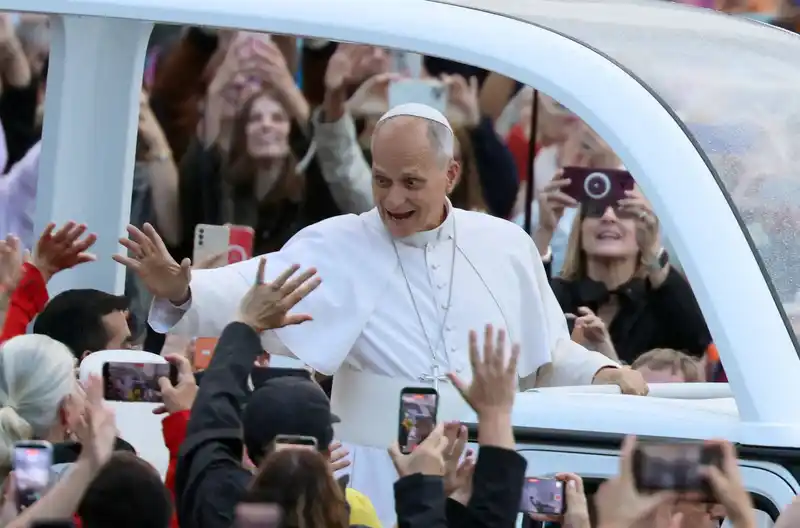
Leo is nevertheless expected to draw huge crowds throughout his trip and will likely raise issues of concern to his still-young pontificate: economic injustice, the plight of Indigenous peoples and the Amazon, and the church’s dreadful legacy of clergy sexual abuse.
The trip will also mark U.S.-born Leo's return home to Peru, where the then-Robert Prevost lived for two decades as a missionary priest and learned to be the pastor he is today. Leo holds Peruvian citizenship and is so attached to Peru’s people that he gave them a shoutout in Spanish from the balcony of St. Peter’s Basilica on the night of his election.
Leo is also going to Argentina, the home of his predecessor, Pope Francis, to whom Leo owes his pontificate. It will be a homecoming of sorts there, too, since Francis never returned to Argentina after his 2013 election, leaving a complicated legacy that Leo will now have to navigate.
A papal homecoming to Peru
No leg of the trip is more anticipated than the final stop in Peru, with Leo’s arrival in Lima, and after that, Chiclayo, his beloved former diocese that he headed from 2015 to 2023, when Francis summoned him to Rome.
“He is so excited. He personally confirmed this trip with no changes,” said Maria Montserrat Alvarado, the Vatican’s new communications chief.
Leo told the region’s bishops in September that it was in Peru where he “came to know firsthand the faith of a people from whom I received so much, and I came to understand better what it means to be a shepherd.”
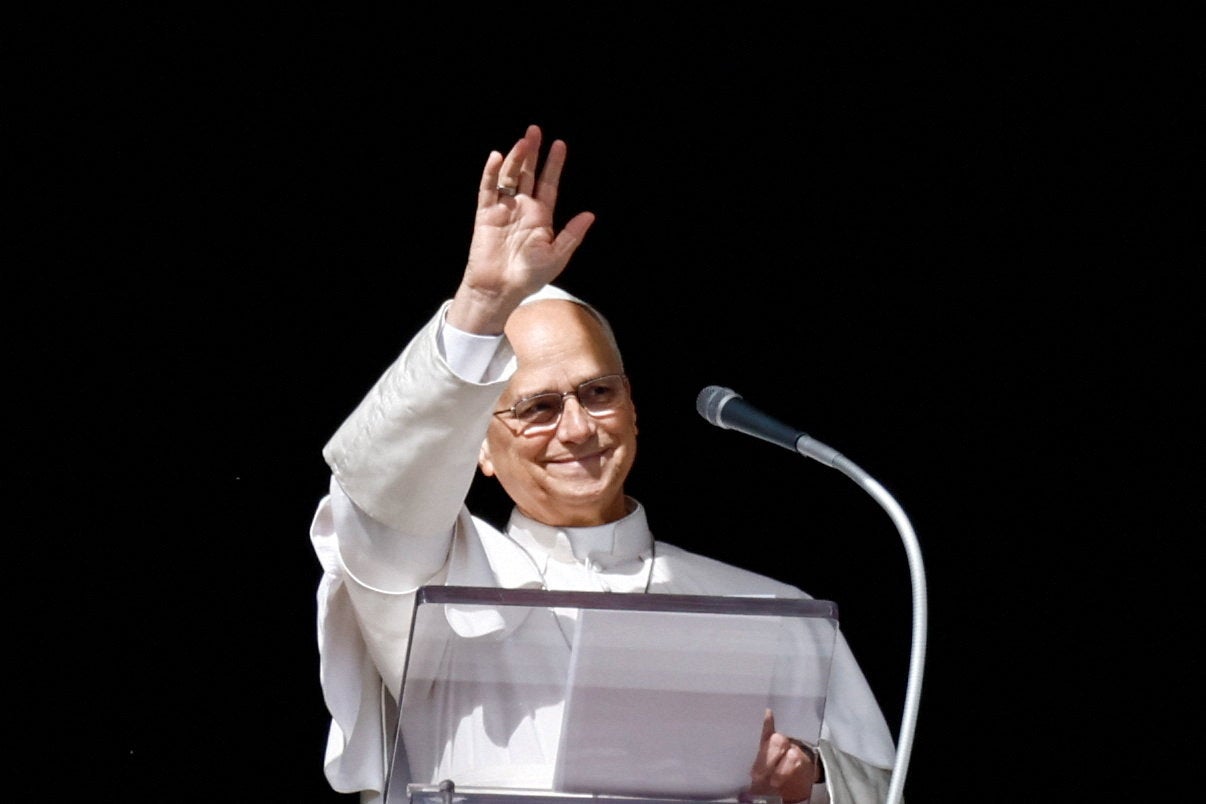
Alvarado said Peru “opened his eyes” to the diverse needs of the church and how the church encounters its flock. “This is a place that gave him his ministry and inspired who he is as a pastor,” she said.
Alvarado predicted that Leo will speak off-the-cuff in Spanish throughout the visit and will show his true feelings much in the same way he did in June during his visit to Spain, where the world saw a much more relaxed and happy Leo than the reserved, quiet one often on display in Rome.
“You will see that again but in a totally different way because he knows these streets,” she said.
Another homecoming to Argentina, with a different pope
Francis befuddled friends and foes alike for the duration of his 13-year pontificate, because he never returned home. He had plenty of opportunities, including during his first trip as pope to Rio de Janeiro, and subsequent trips to the region, including to neighbouring Chile and Bolivia.
“How many times, I and other people asked him,” confided one of Francis’ closest friends at the Vatican, Guzmán Carriquiry, the former head of the Vatican’s pontifical commission for Latin America. “But it was useless, useless! He’d respond with jokes, by staying silent or getting irritated if you insisted.”
Carriquiry said Leo was coming to Argentina to “fill a void that has remained,” much in the same way Leo has undertaken trips to Spain and France — two once staunchly Christian European countries that Francis stubbornly refused to visit, preferring instead more far-flung “peripheral” places.
María Marcela Mazzini, an Argentine theologian who participated in Francis’ 2015 big meeting on the family, attributed Francis’ reluctance to return to Argentina’s complicated political polarisation during his pontificate.
“We understand,” she said. “Things are contextual. I believe the people never doubted the pope’s affection. They always felt he was close to them and now we’re also watching with great joy as Pope Leo continues his legacy.”
“So we’re waiting for him with open arms,” she said.
The Argentine leg of the trip, however, is likely to be the most politically delicate, given the clear differences in priorities and styles of the reserved, pensive Leo and those of President Javier Milei, a self-described “anarcho-capitalist” who once described Francis as a “filthy leftist” and “representative of evil on Earth."
Leo Guardado, associate professor of theology at Fordham University, said he expected Milei’s push to attract AI investment and data centres to Argentina will be a point of discussion, given Leo’s concern about AI’s impact on humanity and the environment.
A visit to the most secular country in Latin America
The visit begins in Uruguay, the first country in the world to legalise marijuana for recreational use, the second country in Latin America to decriminalize abortion, and the third country in the Americas to legalise same-sex marriage.
More recently, it became the first country in the region to approve assisted dying legislation over the strong opposition of the Catholic Church, evidence of Uruguay's entrenched church-state separation that prohibits any mention of God in oaths of office.
“Uruguay is by far the most secularised nation in Latin America. It’s pretty much like a Western European nation,” said Andrew Chesnut, chair of Catholic studies and an expert in the Latin American church at Virginia Commonwealth University.
All of which begs the question of why Leo would bother spending three days of a 12-day trip in a country of 3.5 million people, only a third of whom identify as Catholic and a fraction of whom actually go to Mass regularly.
Alvarado had a ready reply: ”Why not?”
Leo is expected to make clear the Church's teaching on abortion and euthanasia. But he is likely to also recall Uruguay's strong Catholic roots from the Spanish colonial era, most significantly on Sunday when he marks an important Catholic feast day that is intrinsically connected to Uruguay's 1825 declaration of independence and nationhood.
“He is going to meet people and meet hearts and hopefully inspire them to look again for the places where the church was big and now is small," Alvarado said. His message to today's religious “nones,” or nonbelievers, is: “Reconsider.”
Related Articles
- World News
Pope's South American trip to go ahead following lung cancer surgery
- World News
Pope Leo XIV cancels Assisi trip as he recovers from lung cancer surgery
- World News
Pope Leo cancels trip on doctors' advice after cancer surgery
- World News
Pope Leo requested an absentee ballot in Illinois to vote in the midterms
- World News
Why the King's Caribbean tour could be 'biggest risk of his reign'