Pakistan’s donkey trade to China puts rural livelihoods at risk
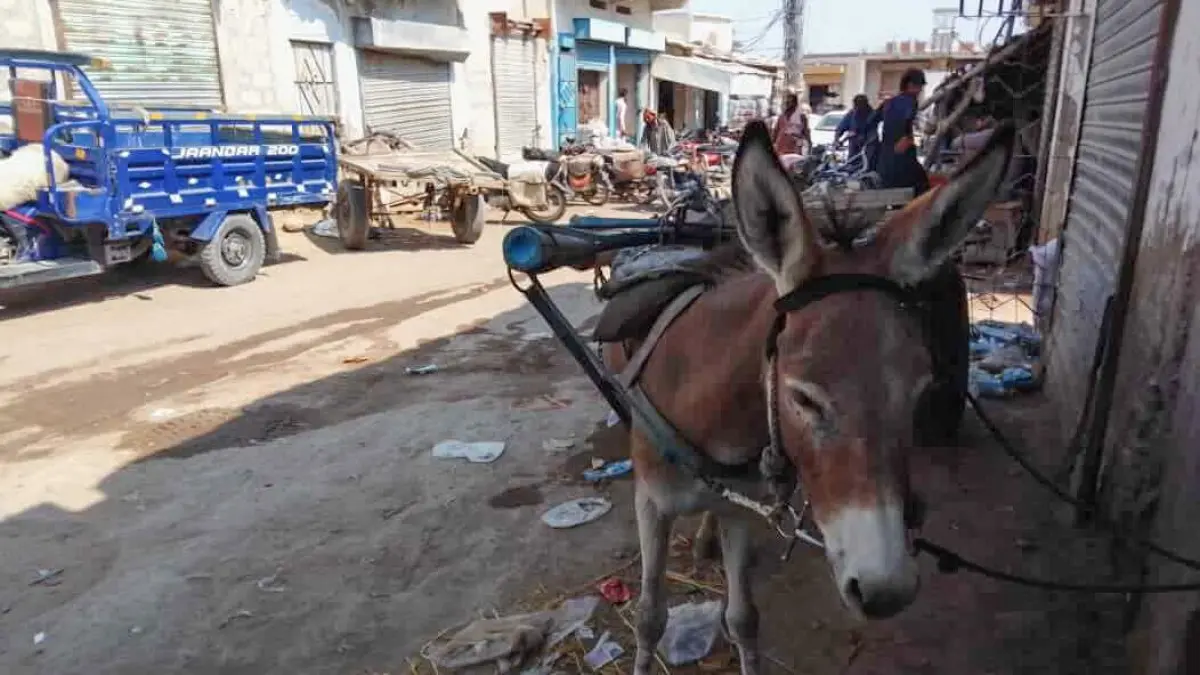
Balochistan, Pakistan – Muhammad Noor sits on a worn charpoy outside his home in Kulahu, near Tump, in Pakistan’s southwestern province of Balochistan.
His eyes linger on a donkey cart with torn tyres and an idle wooden frame. The two animals that once pulled it are gone.
For years, Noor earned his living hauling wood, sand and stones for local customers. During the date harvest, the donkeys were particularly valuable, helping him transport produce and supplement his family’s income.
He sold both animals in July to pay for urgent surgery for his wife, whose eyesight was failing. With no savings and few options, he accepted an offer from a local animal trader.
The stronger male donkey fetched 75,000 rupees ($270), while the female sold for 44,000 rupees ($158).
“I thought the money would restore my wife’s vision and I could buy another donkey later,” Noor recalls. “But a good working donkey now costs 100,000 rupees [$360] or more. I cannot afford one.”

Rising prices
The sale paid for the treatment of Noor’s wife, but destroyed the family’s livelihood. The two animals had earned him about 1,000 rupees ($4) a day. Now he depends on casual labour, earning 500 rupees ($2) on a good day, and sometimes nothing at all.
His elder daughter has left school, the family has reduced its food consumption, and other medical needs have been postponed.
“The trader told me there would always be more donkeys and that prices would come down,” Noor told Al Jazeera. “He was wrong. I sold my livelihood and cannot get it back.”
Across Kech district, residents say traders are increasingly buying stray and underweight donkeys from villages in Dasht, a rural subdistrict bordering the port city of Gwadar, and reselling them through intermediaries.
Animals bought for 4,000-5,000 rupees ($14-18) can fetch 8,000-10,000 rupees ($28-36) in Turbat, the district’s main town and commercial centre. A trader in Dannuk, speaking anonymously, said an animal bought locally for 4,000 rupees could fetch about 15,000 rupees ($54) after reaching intermediaries in Gwadar.
For some families, however, the loss comes without a sale.
In Chahsar, on the outskirts of Turbat, Jumma Baloch’s only working donkey was stolen a month ago while tied outside his home.
“I woke up and it was gone,” he said. “People say stolen donkeys are taken to middlemen in the city who supply the export business.”
Without the animal, Jumma has been forced into irregular daily labour. The rising price of donkeys has made replacing it virtually impossible.
China’s ejiao market
Noor’s forced sale and Jumma’s theft reflect a growing anxiety among working-animal owners in Balochistan, as Pakistan’s donkey population becomes part of an international supply chain serving China’s expanding market.
At the centre of that market is ejiao, a traditional Chinese medicinal product made by boiling donkey hides to extract gelatin. It is marketed for purported health benefits, including claims of improving blood circulation and treating anaemia.
Research published in the Journal of Contemporary China in 2024 estimated that the ejiao industry requires between four million and five million donkey hides annually. China’s domestic donkey population cannot meet that demand, encouraging imports from other countries. The pressure on African donkey populations prompted the African Union in February 2024 to adopt a continent-wide moratorium on mass slaughter for hide exports.
Pakistan has increasingly emerged as a potential supplier. Its donkey population is estimated at 6.2 million in the 2025-26 Pakistan Economic Survey, placing it among the world’s largest donkey-owning countries.
In Gwadar’s North Free Zone, a Chinese company, Hangeng Trading Enterprise, has begun exporting donkey products to China at a processing facility, reportedly built at a cost of $50m. Its first consignments, shipped in July, totalled 94.57 tonnes of donkey meat and hides. In October, the company dispatched 81 tonnes of meat, bones and hides.

The business is not confined to donkey products, as Hangeng has wider interests in livestock and agricultural trade. But its Gwadar operation has become an important part of Pakistan’s emerging donkey export chain.
A second Pakistan-China venture, Shahzad and Shao (Private) Limited, secured 4 acres (1.6 hectares) in the North Free Zone in August to establish another slaughterhouse and processing facility. The company has reportedly received approval for a quota of up to 150,000 donkeys annually.
A Hangeng official, speaking anonymously, said the company procures animals through five or six registered suppliers in Sindh province and two in the capital, Islamabad. Some suppliers originally from Balochistan are registered in Sindh and may also source animals from the province.
The official declined to disclose the purchasing prices, citing commercial sensitivity, and said the company hoped the gap between supply and processing capacity would encourage donkey breeding farms in Pakistan.
Opportunity and threat
Pakistan’s donkey-hide trade is not new.
Between 2011 and 2015, the country exported 141,075 hides to China, Vietnam and Hong Kong. Exports reached 97,201 in 2014-15. The government banned hide exports in 2015 amid concerns over declining donkey numbers and reports that meat left after slaughter was being sold domestically as beef or mutton.
In October last year, the government amended its export policy to allow hide exports from designated, approved or registered slaughterhouses in Gwadar Free Zone. This year in April, the government’s Economic Coordination Committee approved the export of donkey meat and hides to China.

For donkey owners such as Baksh, the expanding trade presents both an opportunity and a threat.
Standing beside his dark-brown donkey at a stand near Turbat’s Shaheed Fida Chowk, Baksh earns a living transporting household essentials from nearby shops through narrow streets inaccessible to larger vehicles.
“The work brings me around 30,000 rupees [$108] a month,” he says. After paying for feed, approximately 25,000 rupees ($90) remains for groceries and his only son’s education at a nearby religious school. There is little left for emergencies.
Traders, mostly middlemen linked to suppliers serving the Gwadar export chain, regularly approach him with offers. His nephew has sold five donkeys to traders in Turbat for 5,000-6,000 rupees ($18-21) each. The animals were subsequently sent to suppliers in Sindh before entering the Gwadar supply chain.
“I have not sold mine, but I can see the market,” Baksh said. “People say the animal is worth more now because its skin is supplied to China.”
Yet rising prices make him anxious. If his donkey falls ill, is injured in traffic or stolen, he doubts he could afford a replacement. Having heard about Jumma’s experience, he now secures the animal after dark.
“Many donkeys have been stolen in our area, and I am concerned,” he says. “The loss would jeopardise the income that sustains my household.”
The contrast is stark: in Turbat, a donkey remains a family’s transport, livelihood and means of educating children. In Gwadar, the same animal is increasingly viewed as an export commodity.
The export industry could create employment in slaughterhouses, meat processing, hide preparation, packaging and transport, while generating foreign exchange and income for suppliers.
But those gains will not automatically reach the rural families whose animals enter the supply chain. Much will depend on sourcing practices, breeding investment, animal protection, and whether working donkeys remain affordable.
For Noor, the consequences are already clear. His wife’s surgery has been paid for, but the cart outside his home remains idle. For Baksh, the question is how long he can hold on to the animal that keeps his household afloat.
Their livelihoods depend on decisions being made far beyond their villages – in Gwadar, Islamabad and Beijing.
Syed Naeem Abbas, an animal welfare expert in Lahore, says the consequences extend beyond individual households. He warns that many animals entering the export chain were previously working donkeys rather than animals bred specifically for slaughter.
Without effective breeding programmes and safeguards for working equines, says Abbas, commercial demand could deepen the economic vulnerability of poor households.
He urged the Balochistan government to introduce animal-welfare legislation, following Khyber Pakhtunkhwa, which in 2024 became the first Pakistani province to enact such a law. He also advocates exploring plant-based and artificial alternatives to animal-derived ejiao.
“What we are seeing is not just the movement of animals, but the quiet collapse of livelihoods,” Abbas told Al Jazeera.