More than 700,000 Russian soldiers have been killed in the Ukraine war, new estimate suggests
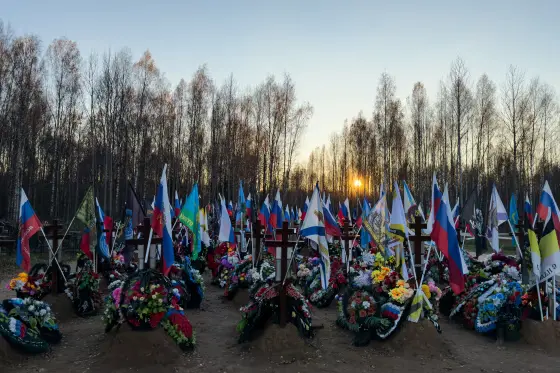
More than 700,000 Russian soldiers have been killed in Ukraine, according to a new projection based on leaked official data, an estimate that sheds new light on the staggering cost of Vladimir Putin’s war.
The grim assessment comes more than 4 ½ years after the Kremlin’s invasion of its neighbor, an all-out war that has consumed Russian society. The death toll has been mounting with each painstaking ground assault, with no end to the conflict in sight despite pressure from President Donald Trump for Kyiv to make a deal.
The leak from Russia’s state statistics agency, Rosstat — released by Belarusian and Ukrainian hackers earlier this month — reveals that at least 490,000 Russian soldiers had been killed in Ukraine based on registered deaths as of the end of September. That’s according to breakdowns by a range of independent media, including the BBC and others, that were published this week. But one exiled Russian media outlet, Meduza, also used the leaked mortality data to project the total number of military deaths, including those that have not yet been recorded.
They estimate that number to be 720,000.
NBC News did not have access to the leaked data and could not authenticate it nor independently confirm these numbers.
Neither Moscow nor Kyiv provide regular updates on their battlefield losses.
Mediazona, along with the BBC Russian Service and a team of volunteers, have been compiling a separate named list of Russian war dead using open-source data for years, given the difficulty of gauging the true impact of the war on Russian society.
In its analysis, Mediazona said it arrived at the 490,000 war dead number from the 29.7 million records it obtained from the hackers that covered nearly all death registrations in Russia from early 2021 through September this year, based mainly on records with an “explicit military cause of death” and court rulings declaring people dead.
The leaked data was cross-checked against Mediazona’s own named list and matched 95% of the records, as well as the publicly accessible national Probate Registry, a database of inheritance cases, and Rosstat’s own official mortality statistics, the outlet said.
Mediazona said it also checked against possible data tempering and fake military death injections by cross-referencing a unique vital record number that every death registration carries, and court rulings, which often cite death record numbers.
“We are confident that this data is genuine,” the outlet said, adding that fabricating a dataset of this scale from scratch would be “impossible” especially as it checks out against official registries.
The hackers shared leaked data with a number of other exiled Russian media outlets and the BBC, who all arrived at a figure close to the 490,000 reported by Mediazona. A similar estimate of half a million Russian troops killed was also shared by a senior British defense official in September.
Before the new analysis of the data in the Rosstat leak, the verified named list of Russia’s war dead compiled by Mediazona and the BBC stood at just over 289,000. It was based on obituaries, local news and official registries, and was the only publicly available database containing the fallen soldiers’ names.
Russia’s defense ministry has not officially updated its death toll in Ukraine since the early months of the war, when then-Defense Minister Sergei Shoigu said it stood at nearly 6,000.
Mediazona warned that due to a considerable lag in military death registrations, Rosstat may not yet have finished capturing deaths from 2025. “That means the leaked records through late September — however authentic and reliable they are — still fall short of the true death toll,” it said.
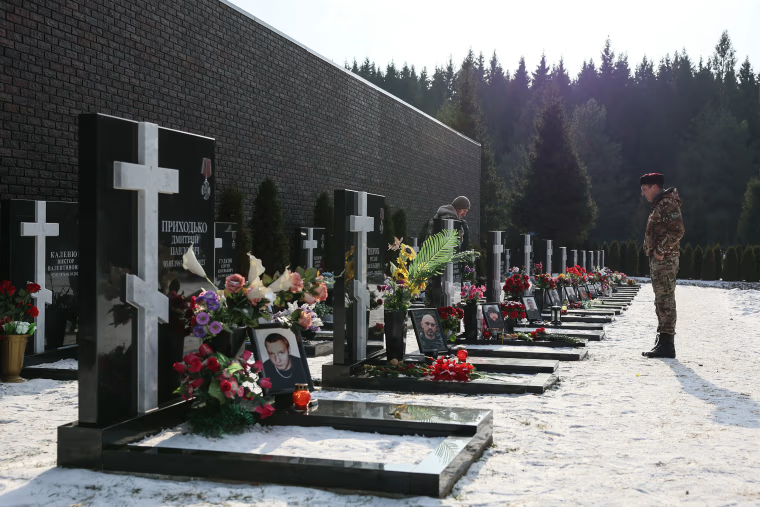
It was this that prompted Meduza to try and calculate an estimate of total Russian losses to date — 720,000 people, a figure that includes deaths it predicts will be registered later.
“Since 2024, the share of late registrations has grown dramatically, and it continues to rise,” the outlet said in its own analysis, adding that the 2026 data is extremely incomplete for both missing service members and other military deaths. It said it used epidemiology and tools like the “chain-ladder method” from actuarial science, which uses mathematics to help measure the probability and risk of future events, to arrive at the projected estimate. These methods allowed Meduza to calculate the number of military deaths that it estimates have happened but haven’t yet shown up in the data, the outlet said.
“Today, it’s simply impossible to leave this category out of an overall estimate of the dead,” it added.
The Kremlin dismissed the analysis Wednesday.
“The only department authorized to officially release data on casualties is the Ministry of Defense of the Russian Federation,” spokesman Dmitry Peskov told NBC News during a call with reporters, when asked if the Kremlin was aware of the 700,000 projected estimate by Meduza.
“I suggest disregarding any other data,” he added.
It is similarly difficult to ascertain the true number of Ukrainian soldiers killed fighting against Russia. Kyiv has been slightly more forthcoming, with President Volodymyr Zelenskyy volunteering some estimates of battlefield losses in recent years, the latest in July putting the total at around 50,000 killed.
But analysts say this is likely an undercount.
An assessment by the Washington-based Center for Strategic and International Studies (CSIS) earlier this year said up to 150,000 Ukrainian soldiers have been killed, based on estimates from Britain’s military, Mediazona’s named war dead list, its own estimates and interviews with U.S., European, Ukrainian and other government officials.