Melbourne hits 40C as Australia’s most severe heatwave in six years descends on south-eastern states

Melbourne has recorded 40C and Adelaide’s temperature has reached 43C as a heatwave not seen since the deadly black summer bushfires has caused “really dangerous” conditions and bushfire warnings in several states.
Severe to extreme intensity heatwaves stretched from the north-west to the south-east of the country – developing in Western Australia and moving through SA, Victoria, New South Wales, the ACT and Tasmania.
Many areas were expected to see temperatures in the low to mid-40s, according to the Bureau of Meteorology, amid the most significant heatwave since the 2019-20 black summer.
Adelaide and Melbourne were facing “sweltering conditions”, forecast to reach 42C in both cities on Wednesday, said the senior meteorologist Miriam Bradbury, with Elizabeth, in Adelaide’s north hitting 44C just after lunch.
Temperatures are expected to remain close to their maximum into the evening.
“It’s not just a normal burst of summer heat,” Bradbury said. “These are really dangerous conditions.”
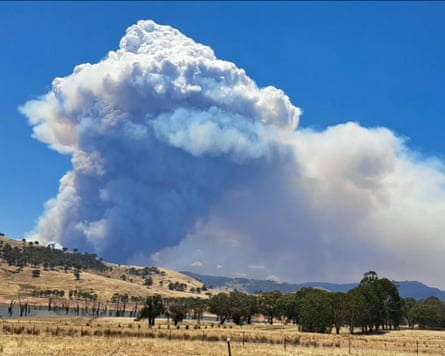
In Victoria, residents in Bungil, Granya, and Thologolong the state’s north-east have been warned to “leave immediately” due to a bushfire travelling south from Mt Lawson State Park that was not yet under control.
Forest fire management Victoria said the fire was about 1,000 hectares and likely to grow. About 305 firefighters, 12 aircraft, and more than 30 bulldozers were working to control the blaze.
Community safety officers at the City of Melbourne were checking in on those experiencing homelessness, and handing out “cool kits” containing water, Hydralite, towels and a map of cool places to go in the city.
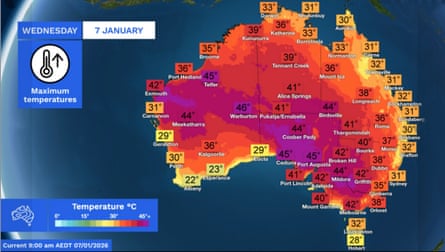
Murray Bridge, in SA’s Murraylands region, was headed for 46C on Wednesday. Port Augusta, about 300km north of Adelaide, could reach 45C, followed by 47C on Thursday.
Ceduna, a town to the west of SA’s Eyre Peninsula, had reached 45.7C just after midday (local time). Roseworthy, about 50km north of Adelaide, had recorded 44.2C. The town of Hay, in the NSW Riverina, was 43.2C at 1pm. In Victoria, the highest temperatures so far were 42.5C at Hopetoun and Walpeup as of 12.50pm.
Sign up: AU Breaking News email
“For South Australia today, pretty much the entire state is sitting at extreme fire danger ratings, with the exception of the northern pastoral districts,” Bradbury said.
The added threat of isolated, dry thunderstorms “obviously rings warning bells” for emergency services, Bradbury said.
Commander Ann Buesnel, of SA’s Country Fire Service, told the ABC the landscape was “really dry”.
“We haven’t had significant rain. Everything is essentially ready to burn.
“Our crews are all prepared, our volunteers are ready. We’ve brought on some additional aircraft to protect the state as well. We’ve done everything we can and now we’re looking for the community to do their part as well.”
In Victoria, a total fire ban was in place for the Wimmera, south-west and central districts, including Melbourne and Geelong on Wednesday.
On Thursday, total fire bans would apply across the Mallee, North Central, North East and Northern Country districts.
The state’s Country Fire Authority chief officer, Jason Heffernan, said hot and dry conditions over the next three days would be extremely challenging for firefighters and those living and travelling in high-risk areas, and people should be prepared to leave early and take action.
Conditions would “make it difficult for firefighters to suppress a fire should one start and, given the landscape has dried up significantly over recent weeks, high fuel loads pose a serious grassfire risk”.
Sydney (forecast maximum 31C) and Canberra (maximum 35C) were expected to heat up further from Thursday. Temperatures in Hobart (maximum 28C) were forecast to be well above average.
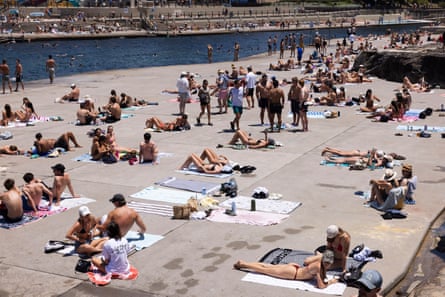
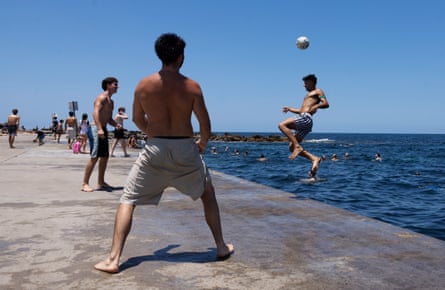
Hot daytime temperatures and very warm nights would offer little relief over the coming days, Bradbury said.
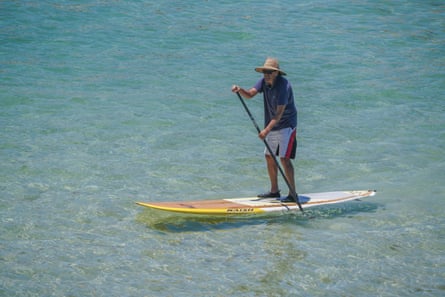

“These are really dangerous conditions which may affect not just those who are vulnerable to the heat, like those who are unwell or elderly, but may likely affect those who are young and healthy as well, with such persistent, intense heat.”
NSW health minister, Ryan Park, urged people to avoid exercising in the middle of the day, and reminded parents and carers to never leave children in cars.
The Royal Australian College of GPs advised people in affected areas to “stay hydrated and stay indoors if you can” warning the peak UV hours were 11am to 3pm.
Australia experienced its fourth-warmest year on record in 2025, with average temperatures up 1.23C nationally, according to the BoM.
The climate crisis has increased the frequency and severity of extreme weather events, including heatwaves and bushfires.