Israeli elections poll tracker: Three scenarios as Netanyahu faces losing power


Exclusive: A poll of 4,000 Israelis shows that it is unlikely that Netanyahu’s bloc will hold on to power when the country votes next week
Israeli prime minister Benjamin Netanyahu could lose the far-right coalition underpinning his current government when the country votes next week in a crucial election, according to a new poll.
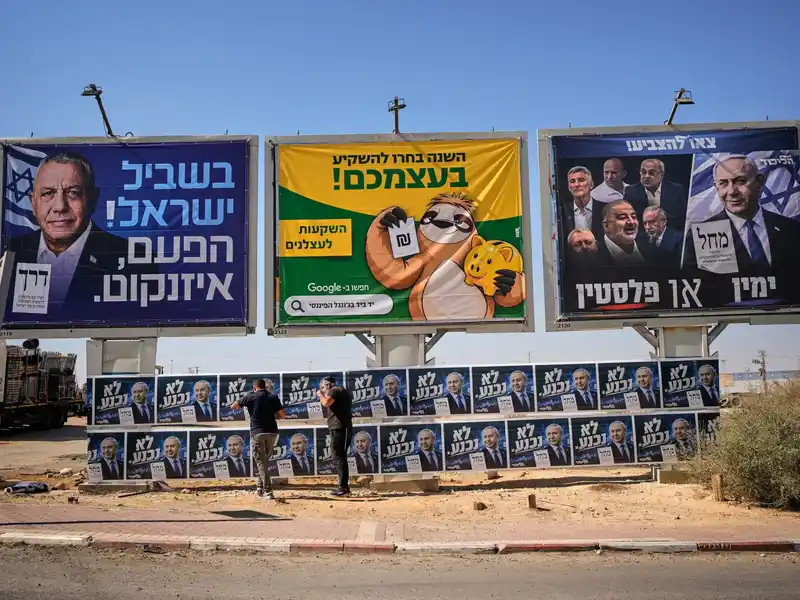
Elections in Israel will take place on 27 October with the country using proportional representation to secure its leadership.
Around three million voters will seek to fill 120 seats in the Knesset with Israelis voting for their preferred party and not a particular politician.
No party has ever won the 61 seats required to secure a majority outright, meaning that the country regularly relies on the formation of a coalition government. A party must win at last 3.25 per cent of the national vote to enter parliament.
According to preliminary polls of 4,000 Israeli participants by Agam Labs in conjunction with Hebrew University, published on Thursday, Netanyahu’s far-right coalition is unlikely to survive the election.
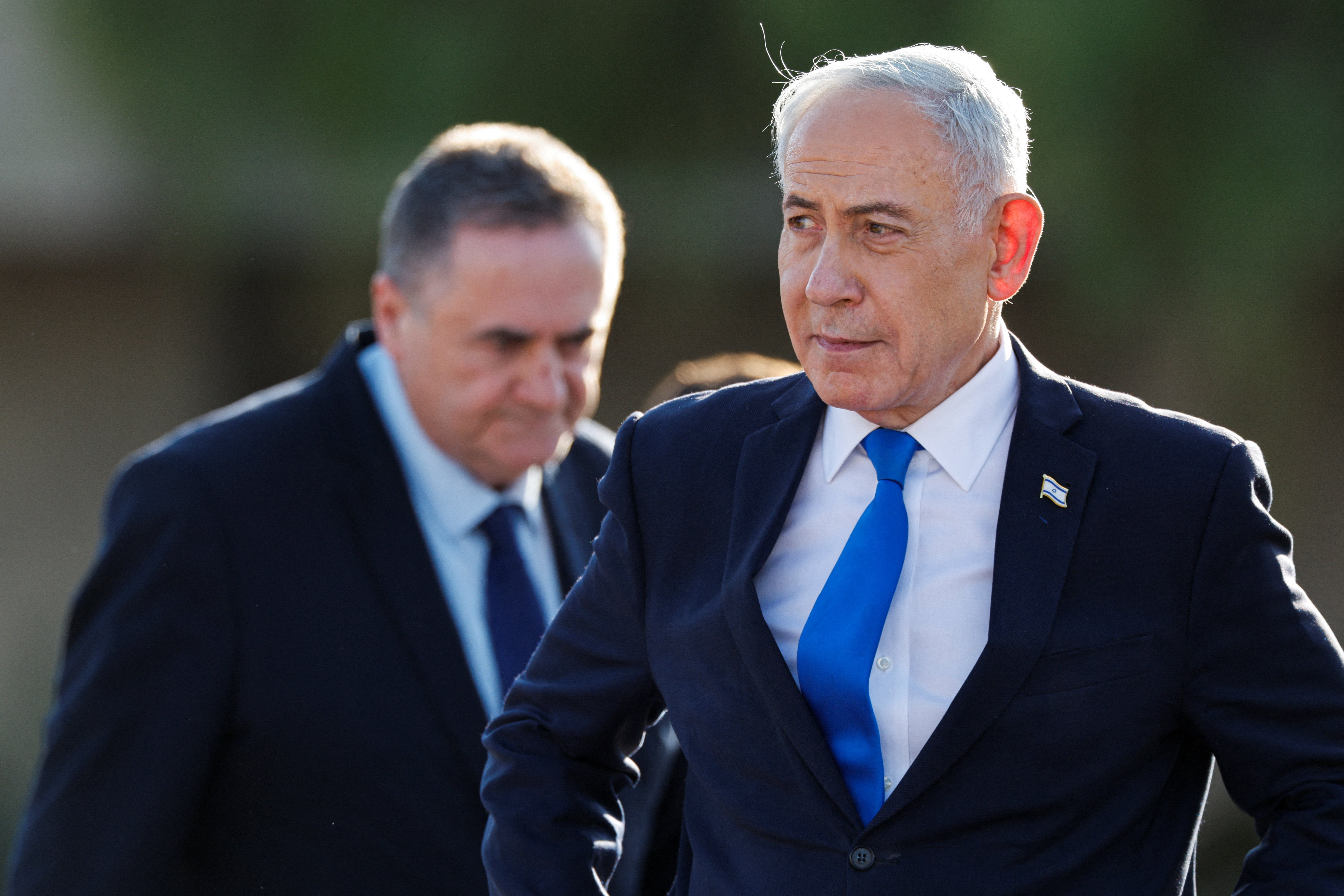
Netanyahu’s Likud party currently has 32 seats in government and has formed a coalition with Shas, which has 11. Bezalel’s Smotrich’s Religious Zionism has seven and far-right security minister Itamar Ben-Gvir’s Otzma Yehudt holds six seats, with New Hope on four. It meant that Netanyahu’s government held 60 seats while the opposition had 59 with one seat unaffiliated.
Below, we look at the three scenarios that could play out.
Netanyahu has to bring in more moderate voices to secure a majority
Based on the responses, the most likely scenario would see the right-wing “Haredi” bloc - including Netanyahu’s Likud and Shas - securing 52-54 seats, falling short of a majority. That includes a drop in seats for Likud with 19 and a decrease to six for Shas.
According to the projections, this bloc also includes the hard-right party Amcha, which is predicted to clear the threshold to enter the Knesset.
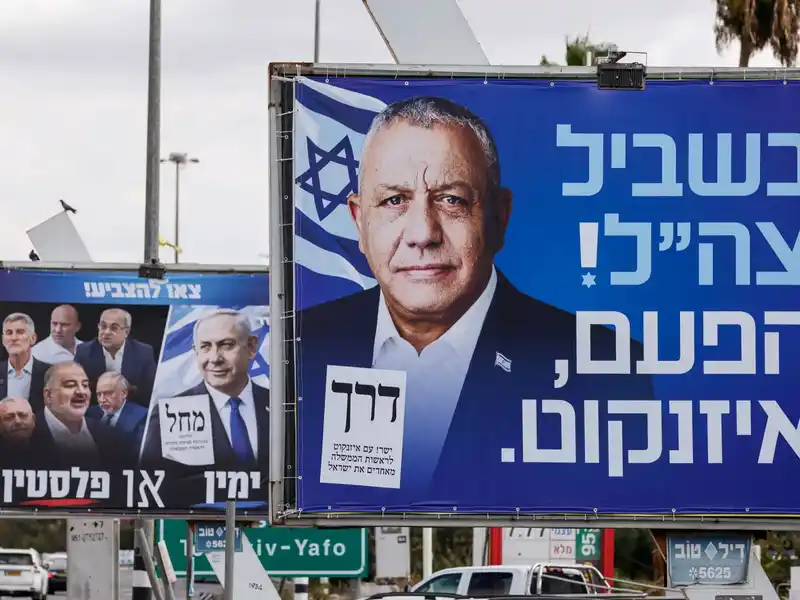
Meanwhile, the opposition, led by Yashar’s Gadi Eisenkot, is predicted to secure the most seats with 20, although other liberal parties it could form a coalition with are forecast to collectively pool fewer votes than the right-wing.
But it still leaves Netanyahu’s bloc short of a majority, meaning that it could have to bring in The Reservists and Economic Party, a centre-right group which positions itself as a “third bloc” in Israeli politics.
“Israel’s election is not a single game, but a tournament – and election day is only the opening round,” Dr Nimrod Nir of Agam Labs told The Independent.

“Our polling suggests that neither bloc is likely to secure a governing majority, leaving three possible outcomes: a unity government bringing Netanyahu together with more liberal parties, an alternative coalition backed by Arab parties, or yet another election.
“The one outcome that appears increasingly unlikely is Netanyahu retaining his current far-right coalition, but that doesn’t mean his opponents have a clear path to power. The real political drama will begin the morning after the election.”
Only one ‘third bloc’ party clears the threshold
Agam Labs’ two other scenarios includes the prospect of only one “third bloc” party clearing the threshold, leaving both the right-wing and liberal blocs short of a majority. This increases the potential seats secured by Arab parties, which could be enough for either group.
While Amcha have explicitly rejected being labelled as a “third bloc”, their possible entrance as a new party in the Knesset means that researchers still consider them unaligned outside of the core coalition.
“The opposition will most likely fail to get a majority without the Arab parties, from which they have pledged to keep their distance,” says Prof Andreas Böhm at the University of St Gallen.
“If they do form a coalition with Arab parties, it would be a very diverse alliance and potentially difficult to manage.
“There might also be a scenario where Arab parties play a role if Eisenkot cannot get a majority. They could abstain from voting while the opposition has a relative majority in the Knesset.”
No ‘third bloc’ parties clear the threshold
If both Amcha Israel and The Reservists miss the threshold, then this leaves the right-wing group with between 51-54 seats and the liberal group with 50-54. Arab parties would have 15-18 seats, meaning that the lack of a clear coalition could spark another election.
“Right now, all the polls indicate that neither of the two blocs is close to a majority. Polls can be wrong, of course, but both are quite far off,” says Prof Andreas Böhm at the University of St Gallen.
“Such a scenario could suit Netanyahu, who is a master of this kind of political horse-trading, while he remains in power as caretaker.
“If nobody is ultimately able to manufacture a majority, the Knesset is dissolved and new elections are called. This could go on for a while, just as it did between 2019 and 2022, when Israel went through five elections in quick succession.
“It is quite conceivable that there is another cycle of elections ahead without either bloc gaining a governing majority.”
The publishing of election polls is illegal in Israel after Friday. The ban extends to social media and direct messages to voters.
“Our findings suggest that Israelis are heading toward an election in which Netanyahu is unlikely to keep his current government, yet the opposition may still be unable to replace him,” says Dr Nir.
“In other words, voters may determine who wins the election, but the parties will determine who actually governs.”
Related Articles
- World News
Israeli elections: What are the possible outcomes?
- World News
Key players in Israeli election as Benjamin Netanyahu fights for his political life
- World News
How will the Israeli election work and when will the result be announced?
- World News
What can we expect from a new Israeli government (if one is elected)?
- World News
As a divided Israel prepares to go to the polls, can Netanyahu pull off his greatest political trick yet?