In top Senate race states, gas and grocery costs rose faster than the national average


From gas and groceries to housing and wage growth, midterm voters who are being squeezed by inflation say the economy is their top issue this Election Day.
From gas and groceries to housing and wage growth, midterm voters who are being squeezed by inflation tell NBC News the economy is their top issue this Election Day.
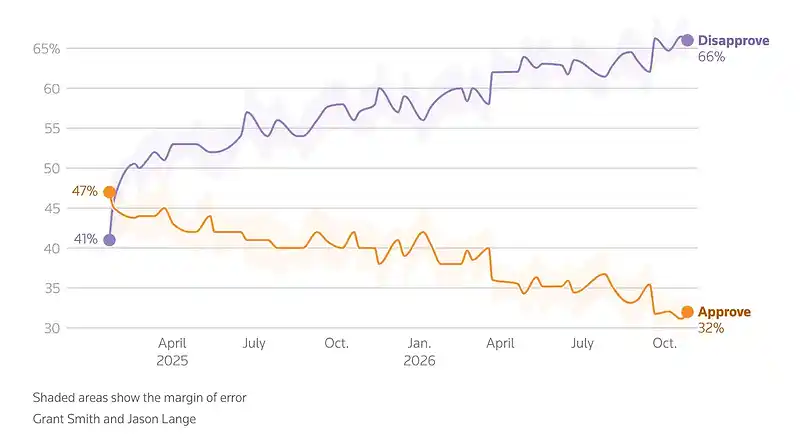
In 2024, President Donald Trump’s promise to bring down prices and make daily life more affordable helped him to win back the White House.
But nearly two years into his second term, Trump’s tariffs and his war with Iran are driving costs higher across the country and fueling deep discontent among voters.
These frustrations aren’t confined to voters who support Democrats. More than half of Republicans, 53%, are dissatisfied with the state of the economy, according to the latest NBC News poll.
This has created an opening for Democrats to win majorities in both the House and Senate. And while the House majority is widely expected to shift to Democrats after Tuesday night, the Senate is still very much a jump ball.
Veteran election data analysts are quick to remind the public that as Tuesday’s voting and later counting unfolds, any one of the competitive Senate races could tip either way.
Gas prices outpace the national average
In several of the states with close Senate races, voters face gas prices that have climbed higher, and more sharply, than the mean nationwide prices over the same period.
Across the country, the average cost of a gallon of gas has risen 40% since Feb. 28, the day before Trump launched attacks on Iran that sent crude oil prices through the roof.
Right before the war, the average price of unleaded was $2.98 per gallon, according to NBC News’ gas price tracker. On Monday, it was $4.16.
In Iowa, however, the average price has climbed by significantly more, nearly 55% since late February. The same figure applies in Nebraska. In Kansas, gas prices are up by 53%.
All three states broke for Trump in 2024. But two years later they are in play, and Democratic Senate candidates Josh Turek in Iowa and Adam Hamilton in Kansas, as well as Independent Dan Osborn in Nebraska, will be very closely watched tonight.
Drivers in Michigan are also experiencing an outsized jump, with gas up 51% from $2.99 in February to $4.52 on Monday. There, Democrat Abdul El Sayed is facing off against Republican Mike Rogers.
In Ohio, where Democratic former Sen. Sherrod Brown is challenging incumbent Republican Jon Husted, the price of a gallon of gas has climbed by 48%.
“We aren’t going very many places,” Kathy DiCristofaro, of Youngstown, Ohio, told NBC News. “We’re retired and have had to cancel trips,” she said.
In Maine, the price of a gallon of gas is 46% higher than it was before the war, creating a drag on Republican incumbent Sen. Susan Collins and an opportunity for Democrat Troy Jackson.
Even when national average gas prices pivot lower, as they did throughout October, that doesn’t always extend to parts of the country where refinery activity influences fuel costs, particularly in the Great Lakes region.
Far from the coasts, refineries that service Michigan, Ohio and Iowa cannot easily restore supply lost to weather events or refinery capacity.
“When you’re isolated in the interior of the country, these problems can linger as long as the refinery is experiencing issues,” said Patrick De Haan, chief petroleum analyst at GasBuddy.
Tariffs and higher grocery prices
Beyond the gas pump, voters are also feeling the sting of higher oil prices overseas in the form of increased transportation costs for groceries and retail goods.
In several of the states with tight Senate races, average households are spending a lot more of their monthly income on groceries than shoppers elsewhere in the country, according to a WalletHub study.
Among the 10 most cost-burdened cities for groceries in America, three of them are in Ohio: Cleveland, Toledo and Cincinnati.
Also making the list are Detroit, Michigan and Hialeah, Florida, the latter a red state with surprisingly competitive gubernatorial and Senate races this year.
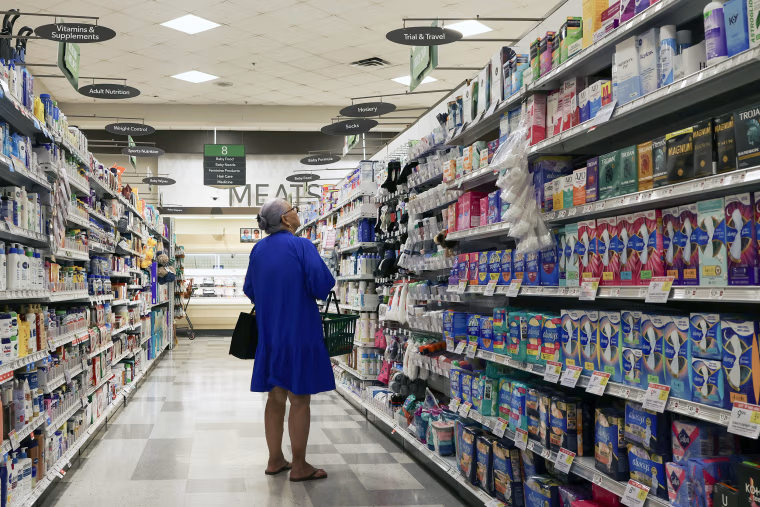
“The cost of living is extremely high,” said Peris Morgan, a Michigan voter who spoke to NBC News outside a polling place in Sterling Heights on Monday. “Rent is high. Groceries are high, gas is high, everything is high, and so yeah, the cost of living compared to what people are being paid is not adding up.”
While higher diesel costs have raised the price of transporting everyday goods, many businesses have also passed another big new cost on to consumers in the past two years: Tariffs.
Trump’s sweeping tariff regime has hit several of the states with major Senate races significantly harder than it has hit other states.
The non-profit National Taxpayers Union Foundation ranks all 50 states by how much tariffs have cost their economies since 2025.
Three of the four states that pay the most for tariffs also have tight Senate races: Texas comes in second, Michigan third and Georgia is fourth. Further down the list, Florida, Ohio, North Carolina and South Carolina are all among the top 15.
The lion’s share of these costs have come in the form of new import duties that affected the price of cars and trucks.
But across the country, tariffs will cost every household an additional $1,100 this year, on average, according to estimates from the Yale Budget Lab.
“This is not what we signed on for, for the tariffs and all this stuff,” said Jacqui Rose Tucker, a resident of Southwest Atlanta who spoke to NBC News’ Gabriella Rudy outside a grocery store.
“My dollar does not go very far anymore,” she said, “This little bit of groceries was $218. It’s ridiculous. So yeah, I’m real concerned.”
Unaffordable housing
While daily costs are straining people’s wallets, longer-term investments like housing are also forcing voters to make sacrifices.
In Alaska, the median home price in September was up by 4.0% year-over-year at $415,805, above the national average of $389,601 which was down 0.1%, according to data from Redfin.
In Ohio, while median home prices are still below the national average, prospective buyers in September saw prices rise by 5.6% year-over-year across the state.
States with tight Senate races are also overrepresented on Redfin’s list of cities where the price of a home has risen the most over the past year:
In Akron, Ohio, average home prices are up 22% from last year, while in Cleveland they’ve risen by 13%.
Joining Akron and Cleveland are Miami, metro Atlanta, Charleston, South Carolina and Cedar Rapids, Iowa — all in the top 10.
As housing prices increase in many desirable metro areas, however, higher borrowing costs at the same time are putting homeownership out of reach for many younger voters, especially Gen Z and Millennials.
The average interest rate on a 30-year-fixed mortgage Monday was 7.27%.
Stagnant wage growth
While Americans are technically earning more in dollar terms on average, paychecks are not keeping up with the pace of inflation.
Wages in September grew by 3.0% year-over-year. But the annual inflation rate hit 3.7%. Adjusting for inflation, this means average hourly earnings nationwide fell by about 0.7%.
This disparity is another source of economic pressure on voters going into Election Day.
But the gap between wage growth and inflation is significantly wider in some of the states that will be most closely watched Tuesday night.
In Nebraska, purchasing power fell by 3.5% over the three months ending in August, relative to regional inflation. Iowa saw a drop of 2.6%. And in Alaska, real pay fell by 2.0% compared to the same period last year.
“I work extraordinarily hard. I’m a single mom. I’ve got three kids,” said Jennie Larson, who planned to vote Tuesday morning in Iowa and spoke to NBC News in West Des Moines. “I go out to eat once a week, right? That’s like my one luxury. But outside of that, like the gas prices, the food prices, it’s unbelievable.”
Gabriella Rudy, Kayla Steinberg, Shannon Pettypiece and Parita Desai contributed.Related Articles
- Business News
US midterm elections: Trump's biggest economic problem looks familiar
- World News
Trump approval rating tracker: How unpopular is the president as midterms arrive?
- World News
Fed expected to hold interest rates steady as inflation tops midterm voters’ concerns
- Politics News
We answered your US midterm questions on the economy, the Iran war, immigration and more
- World News
Americans head to polls in midterm elections seen as referendum on Trump