World

Photos: People flee US-Israeli bombardment of Iran
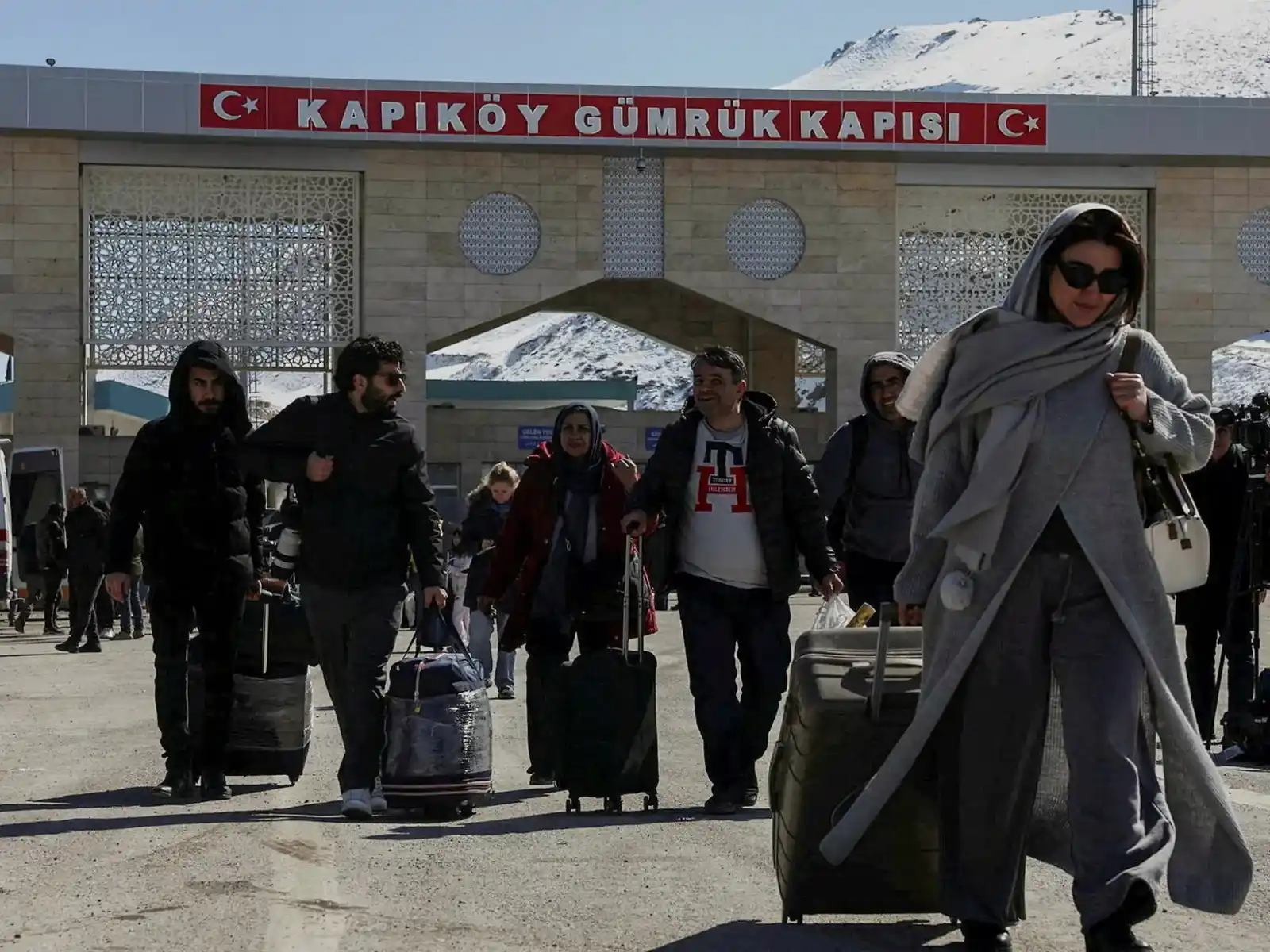
Photos: People flee US-Israeli bombardment of Iran
Iranians cross into Turkiye at the Kapikoy border gate in the eastern Van province. [Dilara Senkaya/Reuters]

In Pictures

At a remote mountain pass in eastern Turkiye, travellers from Iran step across the threshold with a mix of fear, exhaustion and relief, arriving after a week marked by war, long journeys by train or car, communications blackouts and borrowed phones.

Snow-covered hills surround the Iranian side of the frontier at the Kapikoy border gate in Turkiye’s Van province, where families and lone travellers emerge, many after days on the road.

Hundreds have crossed in recent days, and there is now a steady flow in both directions as the US-Israel war on Iran expands across the region.

Some say they fled because bombs were falling on their cities. Others decided to leave after losing contact with loved ones, travelling by land when flights were cancelled.

Egyptian factory worker Mohammad Fauzi, 46, crossed from Iran with no Turkish SIM card, no local currency and no knowledge of the language. He only had the phone numbers of two Egyptian friends in Ankara and Izmir – and a plan to reach Cairo.

He had watched work grind to a halt in Iran during his three months there in the marble and granite sector, with many factories closing.

“The situation is very difficult, and working has stopped. I can’t work, I can’t stay because the situation is dangerous now, so I want to go to my home, my country.”

Jalileh Jabari, 63, said she fled Tehran because “bombs are falling” and the situation had become unbearable. The highways to the border were calm, but uncertainty in the capital pushed her to leave. She was travelling to Istanbul, where her daughter studies.

“If things become good there, if Iran becomes good, I will come back. If there is peace, I will return.”

As many leave Iran, some are returning.

Leila, 45, who did not give the Reuters news agency her last name, decided to head back from Istanbul – where she occasionally assists academics working with a German historical research institution – after she lost contact with her family in Shiraz.

“How can I be safe when I feel my family, maybe they are in danger?” she asked.

One of her brothers is seriously ill and in a coma, increasing her worry. For her, being physically with her family, even in danger, feels more bearable than waiting abroad.

She plans to remain in Iran until the war is over.

“I cannot guard them against bombs. But when I feel I can be with them together, maybe we die together, or I can help them as long as we are alive.”

Iranians make their way after crossing into Turkey at the Kapikoy Border Gate in the eastern Van province
Iranian Leila, 45, waits to cross from Turkiye into Iran. After losing contact with her family in Shiraz, she decided she had to return home. [Dilara Senkaya/Reuters]
Iranians make their way after crossing into Turkey at the Kapikoy Border Gate in the eastern Van province
Mohammad Fauzi, 46, an Egyptian factory worker, crossed into Turkiye with no Turkish SIM card, no local currency and no knowledge of Turkish. He worked in Iran's marble and granite sector but said many factories had closed as the conflict escalated. [Dilara Senkaya/Reuters]
Iranians make their way after crossing into Turkey at the Kapikoy Border Gate in the eastern Van province
Hundreds have crossed the border in recent days, and there is now a steady flow in both directions. [Dilara Senkaya/Reuters]
Iranians make their way after crossing into Turkey at the Kapikoy Border Gate in the eastern Van province
Jalileh Jabari, 63, said she left Tehran because “bombs are falling” and the situation had become unbearable. “If things become good there, if Iran becomes good, I will come back.” [Dilara Senkaya/Reuters]
Iranians make their way after crossing into Turkey at the Kapikoy Border Gate in the eastern Van province
Ebrahim Eidi, 61, who arrived in Turkiye from Iran, said many Iranians still hoped for change but feared taking action themselves. “People are afraid to go to the streets.” [Dilara Senkaya/Reuters]
Iranians make their way after crossing into Turkey at the Kapikoy Border Gate in the eastern Van province
Near the Kapikoy border gate after arriving in Turkiye, Yasna, 63, says: “I came to see my daughter, I haven't seen her for six years.” She was reluctant to comment on the political situation in Iran. “I don't know what to say about the situation in Iran because we will be [going] back to Iran.” [Dilara Senkaya/Reuters]
Hamid Shirmohammadzadeh, 35, who arrived in Turkiye from Iran, sits in the lobby of a hotel in Turkiye's Van province. [Dilara Senkaya/Reuters]
Iranians make their way after crossing into Turkey at the Kapikoy Border Gate in the eastern Van province
Luggage belonging to people arriving in Turkiye from Iran at the Kapikoy border gate in Van. [Dilara Senkaya/Reuters]

Tickers and topics