General Pants Co enters voluntary administration, putting hundreds of jobs at risk
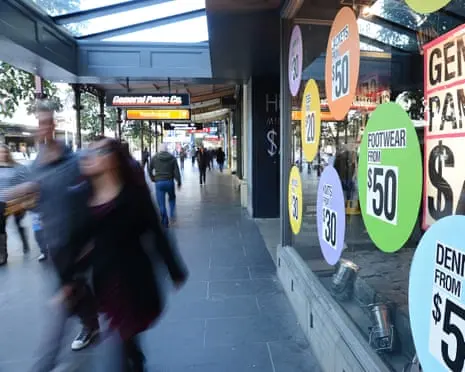
Australian fashion chain becomes latest retailer in trouble after David Jones, Cue and Veronika Maine Get our breaking news email, free app or daily news podcast Youth fashion chain General Pants Co has become the latest major retailer to slide into voluntary administration, putting nearly 500 jobs at risk as Australia’s retail sector continues to struggle with cash-strapped shoppers and...
Youth fashion chain General Pants Co has become the latest major retailer to slide into voluntary administration, putting nearly 500 jobs at risk as Australia’s retail sector continues to struggle with cash-strapped shoppers and online-only competitors.
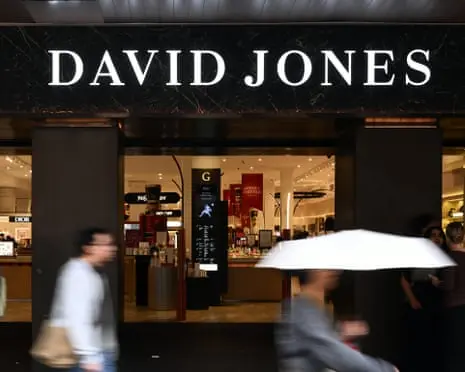
The collapse comes not long after that of upmarket department store David Jones and premium womenswear brands Cue and Veronika Maine, underscoring the mounting toll of tough economic conditions on established retailers.
The consultancy Alvarez & Marsal confirmed it had taken control of General Pants Co and nine related businesses after being appointed their voluntary administrator late on Wednesday evening.
In a statement, the administrators said they were working closely with the existing management team to undertake an urgent assessment of the business, including its trading performance, stores, stock and costs.
All 35 General Pants Co stores and its online store would remain open and trading as usual while the administrators worked out whether they could sell or restructure the business to keep it afloat, the firm said.
Guardian Australia contacted General Pants Co’s parent company, Alquemie group, for comment on Thursday morning.
Alvarez & Marsal said the 500 people employed by General Pants Co across Australia and New Zealand would continue to be paid for the work they did during the administration period.
Additionally, the consultancy said staff entitlements accrued prior to the appointment remained legally protected under the Corporations Act and of a higher priority to administrators than “most” other unsecured creditor claims.
Two of the Alvarez & Marsal managing directors, Jason Tracy and Glen Kanevsky, were appointed to oversee the administration, with a first meeting with creditors due to be held on 30 November.
Tracy described General Pants Co as “one of Australia’s best-known youth fashion brands, with a loyal customer base and a dedicated team”.
He said the administrators’ immediate priorities were to keep the stores trading, support employees and customers, and pursue “a sale and/or recapitalisation” of the business.
“With Black Friday next week, we are focused on maximising trading performance and expect strong demand over the period,” Tracy said.
“We thank the team members, landlords and suppliers of General Pants Co for their support as we work through the administration.”
General Pants Co, which began in 1972 as a specialty denim store on Sydney’s George Street and has traded across Australia and New Zealand since, is not the only Australian retailer under significant pressure.
Last week, the embattled upmarket retailer David Jones entered administration with more than $400m owed to creditors. Less than two months earlier, Cue Clothing Co, the owner of mainstay Australian labels Cue and Veronika Maine, entered administration and receivership in September.
Last year, Mosaic Group, the owner of brands including Noni B, Rivers, and Katies, was liquidated.
While Australian retailers deal with their own increased operating costs, indebted households are tightened their budgets during a new bout of inflationary pressures.
This strain is driving a sharp contraction across the sector, according to credit reporting agency Equifax, marked by surging business closures and a slowdown in new brands.
Equifax’s Brad Walters said that the strain was not limited to large retailers such as David Jones.
“Smaller retailers are also dealing with a difficult combination of softer discretionary spending, rising operating costs and increasingly narrow financial buffers,” Walters said.
“Instead of funding long-term expansion, smaller operators are taking on credit simply to manage immediate overheads.”
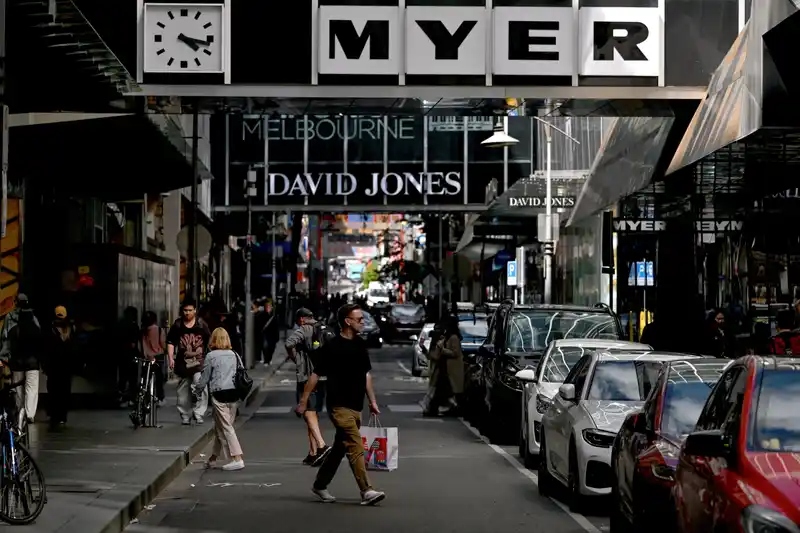
While David Jones is closing half of its 38-store network, rival Myer is facing its own financial stress, with the chain forced to offer “higher than planned promotional activity to stimulate demand”.
Four out of Myer’s five newly acquired apparel chains – Jay Jays, Portmans, Dotti, and Jacqui E – recorded falling sales last financial year, leaving Just Jeans as the sole brand to post growth.