How Brazil’s President Lula overcame poverty, imprisonment and personal tragedies
Luiz Inacio Lula da Silva has been re-elected president of Brazil for an unprecedented fourth time. His journey from deprivation to the seat of power despite multiple setbacks is as extraordinary as his latest comeback victory, writes James C. Reynolds
Brazil’s 80-year-old president Luiz Inacio Lula da Silva clinched an historic fourth term in office on Sunday, defying the polls to defeat his Trump-backed rival.
His electoral comeback is the just the latest step in an extraordinary journey from extreme poverty, through disfigurement, personal losses and imprisonment, to becoming a decades-long force in Brazilian politics.
Growing up poor and unable to read until he was 10 years-old, he worked as a peanut seller and shoe shine boy before beginning his unlikely rise to the highest office in the land.
Losing two wives and a baby in tragic circumstances, Lula has repeatedly overcome personal blows, most famously losing one of his fingers in a machinery accident as a teenager. Far from setting him back though, he would go on to use the industrial injury as a symbol of his working class background.
On Sunday, the veteran left-wing politician secured 51.79% of the vote and overcome the challenge from right-wing Flavio Bolsonaro, the son of the imprisoned Jair Bolsonaro from whom Lula won the presidency in 2023.
The former trade unionist, remembered fondly for his stand against military dictatorship in the late 1970s, appeared to have lost some of his lustre by the time of the latest campaign, with pollsters predicting the elder statesman’s demise after nearly four decades at the centre of public life.
His staggering comeback came in spite of reports Washington was actively lobbying to restore the Bolsonaro dynasty to power. Lula will now continue to oversee a Brazil dogged by high inflation, interest rates and public debt, acknowledging in his victory speech that talk of national unity “doesn’t always fit the reality of this country”.
Below The Independent looks back on Lula’s remarkable rise - and return - to power.
Working class champion born into poverty
Lula was born on 27 October 1945, the seventh child of Eurídice Ferreira de Melo and Aristides Inácio da Silva, illiterate tenant farmers living an impoverished existence in the rural and drought-suffering state of Pernambuco.
Eurídice and the children remained in Pernambuco, subsisting on a diet of flour and beans as Aristides joined the many pilgrims venturing south for work in one of Sao Paolo’s now booming factories.
Lula was seven when his mother sold her watch and a donkey to afford the 13 day journey to Santos, on the coast, in search of a better life with the children. He was ten when they moved back to the state capital and rented the grotty backroom of a bar, where he would learn how to read.
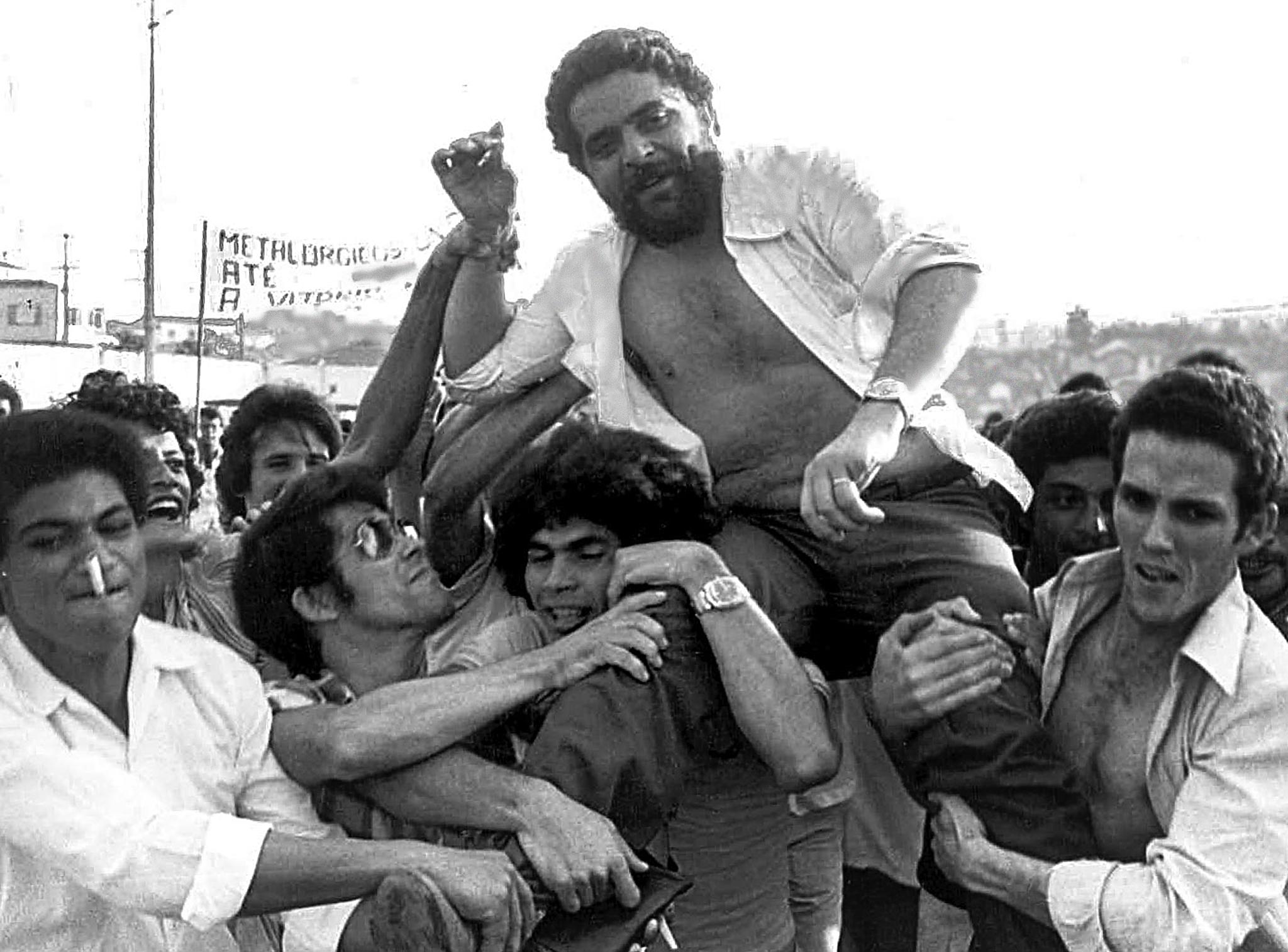
Lula, the youngest child, found work as a boy shining shoes and delivering laundry to help make ends meet. He dropped out of school at 14 but soon found employment at a factory making screws, a small part in the rapidly industrialising skyline over Sao Paolo.
Work offered a path to trade school where Lula would become a skilled machinist and metallurgist, learning to work on the mechanical lathes.
It was while working in 1964 that he lost his little finger, crushed while trying to fix a broken press. It would become a symbol of his working-class roots, even as rivals attempted to use it against him.
The missing digit became a line of mockery for the younger Bolsonaro on the campaign trail, who called him ‘Nine Fingers’ in a jab that quickly backfired.
Lula dismissed the comments from “some rich guy” who, he also said during a late debate, “doesn’t know what hunger is”.
Bolsonaro should have known the injury was something that garnered Lula support rather than scorn.
Earlier this year, South Korea prepared a four-fingered glove for Lula during a diplomatic visit. President Lee Jae Myung, who had his own finger and arm hurt when he worked as a child, celebrated the two leaders as “brothers” who had “gained life’s wisdom through labor”.
Personal tragedy and an unlikely path into politics
Brazil was thrown into crisis in 1964 by a military coup, creating severe labour market changes and eating into real wages.
Lula was forced to change jobs several times before landing at Indústrias Villares, a metallurgical company in Sao Bernardo do Campo, where he became to come into contact with the trade union movement through his brother, José Ferreira da Silva.
By 1969, Lula had been elected as a substitute on the board of the metalworkers union at Sao Bernardo do Campo.
It was the same year that he married Lourdês, the younger sister of his best friend, and bought a small house near a bakery. Lourdês fell pregnant but tragedy struck in the seventh month of her term when she developed hepatitis, killing both mother and baby.
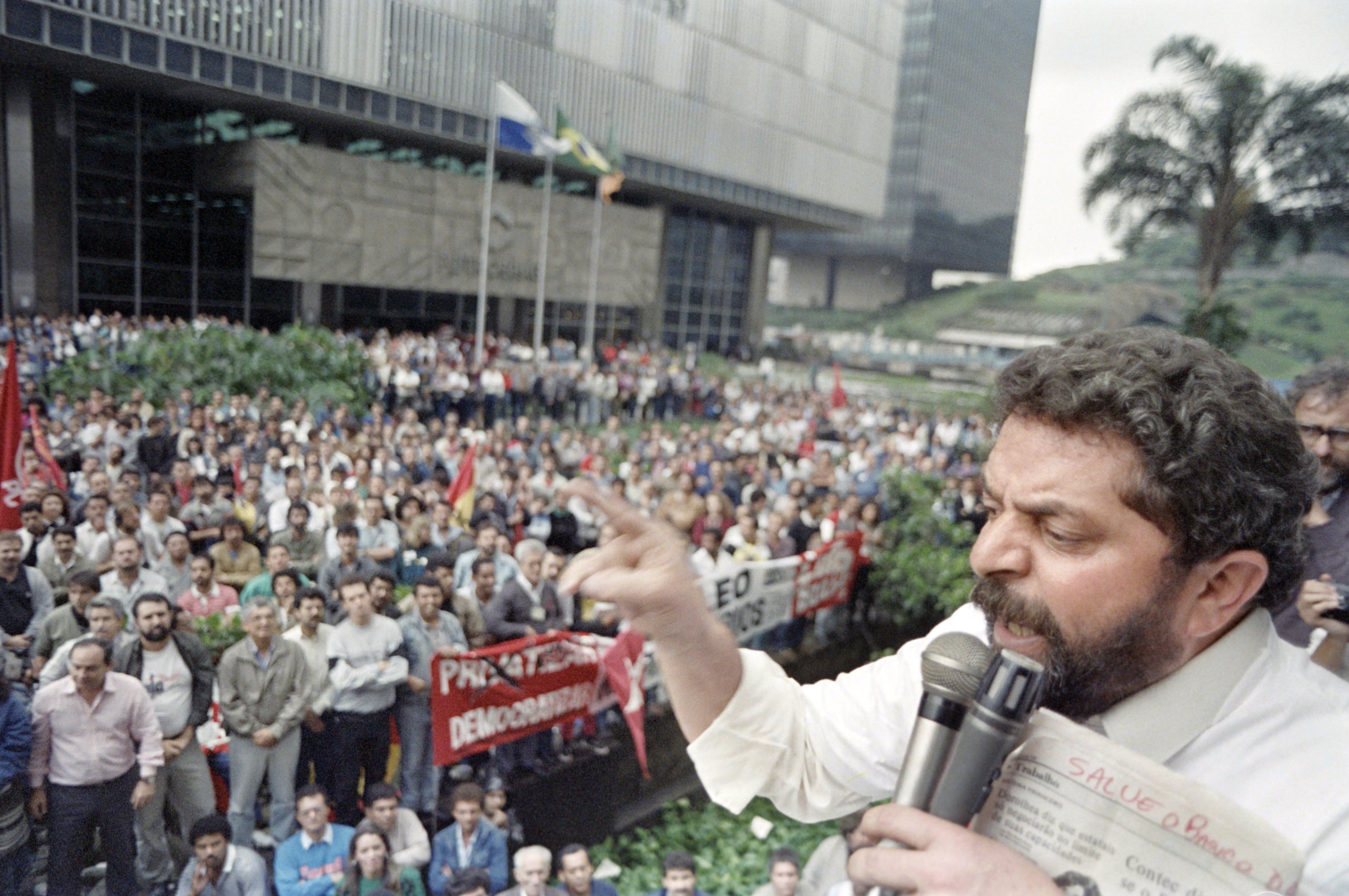
Grieving, Lula went through “three years of craziness”, he later assessed, and started spending more time at the union.
He was first secretary by 1972, remarried to Marisa Leticia Casa in 1974, and elected president of the union in 1975 with 92 per cent of the votes.
Re-election followed in 1978 at a time of exceptional pressure, with the military junta outlawing strikes and dismantling worker protections. Lula, defiant, led the metalworkers’ strikes of 1979-1980 that paved the way for democracy to return to Brazil.
In 1980, as the military leadership began to oversee a period of reopening, Lula helped to found the Workers’ Party (PT), which rapidly amassed a national following.
After nearly three decades without direct elections in Brazil, he was able to run for president for the first time in 1989. He lost - and again in 1994 and 1998 - but momentum continued to carry the movement.
Back-to-back landslides sweep Lula to power twice
A landslide victory swept Lula to power in 2002, completing his journey from the humblest of beginnings to the most powerful man in the country.
In office, Lula forged wide alliances with world leaders across the political spectrum but adopted conservative fiscal and monetary policies that estranged some of his base.
Corruption allegations followed towards the end of his first term, but failed to prevent a second landslide in 2006, achieving nearly 61 per cent of the vote.
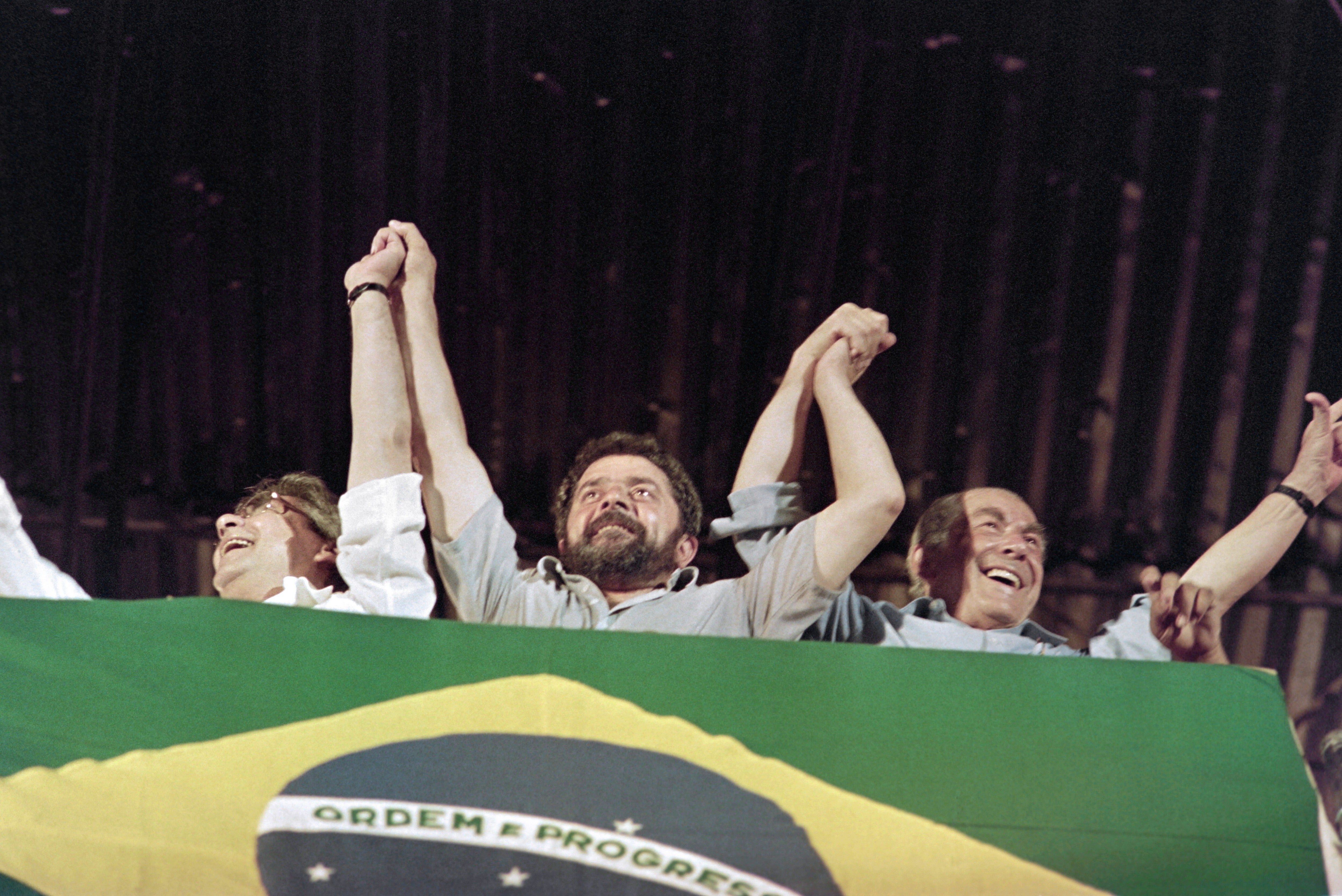
Lula could by then point to having lowered poverty and improved the economy of South America’s biggest country, while discrediting the scandals hanging over the party.
He was eventually ousted in 2010 by Dilma Rousseff, a former Marxist rebel tortured under the military dictatorship.
Jailed in corruption probe and another personal loss
In 2014, Brazilian public life was shaken by Operation Car Wash, starting as anti-corruption probe into alleged bribery and money laundering that would go on to topple dozens of politicians and members of the business elite by the time of the next election.
Lula was charged with leading a corruption scheme at the state oil company Petrobras in 2016, and in 2017 convicted of corruption and money laundering tied to a beachfront apartment that prosecutors said was promised to him as a kickback from construction company OAS.
His wife, a longtime supporter, advisor and campaigner, suffered a stroke in January 2017 and died a little over a week later in hospital.

Lula turned himself into police in April 2018 following a two-night standoff at a steelworkers’ building in Sao Paolo. He had tried to leave the union building earlier in the day, but had been blocked by thousands of his own supporters, forcing him back inside.
He claimed the trial was politically motivated to prevent him from running for office again, and the supreme court eventually annulled the convictions in 2021.
Lula spent 580 days behind bars in Curitiba before his release in 2019, as a judge ruled that defendants should only be imprisoned if they have exhausted their appeal options.
Out of prison, he would go on to be elected for a third term in late 2022, returning in January to displace the beleaguered Jair Bolsonaro from office as the former congressman faced pressure over his handling of the pandemic and subsequent economic recovery.
Lula remained popular among supporters, and a darling of the global left, but was a symbol of lingering corruption to detractors. He remarried again in May that year to Rosângela da Silva, a fellow member of the Workers’ Party in her youth.
An historic fourth term on the eve of his 81st birthday
Lula triumphed on Sunday, two days before his 81st birthday, to secure a fourth term against the odds. Despite close polling in the days beforehand, saw off Bolsonaro by a margin of more than four million votes.
During the campaign, Lula pointed to his track record of cutting poverty and inequality while also highlighting record low unemployment, illiteracy and deforestation. He also defended against graft allegations by promising to make public his bank, tax and telephone record so long as his competitor did the same.
But a fourth term could prove challenging, forced to work alongside a Congress packed full of Bolsonaro allies. Brazil’s public debt has surged more than 10% since Lula’s 2023 term, interest rates sit at 13.75% and inflation remains high at 4.6%
Lula’s platform promises lower interest rates through fiscal discipline that spares social programs, but most economists say rates will only fall faster if Brazil cuts spending, and it’s unclear how he will square the two.