
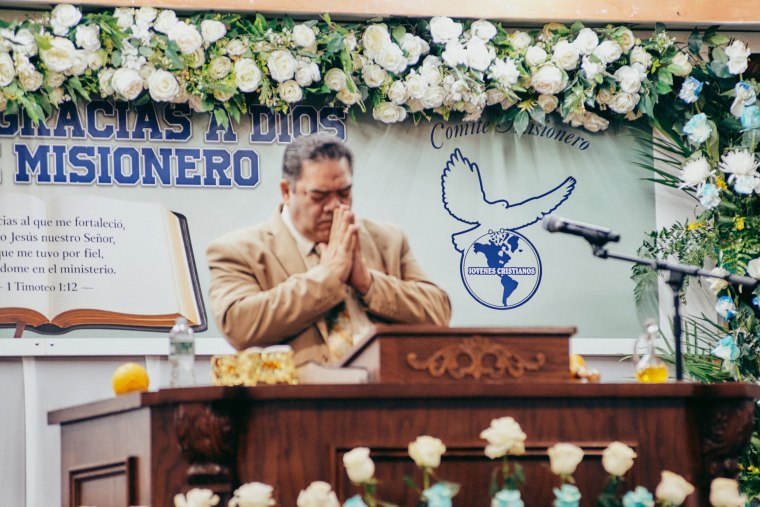
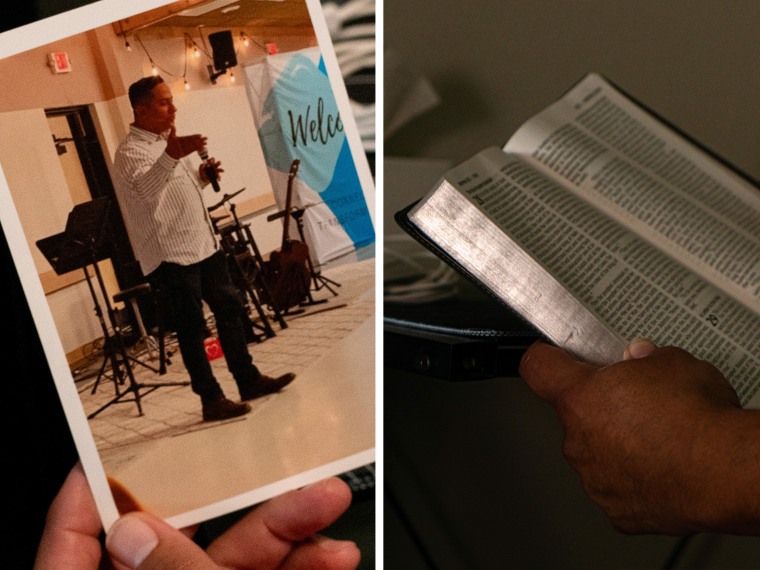
Pastor Erick Salgado used to preach to his Brooklyn congregation that they shouldn’t fear immigration officers because “they are after criminals.”

Subscribe to read this story ad-free
Get unlimited access to ad-free articles and exclusive content.

Then ICE started arresting members of the church. Then the agency detained Sebastián Renoj Ordoñez, a deacon who had also served as the church’s secretary for 18 years.
“Seeing him be apprehended by immigration the way he was, it’s like taking hope away from other members,” said Salgado, who’s led the Iglesia Jóvenes Cristianos church for the past 28 years. “Now, we just have to let people know that there’s always a possibility for them to be apprehended — they have to just pray before they go to work and hope for the best.”
As President Donald Trump’s immigration crackdown intensified over the past year, members and leaders of Latino evangelical churches are reeling from the effects of the stepped-up enforcement actions. Now this key electorate that helped Trump return to the White House finds itself caught in the crosshairs of his mass deportation agenda.
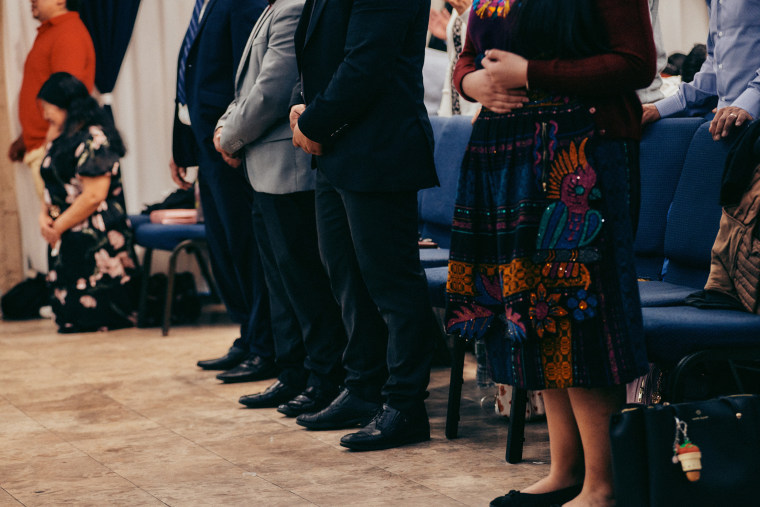
NBC News spoke with eight pastors from six states who described the toll of the crackdown. Immigrant members of their churches, including leaders, have been detained, deported or pressured to leave the U.S. due to changing immigration policies and rollbacks on programs that allowed them to remain in the country legally.
Amid increased immigration arrests in their communities and more ICE agents near their places of worship, attendance has dramatically declined and fewer families are filling collection plates, leading to reduced funds and the closure of some churches.
The pastors, regardless of political ideology, said that what they are witnessing goes against Trump’s campaign promise to prioritize deporting those in the country illegally and focus on those who have committed serious crimes.
‘Killing the Latino evangelical church’
Trump’s immigration policies and aggressive enforcement tactics are having such far-reaching consequences on congregations that two influential Latino reverends — despite standing on opposing ends of the political spectrum — view the issue as an existential one for the respective networks of churches they lead.
“ICE did not just come after the bad people,” said the Rev. Samuel Rodríguez, an influential pastor at the New Season megachurch in California and president of the National Hispanic Christian Leadership Conference. “You’re deporting the future of American Christianity by deporting the good people.”
“That collateral damage is not what we signed up for,” said Rodríguez, a social conservative who has advised Trump and criticized Democrats in 2024 for going “too far left” on immigration and abortion.
For the Rev. Gabriel Salguero, a pastor at The Gathering Place church in Florida and president of the National Latino Evangelical Coalition, “people who had historically supported this administration are finally waking up and saying, ‘We were for securing the border, we are for dealing with violent criminals, but this is not what we wanted.’”
“We are frustrated and angry with how they’re targeting immigrant families and children,” said Salguero, who leans progressive. “It’s devastating.”
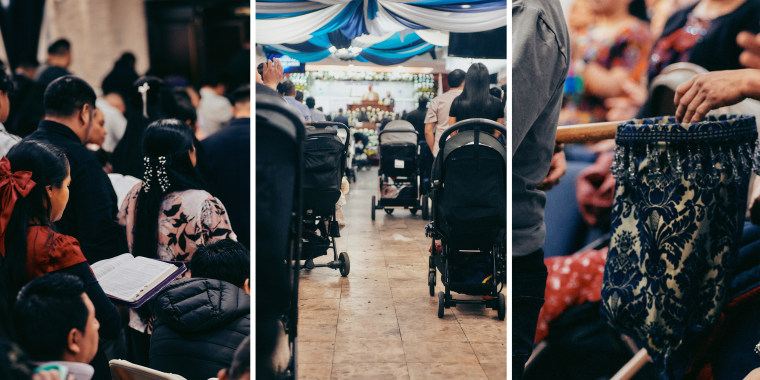
At NALEC, the network of churches he leads, staffers get dozens of calls a day from pastors seeking support because church members have been detained or deported. During immigration operations in specific cities, they would field hundreds of calls, Salguero said. But for the most part, pastors call because they can’t afford keeping their churches open as attendance dwindles, he said.
Immigrant churches in the Minneapolis and Chicago areas began closing down after attendance declined 75% during operations Metro Surge and Midway Blitz, respectively, Salguero said. Other churches across different states have seen their attendance drop by a third, he said.
In an opinion piece titled “ICE is devastating some Latino churches” in the influential magazine Christianity Today, Rodriguez described seeing a pattern of dwindling attendance after he visited churches that are part of the NHCLC.
“The current immigration malaise is killing the Latino evangelical church,” Rodriguez told NBC News.
As church attendance declines in the U.S., these congregations, especially Hispanic ones, are a crucial source of growth when it comes to new and emerging churches, referred to as plants — and are considered an important part of evangelism designed to reach new believers.
Even as evangelical houses of worship risk closure and struggle to pay rent, they also serve as lifelines for scared immigrant families in hiding. Members deliver groceries, take children of immigrants to school and appointments, and some also turn their churches into centers for know-your-rights immigration trainings.
“We are both the impacted community and the responding community,” Salguero said.
In a statement Tuesday marking the beginning of Holy Week, Salguero denounced the immigration detention of a pastor in Elizabeth, New Jersey: “To detain a pastor and deny him the basic dignity of his faith this sacred season is a moral contradiction that should trouble every American, regardless of political party or faith tradition.”
Spikes in ICE arrests have been driven by the arrests of immigrants with no criminal convictions, according to data from the Deportation Data Project at UC Berkeley, a group of academics and lawyers who collect, post and analyze immigration enforcement data.
A spokesperson for the Department of Homeland Security told NBC News on Thursday the agency is “delivering on President Trump’s promise to the American people to arrest and deport criminal illegal aliens including murderers, rapists, pedophiles, gang members, and terrorists,” and will continue doing so.
The DHS spokesperson said that “70% of ICE arrests are criminal illegal aliens” and that DHS is “continuing to go after the worst of the worst.”
Leading a church, then taken away
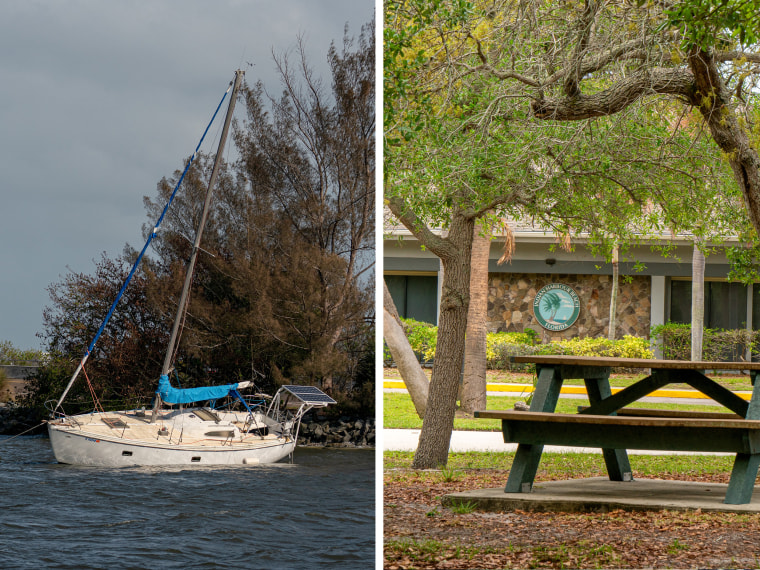
In the coastal Florida city of Indian Harbour Beach, the Church for the Beach was rocked by the immigration detention of Pastor Wilber Marenco, the first case directly affecting a member of that predominantly non-Hispanic congregation this year.
Marenco said he fled threats and government repression in his native Nicaragua when he legally entered the U.S. in 2019 on a tourist visa and applied for asylum.
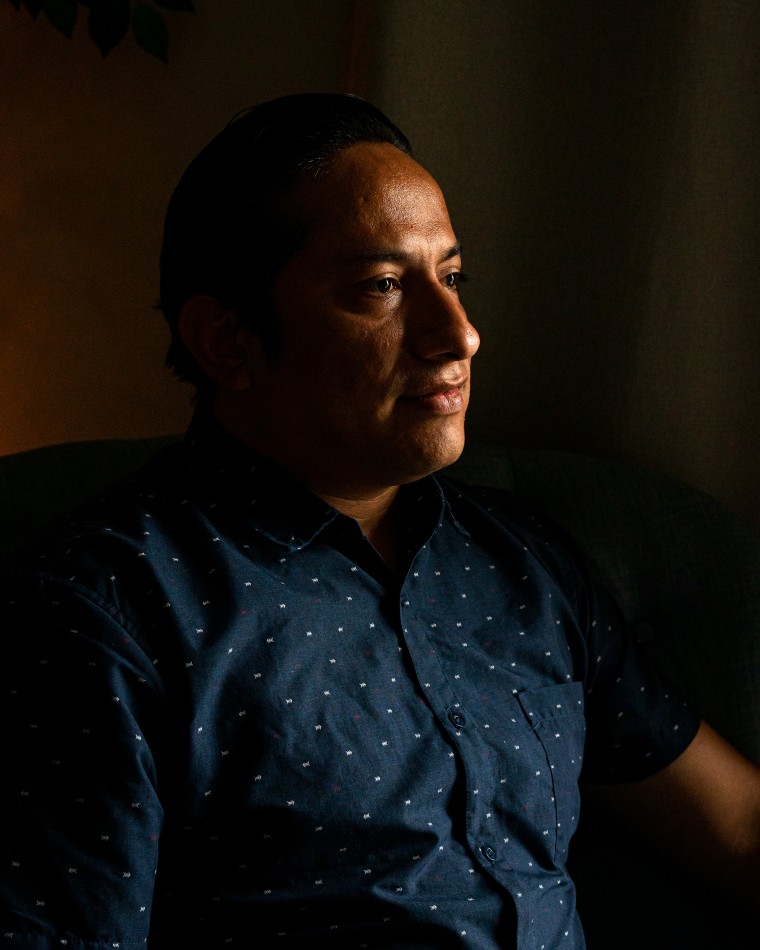
Having a pending asylum application allowed Marenco, who did not have any criminal convictions, to remain in the country and obtain work authorization. The DHS spokesperson said Marenco had “illegally overstayed the terms of his visa.”
Marenco was pulled over at a gas station in February by a sheriff’s deputy, who said he was checking for an expired license plate.
Marenco said he produced all the necessary paperwork and everything checked out, but a while later the deputy conducted an immigration arrest. Marenco believes he was racially profiled.
“I was locked inside the car. It was the first time in my entire life that a police officer had arrested me — taking me away without reason,” Marenco said.
Marenco said he was so scared, his blood pressure and heart rate shot up and he had to be taken to a hospital for treatment before he was booked in county jail. He was eventually sent to “Alligator Alcatraz,” the nation’s first state-run facility for federal immigration detainees, which has faced mounting allegations of “horrible” detention conditions.
“The conditions at Alcatraz are subhuman,” Marenco said, describing very little and poor-quality food, sick detainees who had to wait two or three days to get medical attention and “head to toe” searches every time detainees returned to their cells, which he called “cages.”
“The cages were basically chicken coops — and essentially, that’s where they kept us locked up all day long.”
The DHS spokesperson said in a statement that “Alligator Alcatraz does meet federal detention standards. All detainee facilities are clean. Any allegations of inhumane conditions are FALSE.”

Marenco was released on bond about three weeks after his arrest, and ICE placed a GPS ankle bracelet on him.
He worries about being sent back to Nicaragua.
“We lived in fear of the police — that was our situation in Nicaragua,” he said. “I find myself in that very same situation, facing the very same circumstances — right here.”
Marenco hopes to recapture the sense of safety he felt when he arrived in the U.S. and found a church community that welcomed him and his family seven years ago. With that goal in mind, he’s fighting for asylum.
Pastor Joel Tooley, who leads a different evangelical church in Florida and knows Marenco, said his friend is “somebody who followed all the rules and did everything right — still he was detained.”
“His story really resonated with people who may have voted for this administration and now are kind of caught in that in-between space,” Tooley said.
A voting bloc increasingly ‘disappointed’
With more than 10 million Latinos identifying as evangelical and nearly 3 in 10 Hispanic Republicans belonging to this Christian movement, Trump has been amassing critical electoral support from Latino evangelicals since the 2020 election.
These voters “prioritize their religious identity before anything else,” said Jarred Cuellar, an assistant professor of political science at California State Polytechnic University, Pomona.
They believe Trump and other Republican candidates are more in line with their religious views and stances against abortion, same-sex marriage, transgender rights and other issues, Cuellar said.
A postelection survey from the Public Religion Research Institute found that 64% of Hispanic Protestant voters, including evangelicals, favored Trump in the 2024 presidential election — helping him make inroads with the overall Hispanic electorate.

Cuellar, who researches the growing political alignment of Latino evangelicals with the Republican Party, said he’s seeing many Latinos who supported Trump “feeling the negative impacts” of his immigration agenda.
Though Hispanic voters are the group most likely to know someone who’s undocumented or an immigrant, Cuellar explained, in 2024 many clung to Trump’s campaign remarks that he would target criminals and violent offenders.
Regarding the current immigration situation, “they’re saying that they’re going to pray about it and they’re kind of staying quiet because they’re disappointed,” Cuellar said.
A Pew Research Center survey from November found that 55% of adult Latino evangelicals said they strongly or somewhat disagreed with Trump’s overall approach to immigration.
‘Going after everybody’
During Operation Charlotte’s Web in North Carolina’s largest city in November, Pastor Maudia Meléndez said members of her church would wait until 7 p.m., when most of the immigration officers appeared to be done with their shifts, to escort immigrants, some undocumented, to the supermarket so they could buy groceries.
After seeing the deadly consequences of a similar immigration enforcement operation in Chicago, “we were afraid that someone was going to be killed,” Meléndez said. Even after Operation Charlotte’s Web ended, congregants have been detained and deported as they go about their daily lives, including one young man who got picked up by immigration while traveling for work, she said.
A review of four lawsuits from churches suing the Trump administration for eliminating protections against immigration enforcement at places of worship detailed seven immigration arrests that took place at churches or in their vicinity a few months after the policy changed last year. Three of those arrests occurred at evangelical churches.
“Let me be clear: ICE does NOT raid churches,” the DHS spokesperson said, adding that an injunction in one of the lawsuits, limiting the policy’s implementation until the case is resolved, “is based on a false narrative.”
In response to the lawsuits, the government has argued that plaintiffs can’t prove that immigration policies allowing enforcement at sensitive locations are directly impacting the exercise of religion or church attendance.
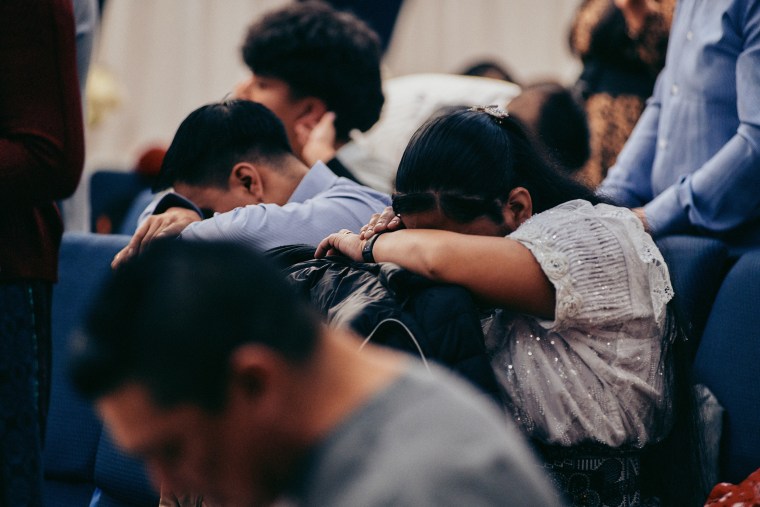
In Minneapolis, Pastor Víctor Martínez leads the New Generation Church, a bilingual congregation of 60 people, many of them immigrants.
“We started hearing stories of people that are documented being picked up,” he said. “That affected us. That really bothered us.”
Recently, the deportation of two Mexican families who attended his church rattled him, he said. Members of his church are working on returning the belongings the families left behind to Mexico.
“As immigrants, we’re going to keep suffering until immigration reform is passed,” he said.
In January, during Operation Metro Surge in Minneapolis, five or six immigration officers surrounded Martinez’s church while congregants were doing food deliveries. According to Martínez, crowds of observers drove the officers away before they arrested anybody.
“It was very scary,” he said. “We were thinking of closing the church because we felt we were making people targets.”
The DHS spokesperson said they have no record of this incident and instead referenced the arrests of three protesters who interrupted Sunday service at a church in St. Paul, Minnesota, back in January. “In fact, it’s anti-ICE agitators who targeted churches.”

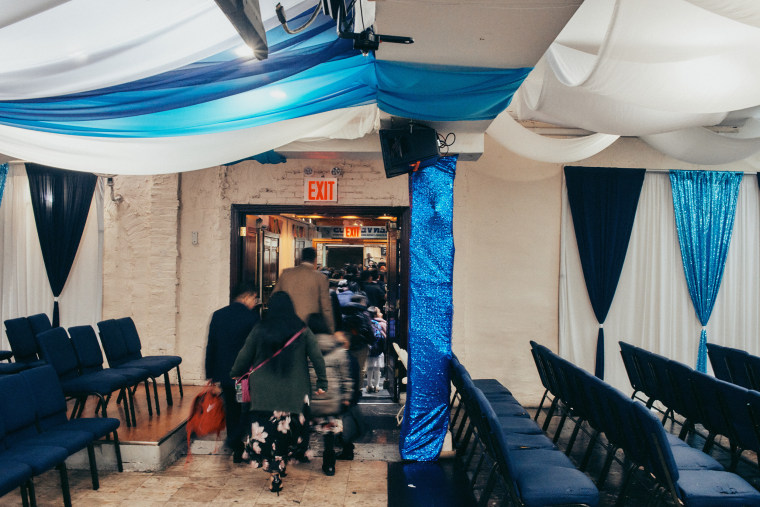
That same month in New York, evangelical church leader Sebastian Renoj Ordoñez was outside his home when ICE officers arrested him in January. According to federal court filings submitted by his attorney, immigration authorities did not give him a reason for the arrest and did not read him his rights. His attorney’s filings state Renoj Ordoñez, a deacon and secretary at his church for almost two decades, had never been charged with a crime.
The federal government pushed for his deportation, stating he had illegally entered the country. According to DHS, Border Patrol had encountered Renoj Ordoñez in 2000 when he was “using a fake name” and claiming to be a Mexican citizen, and he was removed to Mexico and later re-entered the U.S. at an unknown date.
Renoj Ordoñez was bounced around detention centers in New Jersey and New York, including a stint in the Metropolitan Detention Center. MDC, New York City’s sole federal jail, holds ICE detainees while also housing notorious inmates like former Venezuelan President Nicolás Maduro.
Unsure of how long he would have to endure MDC’s poor conditions after three months in detention, Renoj Ordoñez opted to voluntarily depart to his native Guatemala, leaving behind his U.S.-born children and grandchildren, according to Salgado.
“Going after criminals, everybody understands that that should happen. But going after everybody?” Salgado said. “That’s troublesome.”
Praying — and pushing back
As immigration enforcement creates crises at their churches, some leaders are turning to prayer.
Meléndez, who leads a congregation of nearly 40 people at Jesus Ministry church in North Carolina, said she is addressing it “in the spiritual realm by praying, fasting, believing in God for protection — that he is going to bring a change.”
Rodriguez, of the New Season Church in California, said “there has been more prayerful intercession — churches are doubling down, even though the attendance has gone down.”
Others feel prayer alone is not enough.
In Virginia, the Rev. Carlos Malavé of the Latino Christian National Network is among those who sued the Trump administration to reinstate the policies protecting churches from immigration enforcement.
“Things are not going to change just because we wish so, or even because we ask God,” he said.
“We need to continue working very intentionally and intensively in convincing our folks, particularly Latinos and Latinas who can vote, that it is extremely important that they engage in the electoral process.”