Don’t expect the price of beef to drop anytime in the near future, industry warns


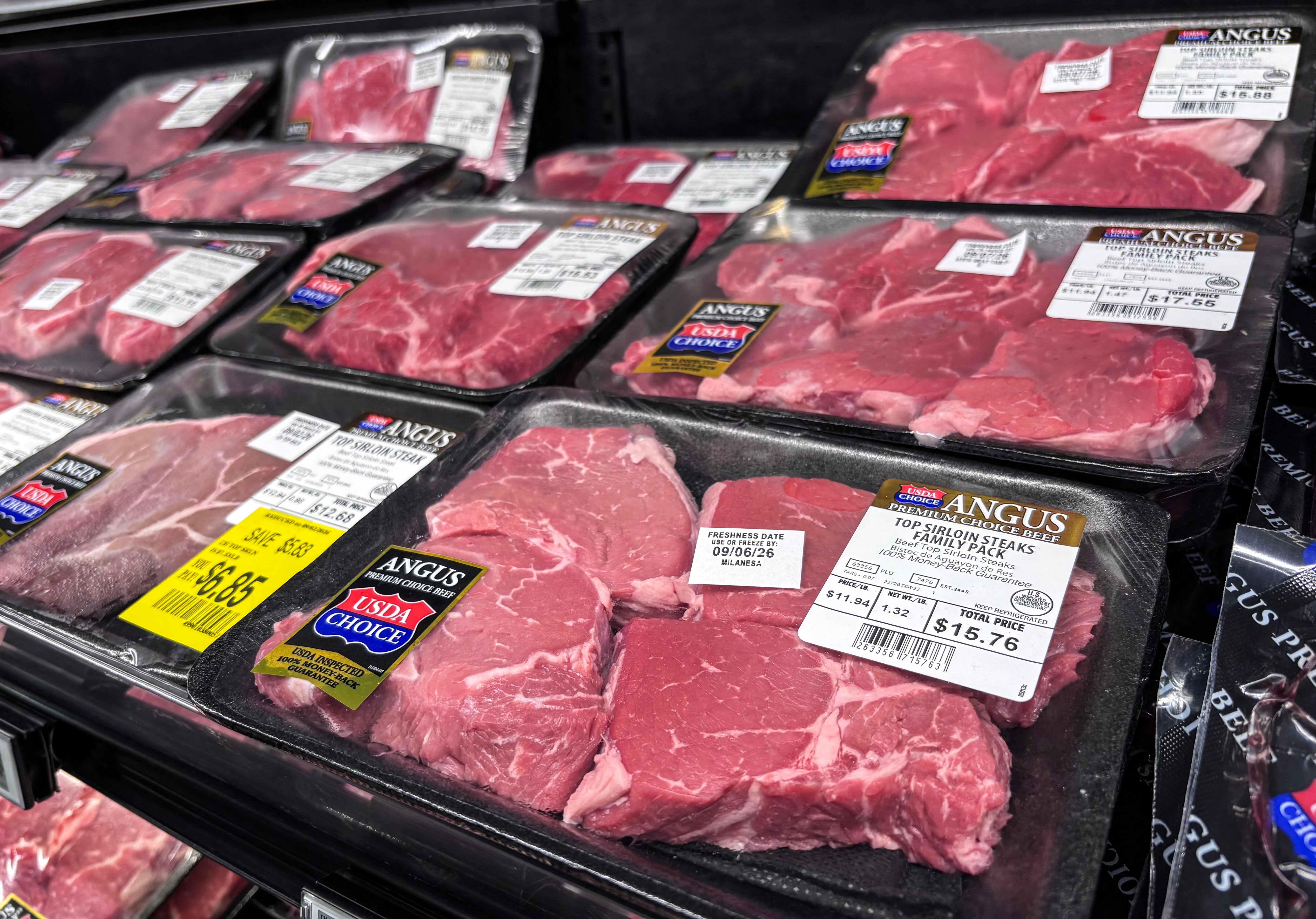
Beef prices have reached a near all-time high as of October, but experts say hostile industry conditions are likely to persist
Consumers should not expect a drop in the price of beef any time soon, industry experts have warned.
Rising prices have been a thorn in the Trump administration’s side as it battles against voter frustration with the soaring cost of living.
When President Donald Trump took office in January 2025, a pound of 100 percent ground beef stood at $5.545, according to the Federal Reserve Bank of St. Louis.
By August this year it hit an all-time high of $6.923, easing slightly in October to a still-substantial $6.755.
Much of the rise has been attributed to a low domestic cattle inventory, and those working in the industry are pessimistic about the prospects of any imminent improvement.
Livestock auctioneer Brad Peek toldThe Wall Street Journal he expects the effort to restore cattle populations could take years.
“The common public probably thinks you can turn it around in four months,” Peek said. “We’ll be lucky to start gaining cattle in four years.”
In July, the U.S. Department of Agriculture confirmed there were 94.2 million head of cattle and calves on the nation’s farms.
While that number is up from the 86.2m recorded at the beginning of this year, the January figure was still the lowest for cattle populations in 75 years.
Austin Campbell, a maintenance worker at a Tyson Foods facility in Utah, told The Journal he received an email from the firm’s then-CEO Donnie King announcing the closure of his 5-year-old plant due to gloomy industry conditions.
“Our beef business is operating in a challenging environment due to the historic cattle shortage,” King wrote in the email, per the WSJ. “These supply constraints are likely to persist.”
High energy costs and droughts limiting crops used to feed livestock have also raised costs for farmers and beef producers. Combined with a high demand for beef and a small cattle population, that has allowed prices to continue to rise.
The value of cattle in the U.S. has also been raised by the Trump administration’s May 2025 decision to block the importation of horses, bison, and cattle from Mexico.
The suspension of cattle imports was triggered by the spread of the New World Screwworm, a parasite that eats the living tissue of livestock and can devastate herds.
Between 2020 and 2024, livestock from Mexico accounted for 62 percent of cattle imports to the U.S., the USDA says.
In July, the Agriculture Department announced a gradual, phased reopening of the country’s southern cattle ports.
Industry analysts told The Journal that despite the supply issues surviving ranchers are making their highest profits for some time, making around $1,000 per head.
“If you take that number of cattle out of the beef supply chain, yes, it's going to increase the value of the rest of the calves that ranchers are selling domestically here,” Jason Cleere, a professor at Texas A&M University, told NPR in May.
However, meatpackers are struggling because they are paying higher prices for fewer cattle. Industry analysts told the newspaper meatpackers are losing around $100 per head.