Christine Largarde to leave ECB early amid ‘threat of far-right French election win’

Christine Lagarde, President of the European Central Bank, is reportedly planning an early departure from her role, ahead of France's presidential election next year, to allow outgoing French leader Emmanuel Macron input into choosing her successor, the Financial Times reported.
Her current term is due to end in October 2027, but the prospect of a far-right victory in France's spring 2027 presidential election has raised concerns, potentially complicating the appointment of a new head for Europe's crucial financial institution.
Citing a source familiar with the matter, the FT indicated that while the exact timing of her exit is undecided, Ms Lagarde wishes for Mr Macron and German Chancellor Friedrich Merz to be key in determining her successor. Mr Macron is unable to run for a third term.
A German government spokesperson said Berlin would "always propose a suitable candidate" for the post of ECB President, one who would support Germany's "ideas of stability" - a reference to its preference for strict inflation targeting and sound public finances.
ECB says no decision made
"President Lagarde is totally focused on her mission and has not taken any decision regarding the end of her term," an ECB spokesperson said.
The ECB's response is a departure from an earlier guidance on Lagarde. Last year when the FT suggested Lagarde may leave early, the ECB said Lagarde was "determined to complete her term."
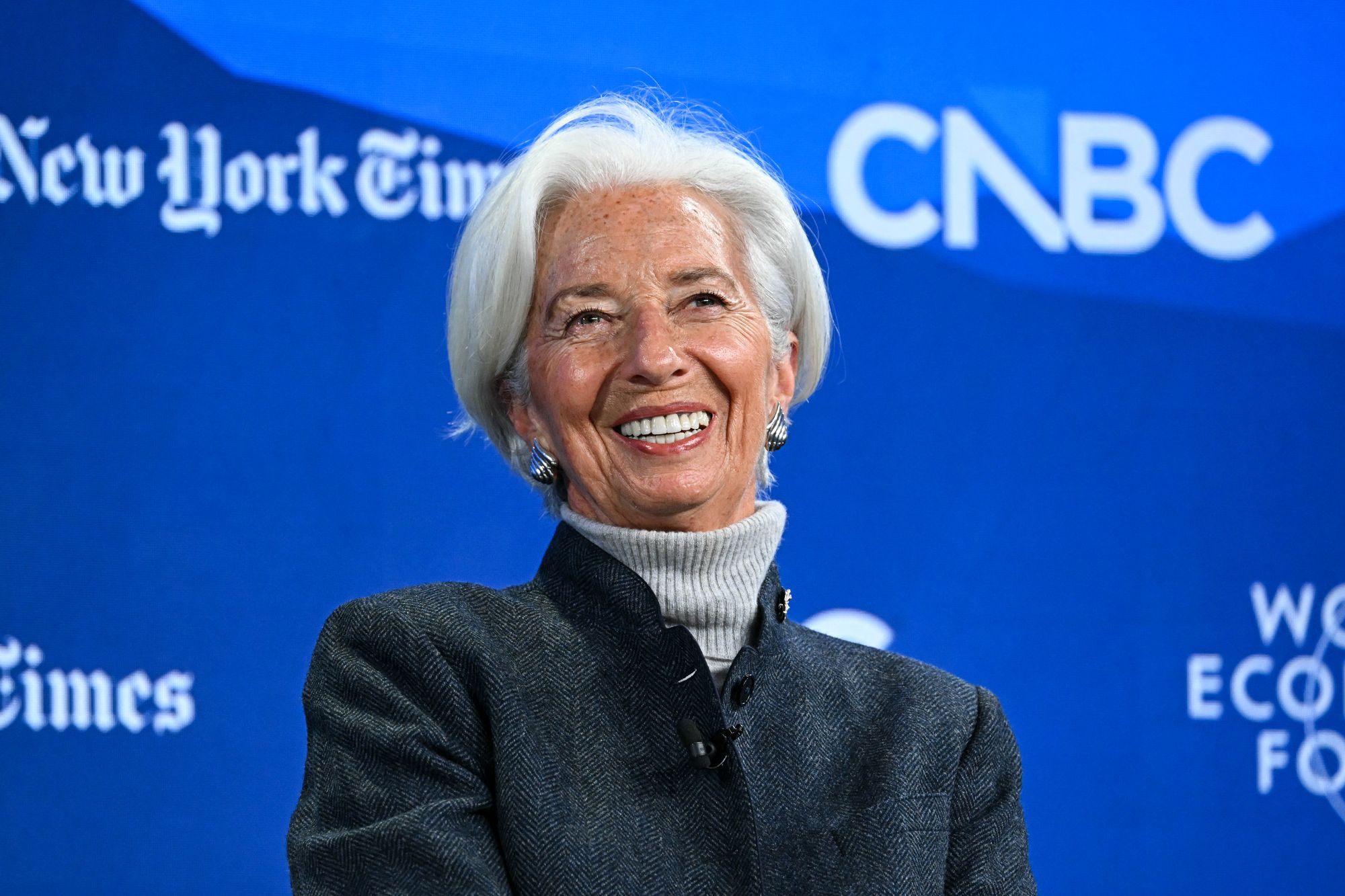
Market reaction to Lagarde's possible departure was muted on Wednesday as none of her potential successors are expected to radically alter policy.
Three big jobs could be in play
"The ECB takes monetary policy decisions by building consensus, and whoever replaces Lagarde is unlikely to radically shift or change the way the ECB works, in particular should her replacement be one of those being touted in the media," Andrzej Szczepaniak, an economist at Nomura, said.
Lagarde's early departure could also strengthen the case for EU leaders to make upcoming ECB Executive Board appointments as a package as the terms of chief economist Philip Lane and market operations chief Isabel Schnabel expire next year.
Since ECB presidential appointments are subject to political horse trading, filling the three jobs together may make sense, especially as the bloc's biggest nations - France, Italy and Germany - have a de facto permanent seat on the board.
Candidates for the top job most often mentioned include former Dutch central bank chief Klaas Knot, Bank for International Settlements General Manager Pablo Hernandez de Cos and Bundesbank chief Joachim Nagel.
Schnabel has also said she was interested in the role but EU law may prevent her candidacy since board members serve non-renewable terms.
"All the likely candidates are mainstream central bankers and, even if the eventual successor is not one of the current supposed front-runners, he or she would be sure to be from a similar background," Andrew Kenningham at Capital Economics said.
French governor also quit early
The FT report comes only a week after Bank of France Governor Francois Villeroy de Galhau said he would step down more than a year before the end of his term, allowing Macron to name his replacement.
That move was condemned by the far-right Rassemblement National which said it was aimed at putting in place anti-RN allies in case there was a change of power in France.
Villeroy reiterated on Wednesday that his choice to step down was a personal one.
Polls show either RN leader Marine Le Pen or her protege Jordan Bardella could win the presidential election, although the nationalist, anti-immigrant party has made little headway with France's economic establishment, which frets over its shifting positions.
While it will be up to leaders from all 21-nation euro zone to pick Lagarde's successor and could technically pick a candidate France disagrees with, past practice suggests a candidate needs both German and French support to clinch the role.
Some analysts also questioned whether an attempt to bypass the far right, or far left, could have unintended effects.
The road to hell is paved with good intentions and (Lagarde) has very honourable intentions," said Frederik Ducrozet, head of macroeconomic research at Pictet Wealth Management. "But this would send the signal that European elites are trying to control the institution and it could prove counterproductive for everything else that the EU is trying to achieve," he said.
On Wednesday in Britain - outside the European Union - the populist Reform UK party, which is leading in opinion polls, said it would make changes to the way the Bank of England operates, but stressed it would respect its independence.
Knot, De Cos, Nagel seen as candidates
The most prominent among Lagarde’s potential successors are former Dutch central bank chief Klaas Knot, Bank for International Settlements General Manager Pablo Hernandez de Cos and Bundesbank chief Joachim Nagel.
ECB board member Isabel Schnabel has also said she was interested in the role but EU laws may prevent her from running since board members serve non-renewable terms.
However, Lagarde's name did not surface until shortly before her own nomination seven years ago, suggesting that this race is unpredictable.
Lagarde would leave the ECB at a relatively tranquil time.

Inflation is at target, interest rates are in a neutral setting, and the euro zone's economic growth is at potential, a rare combination that some have called a central banker's nirvana.
With most if not nearly all major ECB decisions made by consensus, without a formal vote, the change atop the bank is unlikely to shift policy.
Markets currently expect the ECB to keep rates on hold for the rest of the year but exceptional uncertainty in the global environment could quickly alter the outlook.
Lagarde's term runs until October 31, 2027. Prior to heading the ECB, she was managing director of the International Monetary Fund from 2011 to 2019 and before that, the French finance minister.