Cartel leader's romantic partner helped lead to his capture, Mexican officials say
Mexican and U.S. agencies tracked one of Mexico’s most wanted cartel leaders through the location of one of his romantic partners.
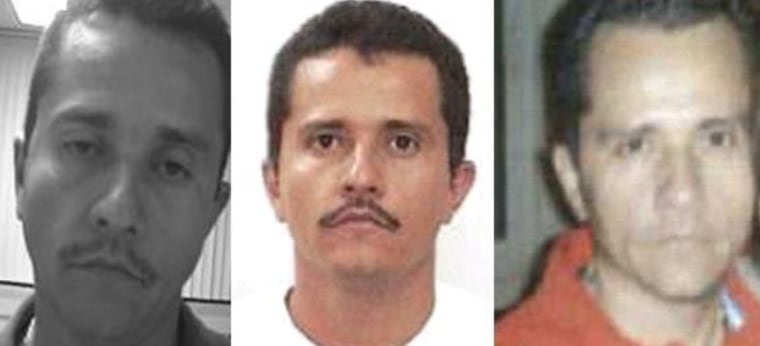
At a news conference Monday morning, Mexican President Claudia Sheinbaum assured the public that the nation is "under control" after Mexican authorities conducted an operation Sunday against Nemesio Rubén Oseguera Cervantes, 59, better known as "El Mencho," the longtime leader of the Jalisco New Generation Cartel.
His killing unleashed a wave of violence across the country that claimed the lives of more than two dozen Mexican National Guard members.
The Mexican president alongside Gen. Ricardo Trevilla Trejo, Mexico’s defense secretary, detailed the operation during the news conference, saying that information obtained from tracking one of Oseguera Cervantes' romantic partners led authorities to locate him at a compound in Tapalpa, the Jalisco town where the cartel is based.
A shootout took place when Oseguera Cervantes attempted to escape, Trevilla Trejo said. After he was injured in the crossfire, Mexican authorities transported Oseguera Cervantes to Mexico City to receive medical attention, but he died on the way there.
At least eight cartel members and three Mexican officials were killed during the operation, according to Trevilla Trejo. The defense secretary described the attack the cartel launched against Mexican authorities as "very violent."
The CJNG, as it's known by its initials in Spanish, is considered the deadliest cartel in Mexico and the main trafficker of drugs such as methamphetamine and fentanyl into the United States.
While expressing his condolences to the families of the officials killed, Trevilla Trejo broke down into tears.
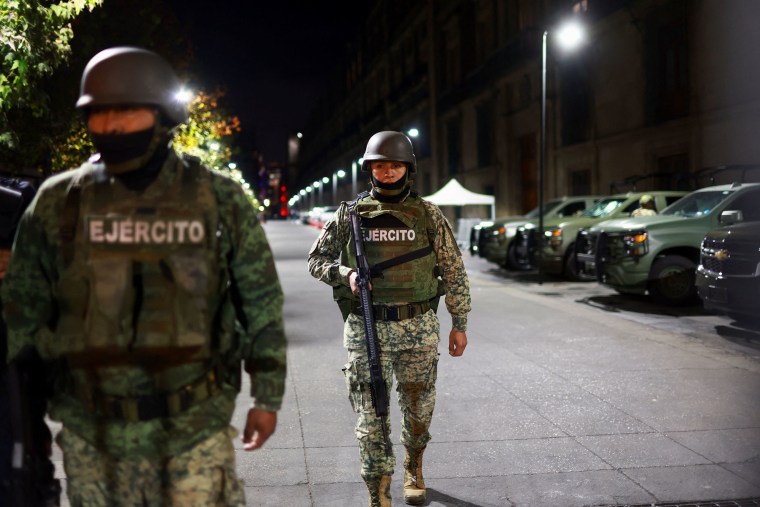
“Mexico should be very proud of our armed forces,” Sheinbaum said.
Oseguera Cervantes was considered the Mexican government’s biggest prize yet in showing the Trump administration that it is committed to cracking down on the cartels.
While the operation was carried out by Mexican special forces, government officials in the U.S. confirmed they provided intelligence to the Mexican government to assist with the operation.
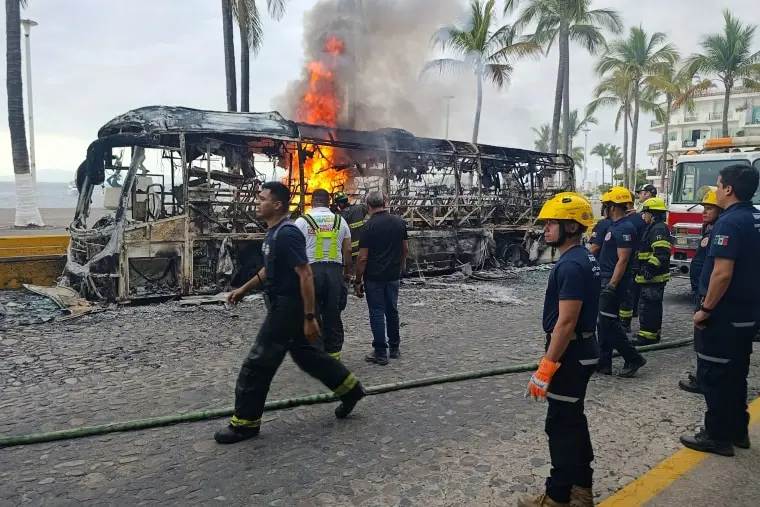
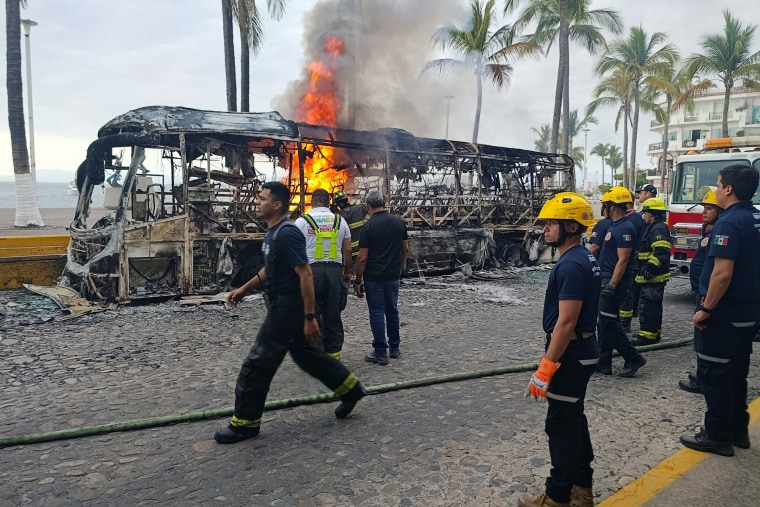
Hundreds of roadblocks set off by cartel violence were reported across 20 Mexican states, most of them in Jalisco, following Oseguera Cervantes' death, Noticias Telemundo reported. As civilians hunkered down, they witnessed cars being consumed by flames in the middle of the streets, among other violent acts, as a potential succession war begins to brew within the cartel.
Attacks were also reported at gas stations and banks, according to Omar García Harfuch, Mexico’s top security official. In Monday's news conference, García Harfuch said 70 people were detained in connection with these types of violent acts. More than 30 suspected cartel members and 27 members of Mexican law enforcement agencies who responded to the outbreak of violence have been killed as well, he added.
"The most important thing right now is to guarantee peace and security throughout Mexico, and that’s what’s being done," Sheinbaum said, adding that the blockades had ceased on Monday.
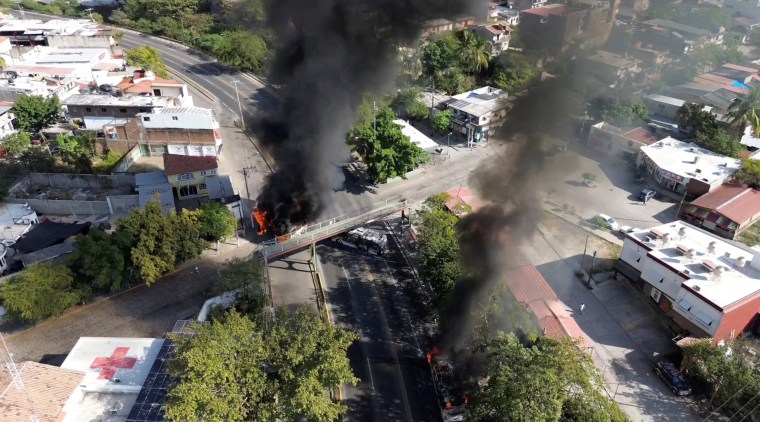
Early on Monday morning, there were cars out in Guadalajara, Mexico's second-largest city and Jalisco's capital. As the Associated Press reported, it was a marked change from Sunday when the city was largely shut down. More than 1,000 people were stuck overnight in Guadalajara’s zoo, where they slept in buses, according to the AP.
Many international airlines canceled flights Sunday in response to the violence that broke out in the streets of Mexico, leaving travelers stranded across the country.
A security alert from the State Department telling American citizens in several Mexican states to “shelter in place” remained in effect Monday.
The areas affected by the alert were in the states of Michoacán, Guerrero, Nuevo León, Tamaulipas, Baja California and Nayarit as well as the state of Jalisco, including Chapala, Guadalajara and the tourist city of Puerto Vallarta.
In an updated security alert Monday afternoon, the State Department also cautioned travelers who are in areas inside the states of Colima, Guanajuato, Estado de México, Oaxaca, Puebla, Queretaro, San Luis Potosí, Veracruz, and Zacatecas.
Sheinbaum said canceled flights, particularly some in Puerto Vallarta, are expected to be fully restored by Tuesday.
The Associated Press, George Solis, Laura Strickler and Garrett Haake contributed.