California ‘king tides’ stress test San Francisco as low-lying areas flood
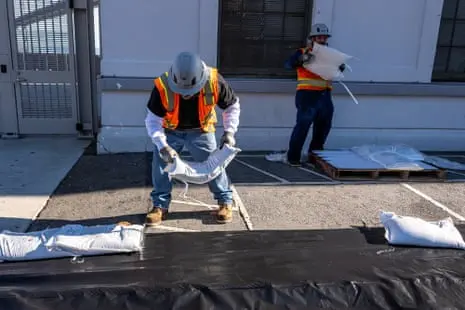
California is grappling with the stress test of record-high or close to record-high November tides up and down the coast this week, with flooding of low-lying roadways in San Francisco and an evacuation of one community in northern California.
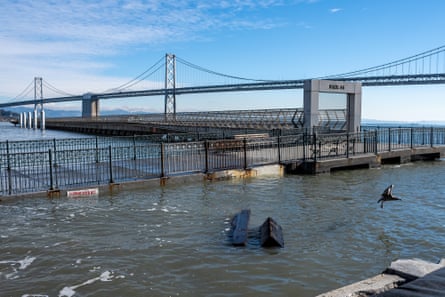
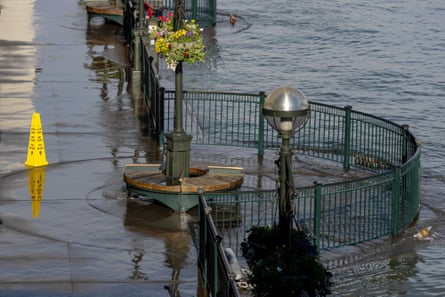
Local residents and media outlets shared images of flood waters rushing over the bayfront Embarcadero at the center of San Francisco’s tourist district, and flooded roadways from San Rafael to Redwood Shores, despite blue skies overhead.
“There’s usually a 20-ft beach under that water,” one social media user posted, sharing an image from Aquatic Park in San Francisco.
The flooding on Tuesday morning remained relatively mild, with the region braced for even higher water levels on Wednesday. The first of the year’s highest “king tides”, have not yet overlapped with intense storm weather in much of the state, so far avoiding the worst-case scenario for out-of-control flooding.
In Newport Beach, in southern California, the high tide matched the record set in late October, when waters rushed into low-lying city streets, but the flooding was more contained this time, local officials told the Los Angeles Times.
“Tomorrow we have another inch to an inch and a half coming our way, so that’s going to be the next-level test,” Mark Vukojevic, the city’s utilities director, told the Los Angeles Times on Tuesday morning.
Monthly tide records were set at locations around San Francisco Bay on Tuesday, with tides expected to hit even higher tomorrow, according to the San Francisco Chronicle. The San Francisco tidal gauge on Tuesday morning broke a November record set in 1982.
San Francisco international airport, which had anticipated flooding, was “pleased to report Airport operations have not been impacted by the King Tides and at this time, do not expect the tides to impact operations today”, the airport said in a statement. Despite calm operations today, multiple airlines continued to offer passengers free changes to flights through SFO on Wednesday, the San Francisco Chronicle reported.
But the combination of seasonal high tides and higher ocean levels from this season’s Super El Niño weather still risks inundating low-lying areas near coasts and bays today, Wednesday and Thursday, with many experts predicting record-setting high water levels.
A moderate rain storm is expected to hit San Francisco overnight and the highest high tides expected on Wednesday, meaning the flooding risk is likely to increase on Wednesday.
Higher coastal surf and dangerous swells and “sneaker waves” are also expected along the coast tomorrow and Thursday, which is Thanksgiving, with the National Weather Service (NWS) in San Diego cautioning: “Thinking of taking a holiday walk along the sand? Well don’t do that during the morning high tides as there will barely be any sand! Record breaking King Tides combined with high surf will lead to coastal flooding and beach erosion.”
NWS Los Angeles warned of “high risk that large waves could wash people off beaches and rocks” in California’s central coast and Ventura county, though the risk for Los Angeles and San Diego appeared lower.
California’s north coast, around Humboldt bay, may see “some of the worst effects” because of the combination of high water levels with strong winds and heavy rains, which is likely to “wreak some havoc along the Highway 101 and Highway 1 corridors”, California climate scientist Daniel Swain said in a briefing on Monday. The National Weather Service office in Eureka reported on Tuesday morning that the storm surge had increased tides by 2ft and that it was possible the area would see record-breaking tides.
Officials in Humboldt county ordered the evacuation of one waterfront community citing the “significant threat” caused by weather conditions.
While San Francisco will also see some rain in combination with the high tides, the Bay Area storm is expected to be lighter than previouslyfeared. However, “we may still approach or exceed all-time record water levels even without a significant storm,” Swain said.
San Francisco’s mayor Daniel Lurie, who had been telling San Franciscans to brace for “high tides and rain that this city has never seen before” and asked residents to avoid inessential travel on Monday through Wednesday, said on Monday that the forecast had “improved”, and that the worst impacts from the high tides were predicted to peak Wednesday at 11am. He advised: “Monday and Tuesday are the best days to travel and to do your errands.” The San Francisco Chronicle published a guide to the best and worst times to be out on the roads across the region on Tuesday, Wednesday and Thursday.
Swain, the climate scientist, said there had been “severe miscommunications” in public messaging about the flood risk, and said he believed San Francisco officials had originally overhyped the geographical range of the flooding danger. “There is real risk along the immediate coast, but there’s almost no risk of inundation at all this week anywhere that’s about more than 3 or 4ft above sea level,” Swain said on Monday. “There is essentially no risk for the majority of the land area.
“Folks even miles away from the water and hundreds of feet above sea level were advised that significant flooding was possible,” Swain said. “I just want to repeat: that does not appear to be in the cards.”
But concerns over more targeted impacts from the high water levels remain. As Thanksgiving week brings some of the year’s busiest travel days, experts have been pointing to flooding risks at the low-lying San Francisco international airport, and Oakland San Francisco Bay airport, both major travel hubs.
Waymo, a self-driving car service, agreed to suspend its activity in San Francisco starting on Monday, after Waymo vehicles stalled in heavy waters and passengers reported dramatic delays during heavy rainstorms last week, ABC7 News reported.
In Orange county, in Southern California, a meteorologist warned that king tide flooding this week could be worse than the 27 October coastal flooding that damaged 114 structures in Huntington Beach and left others in southern California commuting via kayak, the Los Angeles Times reported.
“It’ll most likely be at least as bad as that, and it could be a little worse because we are actually expecting a little bit of higher surf,” meteorologist Philip Gonsalves told the Los Angeles Times.
Dani Anguiano contributed reporting