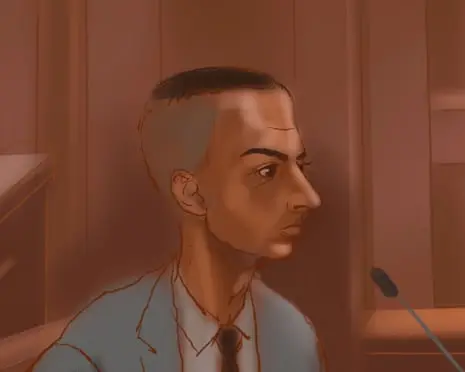
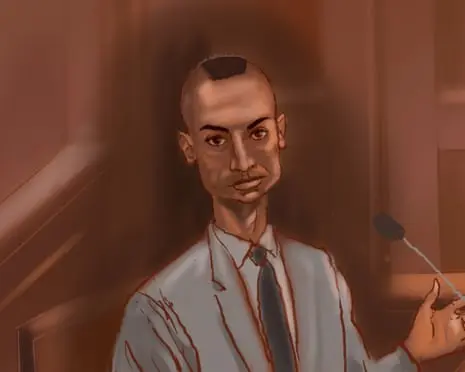
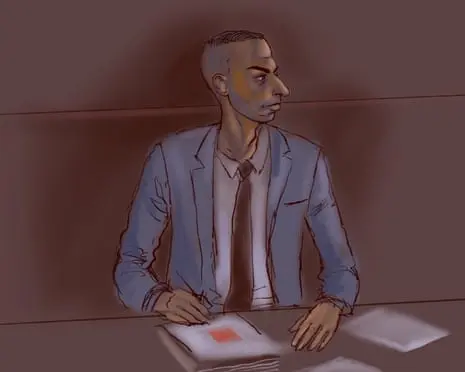
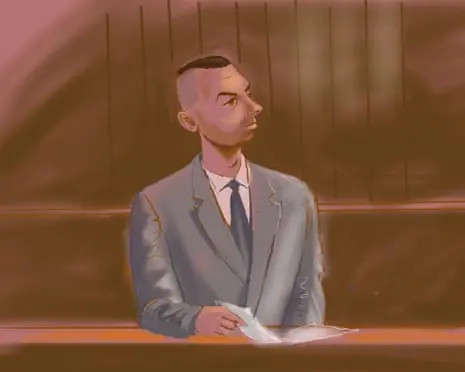
Beau Lamarre-Condon could have told crown ‘do your worst’ and not given evidence, defence says
Former police officer has pleaded not guilty to murders of Jesse Baird and Luke Davies in Baird’s Paddington home in February 2024 Get our breaking news email, free app or daily news podcast Beau Lamarre-Condon could have sat in silence and told the crown “do your worst”, but he made the choice to take the “long walk” to the witness box, a jury has been told. Lamarre-Condon is accused of fatally...
Beau Lamarre-Condon could have sat in silence and told the crown “do your worst”, but he made the choice to take the “long walk” to the witness box, a jury has been told.
Lamarre-Condon is accused of fatally shooting Jesse Baird and his partner, Luke Davies, with his police service weapon in Baird’s Paddington home on 19 February 2024.
The former officer has pleaded not guilty to two counts of murder and one charge of aggravated break and enter.
His barrister John Stratton SC urged the jury to accept Lamarre-Condon’s testimony as truthful, as he wrapped up his closing statement on Tuesday morning.
“He didn’t have to give evidence. He could have said to the crown, ‘Do your worst but I’m not going to help you’,” Stratton told the New South Wales supreme court.
“He didn’t do that.
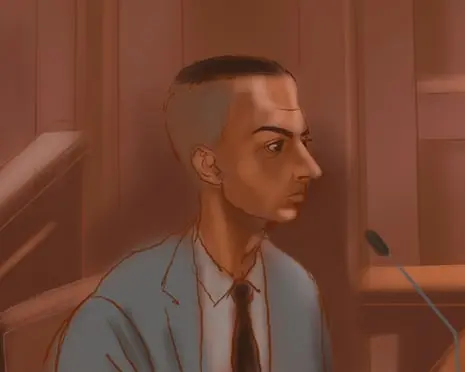
“He took that long walk to the witness box, and he did it voluntarily and he subjected himself to a detailed, fierce cross-examination by a very experienced crown prosecutor that went over six days.”
Stratton claimed the cross-examination did not break down his client, nor did it establish he was telling new lies.
“The fact the accused has chosen to give evidence does not mean he needs to prove his case … the onus of proof is always on the crown,” he said.
The defence and prosecution cases concluded in the 10th week of the trial.
On Tuesday afternoon, Justice Natalie Adams summed up the cases and gave directions to the jury, as she prepares to ballot the jury from 15 to 12 jurors.
“There will be 13 judges in this courtroom,” she said.
“I am the judge of the law and the 12 jurors are the judges of the facts.”
She said Lamarre-Condon was the only witness to what occurred inside Baird’s home and noted the prosecution had suggested he lied while giving evidence.
Whether a lie has been told is up to the jury to decide, Adams said, but a lie could not prove the guilt of an accused.
It can, however, be taken into account by jurors when they consider whether they believe the things Lamarre-Condon said in his evidence.
Adams also acknowledged part of the crown’s case was circumstantial, but said a circumstantial case is not weaker than a direct one.
Crown prosecutor Brett Hatfield SC compared the circumstantial aspects to “strands in a cable”, and Adams on Tuesday explained this in her directions.
“The question is whether you find each fact, or [if] you add another strand to that cable that is the crown case, that cable is ultimately strong enough that you are satisfied beyond reasonable doubt the crown has proved,” she said.
The jury is expected to be sent off to deliberate on Wednesday morning.