‘Barrel bomb mufti’ Ahmad Hassoun handed life sentence in Syria trial
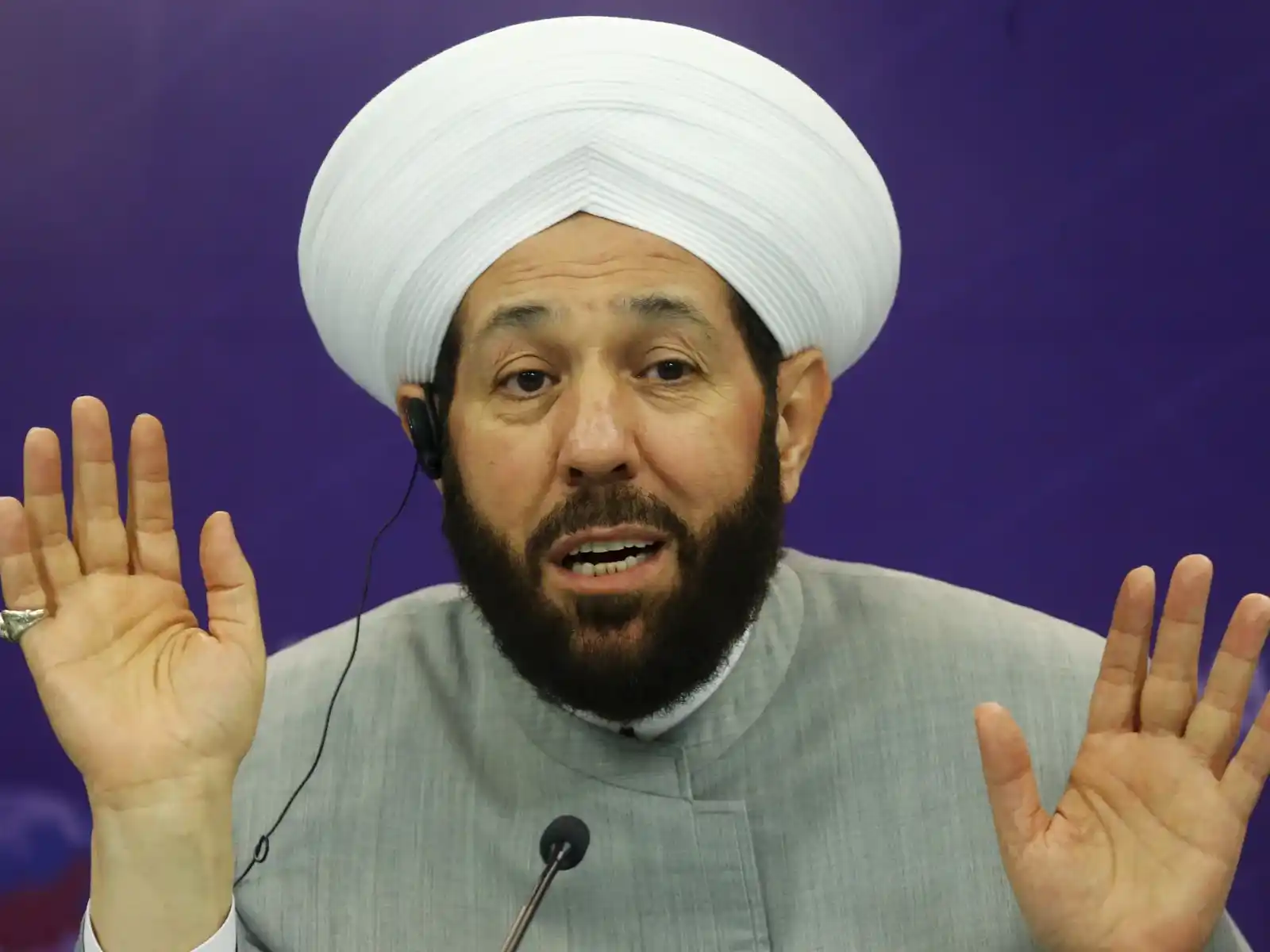
Ahmad Badreddin Hassoun, a top Muslim religious official during ousted Syrian President Bashar al-Assad’s rule, has been sentenced to life in prison for crimes committed during the country’s nearly 14-year war.
The Fourth Criminal Court in Damascus issued the ruling on Monday, finding Hassoun guilty of a range of crimes, including inciting violence, justifying killings and the abuse of his office.
Hassoun, who was Syria’s grand mufti between 2005 and 2021, was arrested at Damascus airport in March 2025, after he emerged from hiding a month earlier. His trial began on June 25.
The court handed Hassoun several prison sentences for various charges.
Judge Fakhr al-Din al-Aryan sentenced Hassoun to life in prison after being found guilty of crimes that incited hatred and contributed to the deterioration of the situation.
Hassoun was also sentenced to 20 years in prison after being found guilty of inciting killings.
The judge also sentenced him to 10 years in prison after being found guilty of prolonging the killings.
The court also ordered the cleric to pay compensation to make restitution to a number of his victims as well.
Judge Fakhr al-Din al-Aryan said that Hassoun and the official religious institution he headed was used to provide religious cover for military and security operations during Assad’s rule.
His teachings also justified the use of barrel bombs that targeted civilian areas and caused widespread destruction, which constitutes a violation of the rules of international humanitarian law, said the judge.
The court found that Hassoun also urged Syrian military officers and soldiers in his religious lectures to confront the country’s opposition, and made public calls through Syrian media for civilians in eastern Aleppo to evacuate their homes.
He also called on the regime’s army to “annihilate and destroy” the areas from which shells were launched, threatening the people of Idlib with killing and displacement.
The court confirmed that Hassoun is barred from any general or special amnesty, given the gravity of the crimes he was found guilty of committing.
His money and properties will also be confiscated by the state for the benefit of the public treasury, the court said.
The verdict comes weeks after Bashar al-Assad, his brother Maher and five other security officials were sentenced to death in absentia for war crimes and crimes against humanity during the war.
Authorities have also handed death sentences to Atif Najib and Wassim al-Assad, cousins of the former ruler who were tried in person.
Reporting from Damascus, Al Jazeera’s Heidi Pett said Hassoun is an “unusual” example of the transitional justice cases that Syria has held since al-Assad’s ouster in 2024.
“All of the other ones were senior members of the regime itself, many of them were members of the Assad family,” said Pett.
“We’ve seen death sentences handed down to Bashar al-Assad, the former president, two of his cousins as well, but Sheikh Ahmad Hassoun, he is the first Sunni to have been tried, and he does still enjoy some level of popular support here in Syria.”
His supporters, who have largely mobilised online, say his statements have been taken out of context, she said.
Many of his critics, however, had called for a death sentence, Pett added.