Audi boss forced to defend $4 billion Georgia plant amid German union anger


Before the project can move forward, Volkswagen's supervisory board must grant final approval for the investment
The top executive at German carmaker Audi defended on Sunday a proposed $4 billion investment in a new facility in the United States, following an announcement made by President Donald Trump during his campaign for the upcoming November midterm elections.
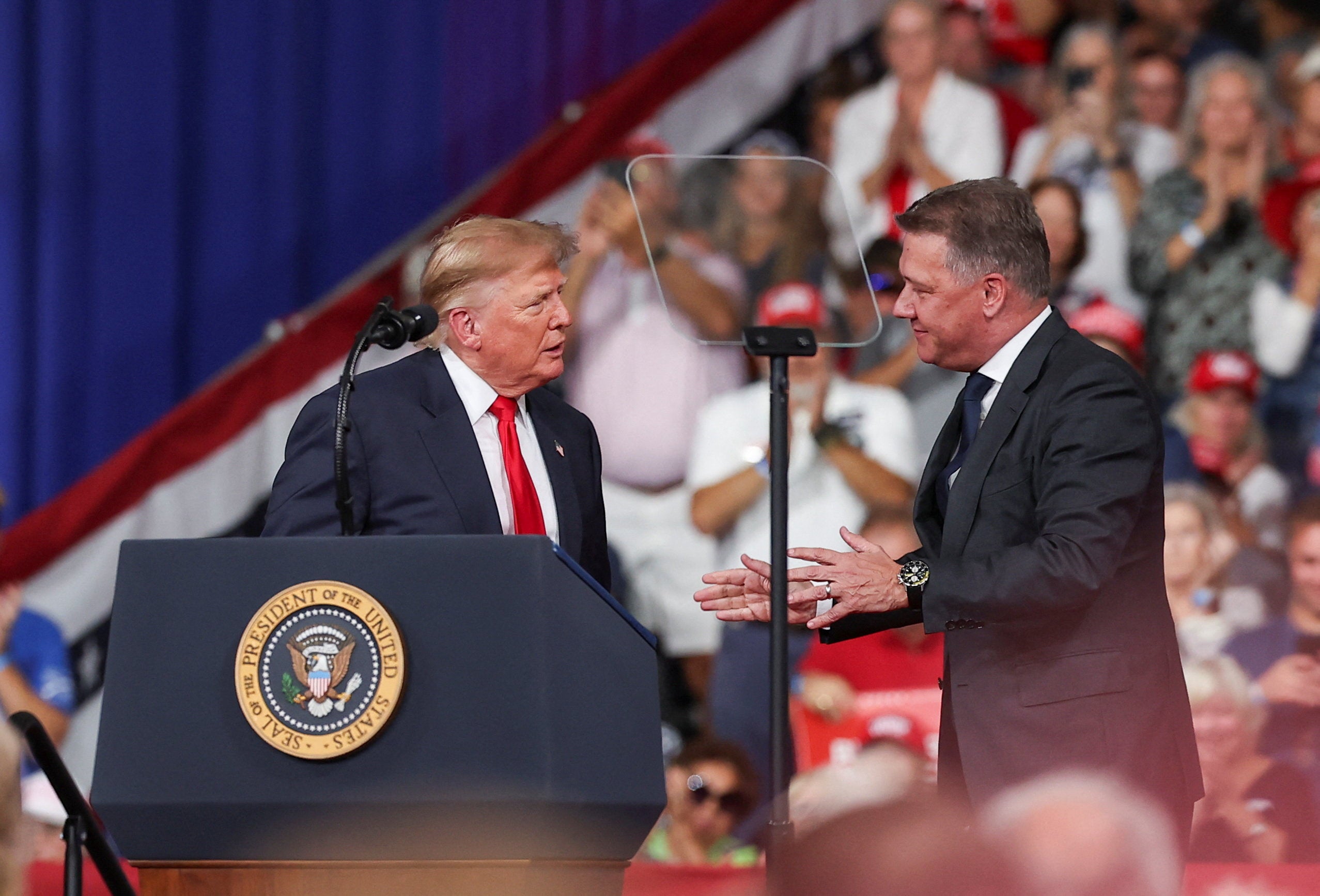
Audi Chief Executive Gernot Doellner appeared alongside Trump during a campaign event in Perry, close to Macon in central Georgia, on Saturday.
At the event, Trump stated that Audi, a brand under the Volkswagen Group, intends to construct a manufacturing facility in Georgia capable of producing 200,000 SUVs each year.
"This decision was preceded by many months of careful planning and intense negotiations," Doellner informed reporters on Sunday. "If the American president invites you, you accept the invitation. That is what respect for the office and for the country in which we invest demands."
Before the project can move forward, Volkswagen's supervisory board must grant final approval for the investment.
The state of Georgia features closely contested races for its governor and the U.S. Senate.
Trump is seeking to demonstrate that his trade tariffs on foreign automobiles are strengthening the American economy and encouraging domestic manufacturing.
In Germany, those same trade tariffs have heightened strain across European industrial sectors while escalating tensions between Volkswagen executives and labor representatives concerned about potential plant closures and layoffs.
Audi previously stated that Trump's tariffs on automobiles, steel, aluminum, and components cost the business approximately €1.2 billion ($1.4 billion) over the past year, as all of its cars sold in the American market are currently imported from Mexico or Europe.
Opponents of the trade policies argue that the tariffs have likewise harmed the domestic economy in the US by raising vehicle prices for consumers and delaying investment plans across the auto industry.
A spokesperson for Germany's IG Metall union remarked that Doellner's choice to appear alongside Trump amidst the political campaign was "hard to understand.”
"Trump has never failed to make it clear what he is after: he wants to weaken our domestic economy, particularly the automotive sector," the spokesperson said.
Christiane Benner, head of the IG Metall union and Volkswagen's deputy supervisory board chair, noted that establishing a US manufacturing footprint was "right and necessary" to enhance the company's competitive standing. "However, firm prospects for workers at all sites, particularly those here in Germany, must be clearly defined and set out," she said.
Doellner refrained from disclosing full terms of the US investment agreement, declining to confirm whether the deal incorporates tariff relief for the automaker.
Olaf Lies, state premier of Lower Saxony—the German state holding Volkswagen's second-largest ownership stake—remarked that expanding operations in the United States presents a positive prospect only if German employees benefit as well.
"Growth in America must secure jobs and value creation here and must not displace them," he said.
According to Audi, the proposed manufacturing complex will generate around 4,500 jobs. Construction work is slated to begin next year, with vehicle production anticipated to start in the early 2030s.
The facility is expected to produce Audi's Q7, Q8, and Q9 SUV models, according to a US official who spoke to Reuters.
The US official added that Audi further intends to manufacture 25,000 vehicles annually in neighboring South Carolina, with a portion of those models—currently produced in Europe—earmarked for export.
Those additional vehicles are set to be manufactured at a $2 billion facility for Scout Motors, VW's off-road vehicle brand, which is under construction in Blythewood, near Columbia, the state capital, the official stated.
"We regard the region as a key market for profitable growth," Volkswagen CEO Oliver Blume said. "A potential Audi plant in the US would create further conditions for this."
During Saturday's campaign rally, a gold Audi displaying manufacturer license plates was parked outside the event location.