Xanadu CEO sells nearly 10% of holdings as lockup lifts
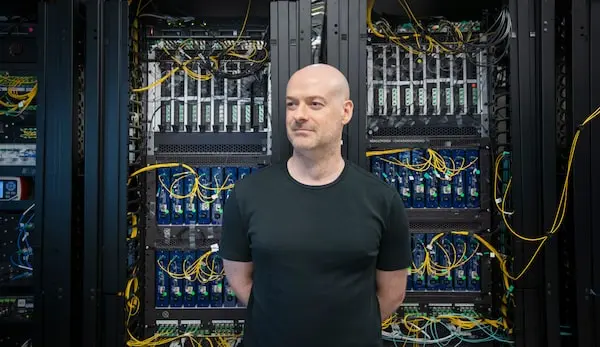

Christian Weedbrook, CEO of Xanadu, said he doesn’t plan to sell any more of his remaining 41.8-million Class A multiple voting shares.Fred Lum/The Globe and Mail
The founder and chief executive officer of quantum computer developer Xanadu Quantum Technologies XNDU-T has sold nearly 10 per cent of his stake in the company.
Christian Weedbrook received aggregate gross proceeds of $32.8-million for the sale, which was made “for personal financial planning purposes,” Xanadu said in a press release.
On Tuesday, Mr. Weedbrook sold 4.6 million Class B subordinated voting shares, or nearly 10 per cent of his total holdings, after converting them from multiple voting Class A shares, the Toronto-based company said. It was the day a lockup lifted on early shareholders, six months after Xanadu went public by merging with a NASDAQ-listed special purpose acquisition company.
Mr. Weedbrook said in an interview he’d long planned to sell 10 per cent of his stake when he had the chance. “They key thing for me is I’m all in. I’ve been at this over a decade, and pretty much 100 per cent of my net worth is tied up in Xanadu. It’s nice to liquidate some of the shares and not think about money, and just focus on getting back to work and achieving our vision of building a large-scale quantum computer.”
The CEO said he doesn’t plan to sell any more of his remaining 41.8-million Class A multiple voting shares, which, combined with his 18,593 Class B shares, give him 25 per cent voting power.
Xanadu stock faces test as lockup set to lift for most investors
Mr. Weedbrook sold on a day the stock dropped by 21.6 per cent as early investors, holding more than 95 per cent of the stock, were able to sell for the first time. It was the second-heaviest trading day for Xanadu after a May 4 rout, when the stock price dropped by 60 per cent after surging to more than US$40 a share.
The stock sold off by a further 7.8 per cent Wednesday, closing at US$5.33 per share on NASDAQ.
Other major shareholders that are now free to sell include Ontario Municipal Employees’ Retirement Systems and Toronto-based private capital firms Georgian and Radical Ventures.
The quantum industry is in its infancy. No company, including Xanadu, has yet produced a commercially relevant machine that can achieve the technology’s full potential, though many are valued into the billions of dollars. Quantum computers derive their computational power from the peculiar effects of subatomic particles. Xanadu achieves its quantum effects from light.
The machines are expected to someday vastly outperform supercomputers, opening up uses in finance and materials and drug discovery.
Xanadu, Nord Quantique of Sherbrooke, Que., and Photonic Inc. of Coquitlam, B.C., will find out this fall if they have advanced to the third and final stage of a U.S. Defence Advanced Research Projects Agency competition challenging developers to show that they can build a commercial-grade quantum computer by 2033. Canada is a leader in the nascent field thanks to early support from governments, universities and tech pioneer Mike Lazaridis.
Companies that prevail could qualify for US$300-million each in American government funding and become front-runners in the global quantum race.