Why this money manager is buying S&P Global and Berkshire Hathaway
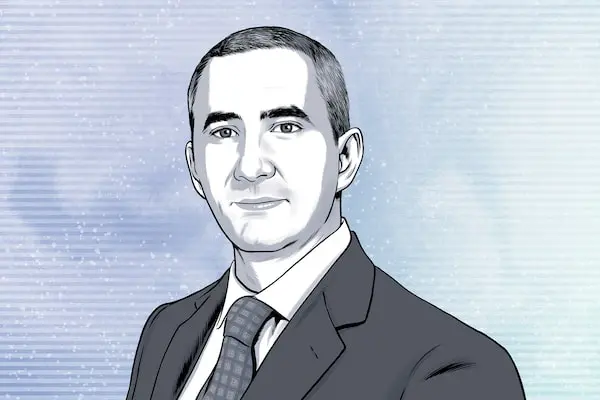

Daymon Loeb, partner and chief executive officer at Ravenstone Capital Management Inc. in Toronto. Illustration by Joel KimmelThe Globe and Mail
Although many investors are fixated on the artificial intelligence trade, money manager Daymon Loeb is focusing on overlooked stocks in other sectors.
“There are a lot of boring, traditional businesses whose multiples have shrunk while their fundamentals have improved,” says Mr. Loeb, partner and chief executive officer at Ravenstone Capital Management Inc. in Toronto, which oversees about $560-million in assets.
Mr. Loeb says his team prefers buying “high-quality” North American stocks with reasonable valuations that they can hold long term. He shies away from volatile commodity stocks and businesses that rely too heavily on debt and equity markets for capital.
“We look for companies that can compound free cash flow and earnings … and management teams and boards that have very strong track records in capital allocation,” he says.
Ravenstone Equity Portfolio, Series F, which includes about 18 to 25 businesses, has returned 8.3 per cent so far this year and 10.2 per cent over the past 12 months. The portfolio’s three-year and five-year annualized returns were 15.2 per cent and 7.4 per cent, respectively. The annualized return since inception on April 1, 2016, is 11.8 per cent. Performance is based on total returns, net of fees, as of Sept. 30.
The Globe spoke with Mr. Loeb recently about what he’s been buying and selling:
Name three stocks you’ve been buying recently.
S&P Global Inc. (SPGI-N), the credit-rating, research and analytics company, is a stock we started buying in January, 2024, and bought more of this past July. The company has a dominant market position in market intelligence – businesses that generate steady, high margins, cash flow and growth.
The stock has sold off significantly because of the perceived threat of AI disruption. The risk is not zero but, to us, the idea that AI could replace S&P Global’s business is nonsense.
Credit ratings are a robust business. It’s highly unlikely that any AI agent will be doing credit ratings for Royal Bank of Canada, Bank of America Corp. or any other company looking to raise debt or equity.
Most of S&P’s revenue comes from proprietary data. The company has spun off underperforming units and is buying back stock actively. The stock is trading at its lowest valuation in five years – a level we view as incredibly attractive. We think it will prove to be a very good investment.
Berkshire Hathaway Inc. (BRK-B-N), the multinational conglomerate best known for its leadership under [now chairman emeritus] Warren Buffett, is a stock we bought again in May after not holding it for many years.
Sometimes, really good investment ideas are hiding in plain sight. The stock has underperformed the S&P 500 by about 40 per cent since Mr. Buffett announced that he was stepping down as chief executive in May, 2025. But the business hasn’t changed. It’s still seeing double-digit compounding in its intrinsic value across its businesses.
We think the market isn’t giving enough credit to new CEO, Greg Abel, who has been running the company’s non-insurance operations since 2018. The company is sitting on a lot of cash [about US$365-billion at the second quarter] and the optionality of that cash is one of the main reasons we find this stock interesting right now.
Mastercard Inc. (MA-N), the credit card company, is a stock we started buying in June, when it was down. We’ve held Visa Inc. (V-N) for about a decade. Together, these two companies have a global duopoly in payment systems. They’re really infrastructure companies as well as technology and financial services companies.
Mastercard has an unbelievable record of compounding its free cash flow. A key thing about Visa and Mastercard is they don’t lend money, so they don’t have credit risk like their competitor American Express Co. Instead, Visa and Mastercard take the swipe fees.
They’re vulnerable to a drop in consumer spending and disruption threats from fintech firms. However, the reality is these businesses aren’t going away anytime soon and the valuations are very attractive.
Name one stock you’ve sold recently and why.
Zoetis Inc. (ZTS-N), the global animal health company, is a stock we sold in early May. We first bought it in 2013, after it was spun off from Pfizer Inc. (PFE-N), and have added to it since.
The stock did very well during the pandemic when it seemed everyone was adopting a pet. It’s a high-quality business, but the fundamentals started to change [amid slowing sales, higher competition and less pricing power] and the valuation was no longer attractive, so we moved on.
This interview has been edited and condensed.

Why every wealth manager wants to be a family office now
Advisors are orchestrating various professionals, borrowing from the family office playbook

BlackRock’s $1,340 Target Hinges on a Breakout and Continued Fee Growth
Market Analysis by Itai Smidt covering: S&P 500, NVIDIA Corporation, iShares Silver Trust, BlackRock Inc. Read Itai Smidt's Market Analysis

Why Amazon Wants the Chips and Blackstone Wants the Buildings
Market Analysis by Jeffrey Neal Johnson covering: Amazon.com Inc, Blackstone Inc, Blackstone Digital Infrastructure Trust Inc. Read Jeffrey Neal Johnson's Market Analysis

Maple Finance CEO Targets up to $15B in Assets Under Management in 2027
Sidney Powell aims to reach $15 billion in assets under management by the end of 2027 as the firm looks to expand into tokenized lending and traditional finance.

Tuesday’s analyst upgrades and downgrades
Inside the Market’s roundup of some of today’s key analyst actions