Why is Kioxia stock tumbling 8% today?


Why is Kioxia stock tumbling 8% today?
Kioxia Holdings Corp stock dropped 8.7% to trade at ¥8,511, marking its fourth consecutive session of steep losses as a toxic mix of disappointing forward guidance and a global AI-sector rout continued to weigh heavily on the Japanese memory chipmaker. The decline follows the company’s October 30 earnings release, in which record Q2 results — including revenue of ¥2.48 trillion and an operating profit margin exceeding 80% — were overshadowed by a December-quarter outlook that pointed to essentially flat profit growth versus the prior period, falling well short of what the market had priced in.
Goldman Sachs stood by its Buy rating on Kioxia and maintained a 12-month price target of ¥39,000, arguing that the long-term demand picture remains intact, with Q4 FY2027 bit shipments expected to recover strongly. However, the absence of any new share buyback announcement alongside the soft guidance removed a key potential support for the stock, and margin call liquidations among heavily leveraged retail investors — who had accumulated a record level of margin long positions — added further downward pressure as the share price broke below ¥10,000.
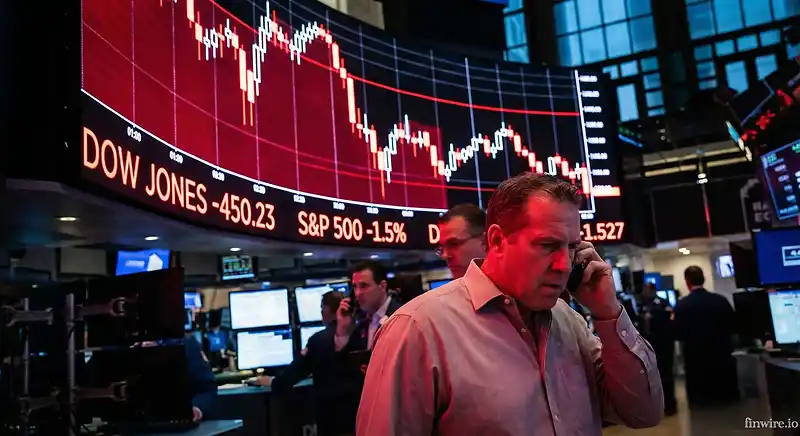
The broader market environment proved equally hostile. The Philadelphia Semiconductor Index plunged more than 12% in the prior U.S. session — its worst performance since March 2020 — after U.S. midterm elections handed the Democratic Party control of Congress, stoking fears of tighter regulation of AI infrastructure and data-center spending. That Wall Street rout spread rapidly across Asia, sending Japan’s Nikkei 225 into official bear market territory today, with the index falling as much as 7.1% to touch 56,745.81 — more than 20% below its June 22 record peak. Kioxia’s memory sector peers were similarly battered, with SanDisk tumbling more than 22% and SK Hynix shedding more than 9% in Seoul.
Taken together, Kioxia finds itself caught between two powerful headwinds: a company-specific narrative shift from explosive AI-driven growth to a plateau, and a macro environment in which the entire global semiconductor complex is being repriced lower on regulatory and demand-sustainability fears. Having already fallen more than 70% from its all-time high of ¥37,566.63, the stock’s 52-week low of ¥2,784.33 now looms as a reference point investors are watching closely.