What do the U.S. midterms mean for investors?
Following months of uncertainty, a major overhang for Wall Street was removed at the beginning of November after the Democrats surged to a sweeping victory in the U.S. midterm elections, gaining control of both chambers of Congress. The U.S. stock market saw an initial relief rally the day after the elections, with the benchmark S&P 500 index climbing over 1.5%.
But the relief was short-lived, as investors came to grips with the potential ramifications of the victory, chiefly on the artificial intelligence boom. Concerns about greater regulatory scrutiny on the AI industry due to the Democratic victory - especially on the proliferation of massive data centers - swept markets and has since turned into a global rout of the AI trade.
AI-related stocks had already been under severe pressure going into the midterm elections, and sentiment received another blow this week from swirling questions about the future of AI darling Nvidia following the shock departure of chief executive Jensen Huang and a record-smashing initial public offering from leading AI frontier lab Anthropic that did little to address the wider questions plaguing the AI trade.
The result has been a precipitous slide in the S&P 500, with the gauge on Friday tumbling into correction territory. Post the initial 1.6% bounce on the day after the U.S. midterms, the index has plunged 10.1%.
UBS, in an analysis of what the midterms could mean for investors, said that federal legislation was “unlikely to materially slow AI development.”
“Greater constraints may come from state and local governments responding to data centers’ demands on land, water, electricity, grid, and tax resources,” the UBS analysts added.
The brokerage believes that for markets, “earnings, AI investment, inflation, Federal Reserve policy, oil prices, and geopolitics will remain more important than the election.”
The analysts also acknowledged that a divided government could limit President Donald Trump’s administration, but highlighted that the U.S. leader would still retain significant authority.
“Most legislation will require bipartisan support, and Democratic majorities cannot override vetoes without Republican votes. The administration also retains broad discretion over trade, immigration, regulation, and foreign policy,” the analysts said.
“A confrontational environment of messaging bills, vetoes, investigations, and executive action is likely,” they noted, adding that “selective compromise” remained “possible.”
While the AI trade has suffered in the wake of the Democratic victory, resulting in a slide in equities, other assets have fared better, in particular oil prices. Hopes of Democratic pressure on Trump to find a diplomatic solution with Iran have played a major role in bringing crude prices down. Brent crude futures, the global benchmark, have plummeted nearly 11% since the midterm elections on November 3.
“In foreign policy, an eventual wind-down of the conflict with Iran is more plausible, although an imminent settlement remains unlikely. Continued stalemate or escalation could generate volatility,” UBS said.
“The war in Ukraine is also likely to extend into 2027. Congressional scrutiny may impede rapprochement with Moscow, but President Trump retains authority to pursue a settlement. A durable ceasefire could support European assets,” the brokerage added.
Here are some popular exchange-traded funds that track the benchmark S&P 500: SPDR S&P 500 ETF Trust, Vanguard S&P 500 ETF, and iShares Core S&P 500 ETF.
US tech stocks recover after selloff spooks investors over AI spending
Midterms didn’t appear to have huge impact, though predicted wins for Democrats could mean more regulation US tech stocks made a recovery Tuesday afternoon after a selloff spooked investors over AI spending. The impact of Tuesday’s midterm elections didn’t appear to have a huge impact on Wall Street, though investors are predicting Democrats get at least a majority in the House and potentially...
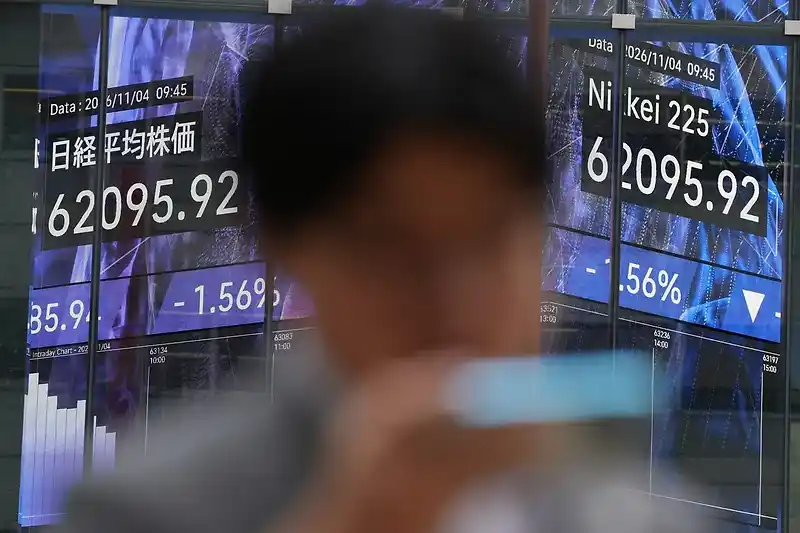
Stock futures swoon, investors brace for U.S. gridlock, as early midterm results point to blue sweep
Markets face the potential for tougher regulation and oversight in areas such as AI
AI stocks plunge after US election, driving down markets
Tech stocks lead US market slide as investors weigh impact of midterm election results on AI industry.

Investors poised for gridlock with Trump as Democrats sweep Congress
Midterm results put fresh pressure on AI-related trades and cryptocurrencies

Stocks tumble as midterms fuel AI fears and judge halts Trump’s D.C. arch: Morning Rundown
U.S. markets took a hit as concerns over newly elected Democrats added to fears about AI.