Why Wall Street is withstanding the Nvidia shock
Market rotation has a lot to do with it
So much for Wall Street’s concentration risk.
AI stocks are wobbling, and on Thursday, Nvidia (NVDA-Q) CEO Jensen Huang resigned under a cloud of scandal. Pressure on tech is unlikely to ease soon. Yet, so far, the wider market is holding up surprisingly well. Can that resilience persist?
In the past month, waves of selling have engulfed the artificial intelligence trade. The Philadelphia Semiconductor Index suffered its second-biggest loss on record, a 12-per-cent slide on Nov. 5, following the U.S. midterm elections. At that point, the index was down almost 40 per cent from its June high.
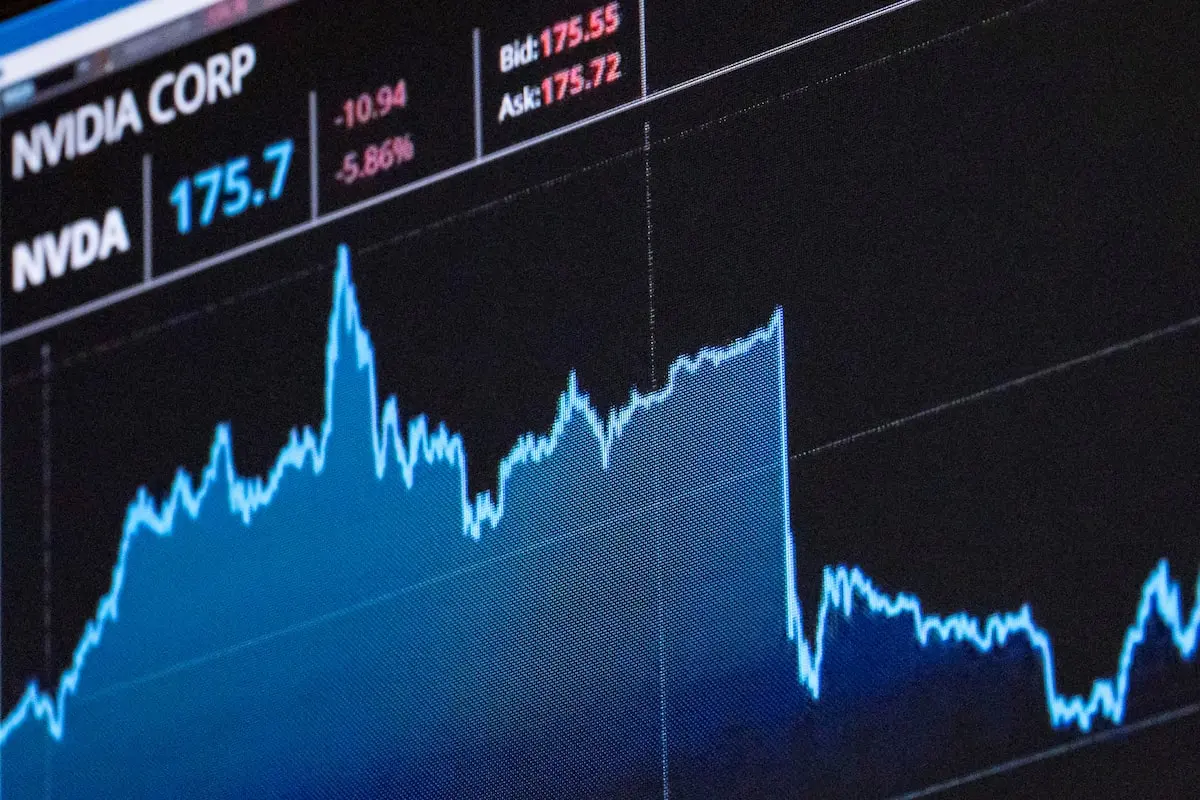
Then came news on Monday that the board of Nvidia – the sun of the AI solar system – was investigating Mr. Huang over an extramarital affair with a woman alleged to be a Chinese spy. After reports of another potential affair with an Nvidia employee emerged, Mr. Huang stepped down on Thursday. Nvidia’s stock tumbled as much as 14 per cent in early trade, leaving it about 40 per cent below its Oct. 6 high. That amounts to more than US$2-trillion in market value erased in a little over a month.
Yet, despite all this, the S&P 500 is only around 3 per cent off its all-time high.
It wasn’t meant to be like this. Never before has the world’s biggest stock market been so heavily concentrated in such a small group of companies. Before this sell-off, around half of the S&P 500’s entire market cap was represented by a few dozen tech and AI-related stocks, with Nvidia alone comprising nearly 8 per cent.
The generally accepted view has long been that if tech crumbles, Wall Street will implode as well. But this has not happened.
The “average stock” is actually holding up quite well. The equal-weighted S&P 500 hit a record high last week and is up nearly 5 per cent since Oct. 6. It is outperforming the more widely followed benchmark index so far this year too, up 16 per cent compared with 11 per cent for the S&P 500.
This resilience is due largely to rotation, as investors have switched into more defensive, value-oriented sectors.
That’s unsurprising, but what is notable is that the benchmark indices’ unprecedented concentration in tech may have actually helped smooth the transition and limited the potential downside.
How is that? It’s because a small percentage of the market cap of tech stocks represents a much larger percentage of other under-owned sectors. For example, if you sell 1 to 2 per cent of your AI holdings, this will enable you to hold much larger percentages of health care or consumer staples.
And this is what’s happening. Between Oct. 6, when the S&P 500 notched its all-time high, and the close of business on Wednesday, seven of the index’s 11 sectors have posted positive returns, two are down less than 1 per cent, and two are firmly in the red. Health care and consumer staples are up 13.1 per cent and 11.8 per cent, respectively, while technology is down 13.7 per cent, according to Ryan Detrick and Sonu Varghese at Carson Group.
“The rotation is real. The lifeblood of a bull market is rotation, and this rotation from growth to value has been one big reason the overall market hasn’t tanked,” Mr. Detrick said.
This does not mean the shift has been painless.
JPMorgan’s equity analysts point out that the pace of deleveraging seen recently, the reversal of crowded positions, and liquidation across equity and quantitative funds have been unusually aggressive. “Long” Momentum portfolio strategies, which are essentially bets that winning stocks will continue to outperform, plunged 11 per cent in October, their worst single month on record, they said.
Yet one might also argue that this has been a healthy clearing of the decks, with a large dollop of froth being skimmed off the market as tech valuations have fallen.
Investor psychology has also shifted. Gone are the days when all news is good news. Goldman Sachs’ proprietary sentiment and positioning indicator has fallen to the lowest level since April 2025, when President Donald Trump’s “Liberation Day” tariffs fuelled a bout of market turmoil, which turned out to be a springboard for a sharp rebound.
A repeat of that is far from certain, at least in the tech sector. The ongoing Nvidia controversy, policy uncertainty surrounding the new-look U.S. Congress, and the prospect of more Federal Reserve rate hikes could keep significant pressure on the AI trade. The question now is whether rotation can continue to soften the blow.