Wall Street advances on semiconductor boost as traders eye earnings deluge
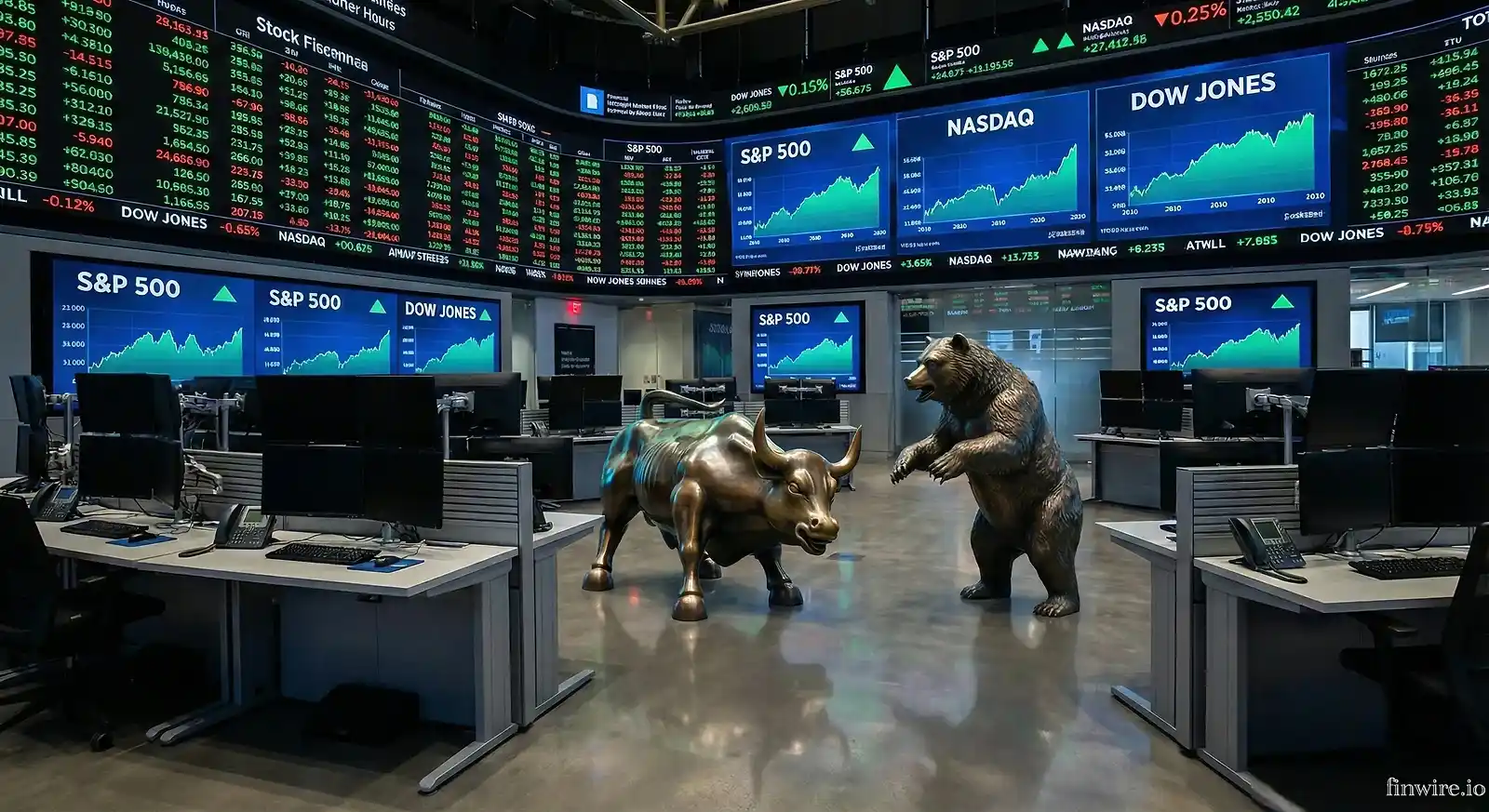
U.S. stocks were higher on Tuesday, helped by a rebound in chipmaking names, however it remains to be seen whether those gains hold after a similar trend in the previous session in which equities eventually ended lower.
With a dearth of economic data and the Federal Reserve in its communications blackout period, the second quarter earnings season will be the primary market driver this week.
At 11:14 ET (15:14 GMT), the benchmark S&P 500 index was up 0.7% to 7,496.51 points, the tech-heavy NASDAQ Composite added 1.3% to 25,830.96 points, and the blue-chip Dow Jones Industrial Average climbed 0.6% to 52,127.73 points.
The main averages on Wall Street retreated in the prior session, weighed down by ongoing worries over the sustainability of massive artificial intelligence-related spending. In particular, these anxieties caused shares in companies making the chips underpinning AI technology to pare back early gains. A tracker of these stocks ended 0.6% higher, after having previously risen by more than 3%. A recent emergence of new Chinese competition to leading U.S. AI models has also dented sentiment.
Much of the focus in markets this week is on a host of quarterly tech results, including Google-owner Alphabet (NASDAQ:GOOGL) and chipmaker Texas Instruments on Wednesday. The figures are expected to provide fresh insight into the state of the AI boom, especially the trajectory of a rapid build-out of the infrastructure powering the nascent technology.
On Tuesday, major earnings are due out from firms like General Motors Company (NYSE:GM), Danaher Corporation (NYSE:DHR), and Charles Schwab (NYSE:SCHW). Philip Morris International Inc (NYSE:PM), Gevo Inc (NASDAQ:GEVO), Moodys Corporation (NYSE:MCO), and CME Group Inc (NASDAQ:CME) are also set to report this week.
U.S.-Iran strikes continue; mediation chatter in focus
Meanwhile, geopolitical tensions have hovered over the outlook for financial markets.
Iran struck a tanker in the Strait of Hormuz on Tuesday, while the United States conducted a fresh round of strikes on Iranian targets, extending an intensifying cycle of attacks and counterattacks between Tehran and Washington.
Citing the British military’s United Kingdom Maritime Trade Operations center, the Associated Press said the vessel was attacked in the strait near Oman, leading the crew to abandon the ship. Iran’s Islamic Revolutionary Guards Corps claimed responsibility for the strike.
The IRGC also said it had launched drone strikes on three major U.S. military installations in Kuwait, local media reports showed. Iran was also seen launching strikes at U.S. bases in Jordan, Syria, and Bahrain.
Earlier, the U.S. military said on Monday evening it had concluded a 10th consecutive day of strikes against Iran. U.S. Central Command said it had struck Iranian military targets, all with the intent of degrading the country’s ability to attack commercial vessels in the Strait of Hormuz. Explosions were reported in Bandar Abbas, Qeshm Island, and Konarak.
On Tuesday, Brent crude futures, the global oil benchmark, rose 2.1% to $91.08 a barrel, while U.S. West Texas Intermediate crude futures gained 2% to $84.15 a barrel.
Oil prices hit five-week highs on Monday as the renewed conflict largely shut down flows through the Strait of Hormuz, driving up concerns over shrinking global inventories, tightening supplies, and a potential burst of global inflation. But oil prices later pared back those gains after reports showed regional mediators continued to push for peace negotiations. U.S. and Iranian officials also signaled that they remained open to an eventual resumption in talks, keeping markets hopeful for a de-escalation in their war.