Wall Street slides to kick off historically worst month as oil prices, yields rise
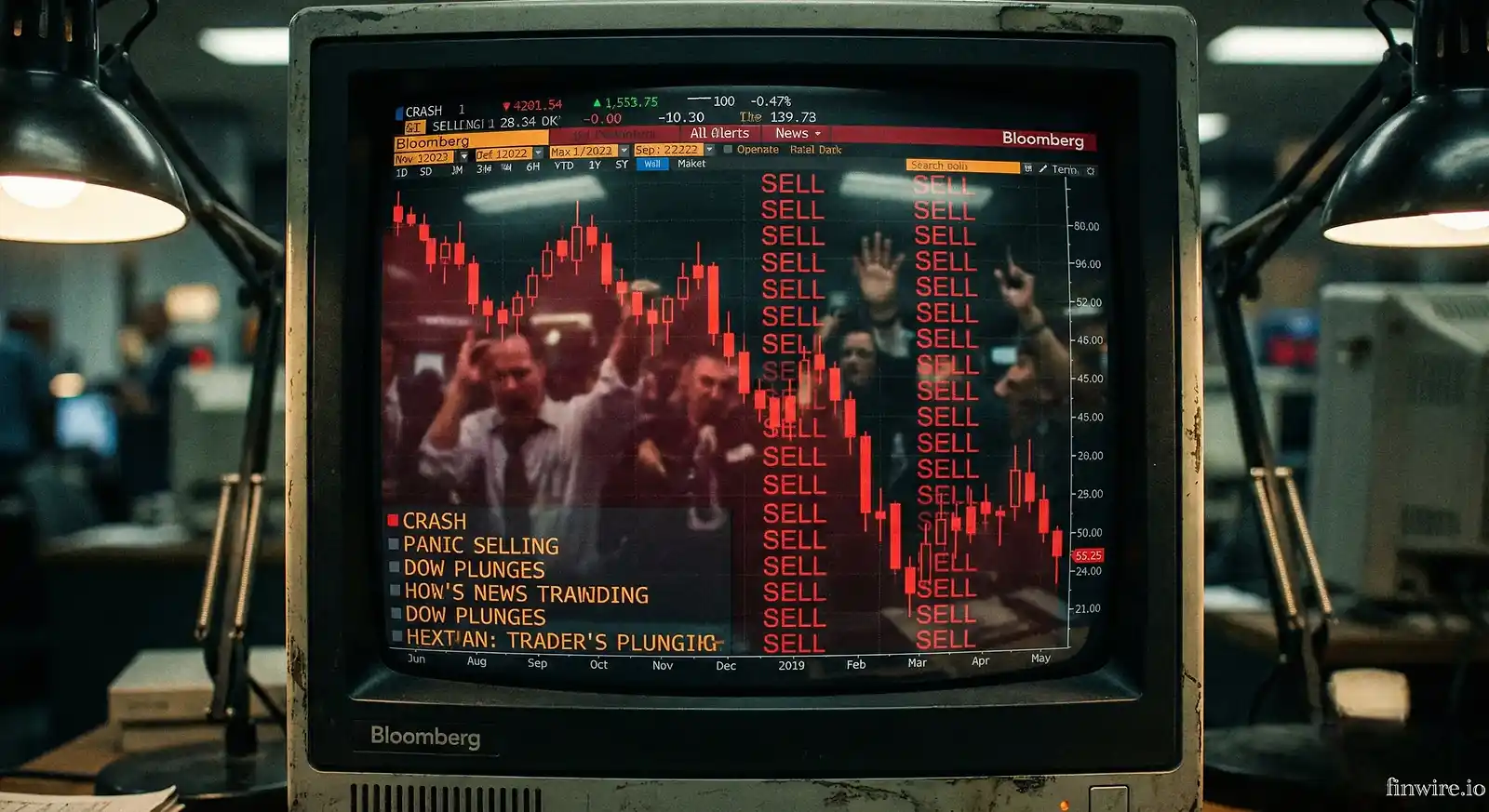
Wall Street on Tuesday began its historically worst month with a negative session amid spiking oil prices and rising Treasury yields. Meanwhile, economic data showed a soft but overall resilient read on the labor market, keeping Federal Reserve interest rate probabilities largely unchanged.
Investors are coming off a positive performance for August, driven largely by a strong earnings season and a slight rebound in the artificial intelligence trade. But equities have been on a roller coaster, buffeted by continued volatility in oil and a sell-off in the bond markets, resulting in a pattern of rallies followed by pullbacks.
The tech-heavy NASDAQ Composite declined 1% to close at 26,099.77 points, the benchmark S&P 500 lost 0.7% to end at 7,632.70 points, and the blue-chip Dow Jones Industrial Average shed 0.8% to settle at 52,767.59 points.
"Right now, more than anything, the markets need stability. The current rally, recede, rally, recede, routine is not sustainable – and against the backdrop of renewed strikes in the Middle East, trade tensions with Canada, and resurgent oil prices, it makes the macro picture increasingly murky," Yerbol Orynbayev, former World Bank governor of Kazakhstan, told Investing.com.
Oil spikes as U.S. strikes Iran again
The Middle East conflict was one of the main drags on sentiment on Tuesday, amid a resurgence in military action between Washington and Tehran. U.S. Central Command said it had launched strikes against Islamic Revolutionary Guard Corps (IRGC) targets, while Iranian state media said the attacks hit a factory in Qeshm and non-military targets in Hormozgan.
Coming into last weekend, the U.S. and Iran had been at an impasse over control of the Strait of Hormuz, and President Donald Trump had appeared to shift his strategy from military strikes to economic warfare. However, kinetic action resumed on Sunday for the first time since July after CENTCOM took what it called "limited, precise action" against IRGC forces laying mines in the Strait of Hormuz.
Iran retaliated by carrying out strikes against U.S. military bases in Jordan, with Jordanian state media separately reporting the successful interception and destruction of eight missiles.
Trump on Tuesday said the latest strikes were in response to the minelaying attempt and the attack on the Jordan military base.
"If the failed Nation of Iran retaliates for this very justified attack, they will be hit again at a much harder and higher level, but it will not be the biggest attack of them all, that is waiting in the wings and, when it is over, there will be very little left of the Islamic Republic of Iran!" the U.S. president said on his Truth Social service.
Oil prices had gained on Monday and sharply extended that advance on Tuesday after the new U.S. strikes. Brent crude futures expiring in November, the global benchmark, were last up 7.9% to $95.36 a barrel, while U.S. West Texas Intermediate crude futures expiring in October surged 5.9% to $90.85 a barrel, topping the $90 mark for the first time since June 11.
Bond rout deepens as focus shifts to labor market for rate cues
Away from the Middle East, a sell-off in U.S. Treasury yields and other major bond markets picked up steam on Tuesday, driven by rising concerns about inflation and fiscal debt. The benchmark U.S. 10-year yield hit its highest level since November 2023, while the 2-year yield hits its highest since July 2024.
Across the globe, Japan’s 10-year bond yield topped 3% for the first time since August 1996, Germany’s 10-year yield reached its highest level since March 2011, and the United Kingdom’s 10-year gilt touched its highest since July 2007.
At home, expectations of a Federal Reserve rate hike in September have jumped since Federal Reserve Chair Kevin Warsh’s hawkish keynote address at the annual Jackson Hole Economic Policy Symposium on Friday. While the spotlight has been on inflation, watchers of monetary policy this week will get a read on the U.S. labor market for more cues on future Fed policy actions.
While raising interest rates can be an effective way to combat inflation by increasing borrowing costs for consumers and businesses, those higher costs can also cut into corporate profit margins, which in turn can force companies to freeze hiring or announce job cuts. Thus, a combination of high inflation and a weakening labor market can put the Fed into a dilemma over its dual mandate.
On Tuesday, the latest Job Openings and Labor Turnover Summary (JOLTS) showed U.S. job openings in July were 7.271 million, lower than the expected figure of 7.330 million, but ticking up from June’s downwardly-revised figure of 7.182 million.
While the headline figure for July was cooler than anticipated, the increase from June and the overall level remaining near the two-year high of 7.585 million job openings in April suggested that the U.S. employment picture remained resilient.
That gives the Fed some potential breathing room in terms of not having to tighten monetary policy immediately, which was reflected in interest rate odds. As per the CME FedWatch tool, the probabilities of a quarter-point hike in September stood at about 68% after the JOLTS data, while that of the Fed holding steady were nearly 32%, both little changed from the previous day.
Eyes are now on Friday’s U.S. August nonfarm payrolls report.
"The fact is, prolonged inflationary pressures and yo-yoing oil prices are always concerning – and both have long beleaguered the U.S. markets. Irrespective of this week’s labor data, the ongoing bond sell-offs have made it clear that the markets are at their limit with the U.S.’s inflation – and its $40 trillion debt pile. And if Warsh’s hawkish speech in Jackson Hole is anything to go by, so is the Federal Reserve," Orynbayev, former World Bank governor of Kazakhstan, told Investing.com.
"Rate hikes may now be unavoidable, and certainly there are plenty of challenges facing the U.S. markets. But, if I have learned anything this year, it is that we can never write off the U.S.’s economic resilience," he added.
Ambar Warrick and Pranav Kashyap contributed to this article