Nasdaq falls 3% in July, driven by worst month for chips since financial crisis
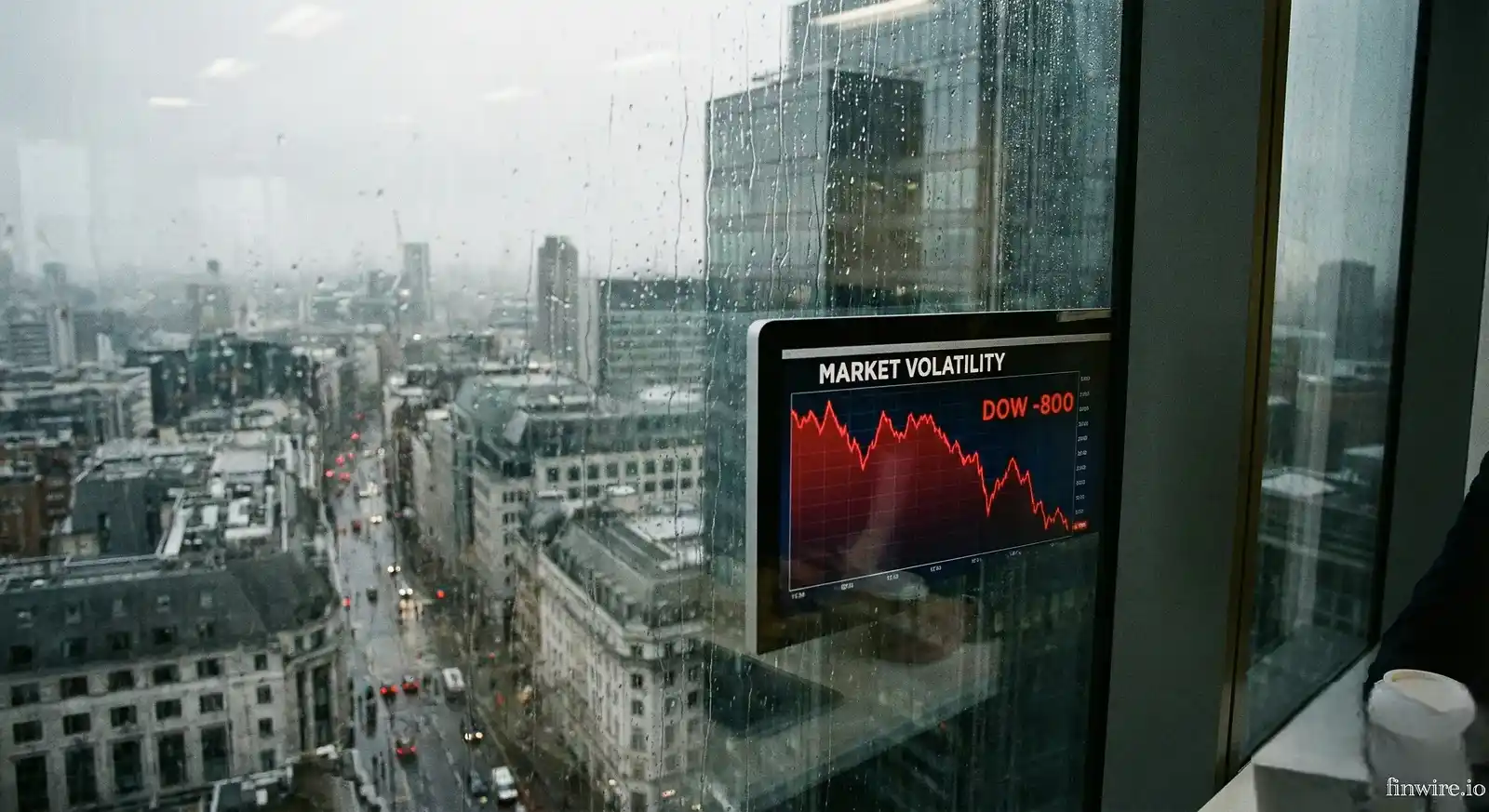
Wall Street on Friday ended higher, as a jump in consumer discretionary stocks on a boost from Amazon and a rebound in chip stocks helped offset a post-earnings slump in Apple, a slide in the materials sector, and rising Treasury yields.
But markets notched a negative month, largely driven down by a combination of a decline in the high-flying artificial intelligence trade and a resurgence in oil prices due to a breakdown in diplomacy in the Middle East.
The benchmark S&P 500 index advanced 0.7% to close at 7,489.67 points, the tech-heavy NASDAQ Composite added 1% to settle at 25,373.85 points, and the blue-chip Dow Jones Industrial Average climbed 0.5% to conclude at 52,485.74 points.
Tech’s July loss driven by worst month for chips since 2008
A blistering rally in the artificial intelligence trade earlier this year helped Wall Street shake off the Middle East conflict and return to record levels. Much of that jump was driven by chip stocks, as semiconductor firms have been some of the biggest beneficiaries of the AI boom.
However, since last month, the AI trade has seen a sharp pullback, amid increasing concerns about lofty valuations, uncertain timelines on returns from massive spending on AI, and Chinese competition. The Philadelphia Semiconductor Index - a key barometer for the chip space - saw a whopping 20.6% loss in July, its worst month since October 2008.
A possible reason for the slide emerged earlier this week after reports said Situational Awareness, the hedge fund started by former OpenAI researcher Leopold Aschenbrenner, had sold its entire AI-focused stock portfolio after steep losses. Vital Knowledge’s Adam Crisafulli said investors were now "attributing the pain of the last several weeks exclusively to technical dislocations" tied to Situational Awareness.
"The stunning fall of the U.S. technology and artificial Intelligence-focused hedge fund, Situational Awareness, may go some way to explaining why so many shares in these sectors have been so volatile of late, and bulls will be tempted to argue that Citadel’s swoop for the public shareholdings of a distressed seller may help to call the bottom and set the foundations for the next upward move," Russ Mould, investment director at AJ Bell, said.
One of the other major drivers for the slumping AI trade had been jitters that returns were too little and too slow from the hundreds of billions of dollars being poured by mega-cap firms into building AI infrastructure, or the combined hardware and software stack needed to handle massive data and computing power used to build and train AI processes. Investors punished Elon Musk’s Tesla and Google-parent Alphabet last week for highlighting elevated AI-related spending plans.
Microsoft results a shot in the arm
After Tesla and Alphabet’s disappointment, market participants this week had been keenly focused on quarterly results from four other members of the Magnificent Seven club: Microsoft, Meta Platforms, Amazon, and Apple.
The latter two saw diverging stock reactions on Friday. Apple ended over 7% lower after the iPhone-maker predicted that sales growth in the September quarter would be between 9% and 11%, just shy of the analysts’ estimates of about 12%. The outlook for gross profit margins also disappointed forecasts.
Conversely, e-commerce titan Amazon jumped more than 15% as its cloud business cash-cow continued to impress. CEO Andy Jassy told investors in a post earnings call that that division, Amazon Web Services, could eventually generate a trillion dollars in annual revenue "in time." Sales at AWS soared by 37% versus a year ago to $42.2 billion in the second quarter.
The cloud performance helped offset a raised spending forecast for the year to $220 billion, an uptick of $20 billion, as Amazon flagged increased costs of memory chips.
The spotlight, however, had been on the capital expenditure guidance issued by Meta and Microsoft. The Facebook-parent’s quarterly profits disappointed, and it also hiked its capex forecast. But Microsoft became the first AI giant to not raise spending plans, and the quarterly performance of its Azure cloud business was strong.
"Today is the aftermath of the relief rally that resulted from ending the hedge fund Situational Awareness’ role as a distressed seller. The rally, along with a hugely positive reaction to Microsoft’s results, rekindled investors’ enthusiasm for tech," Steve Sosnick, chief strategist at Interactive Brokers, told Investing.com.
"Investors have fallen back into love with the Mag 7, thanks to the recent cloud-driven earnings reports of Microsoft and Amazon which have also boosted Alphabet today (and allowing them to largely ignore Apple’s big drop)," he said.
"More stocks are down today than up, oil futures and bond yields are higher, but the combination of ’the correct’ stocks being higher and potential month-end window dressing is keeping the S&P 500 and Nasdaq 100 in positive territory," Sosnick added.
Bond sell-off deepens as Fed dissenters make case for rate hike
U.S. monetary policy outlook has also been a major focus of Wall Street’s in July. After a slide in oil prices in June helped to soften U.S. consumer and producer inflation, the resurgence in crude this month upended price pressure dynamics once again. That led to an unusual amount of uncertainty heading into the Federal Reserve’s interest rate decision on Friday, with odds of a rate hike higher than recent historical trends.
While the Federal Open Market Committee (FOMC) eventually held its key policy rate steady, the decision saw three dissents as Cleveland Fed President Beth Hammack, Minneapolis Fed President Neel Kashkari, and Dallas Fed President Lorie Logan voted for a 25 basis point hike instead.
"Inflation has remained stubbornly above 2 percent for more than five years, and I am not confident it will return to our objective on its own. Supply-side factors, including energy prices, have boosted inflation this year, but I see inflationary pressures coming from the demand side of the economy, as well," Hammack said on Friday.
"Labor, consumption and financial market conditions indicate that monetary policy is not restraining the economy. Without any policy restraint, inflation will likely continue to trend above target until there’s an unanticipated shock," Logan said in a separate statement.
"The FOMC cannot count on unanticipated shocks to achieve its goals and can always adjust policy if unanticipated shocks occur. Modest action in the near term would reduce the likelihood of needing to take sharper action later," she added.
Kashkari also expressed his view: "To manage against the risk that high inflation could become entrenched, I would rather tighten policy incrementally as we gather more data on the path of inflation and employment. If inflation remains elevated, in my view, a potential series of small policy moves would be better than waiting and eventually concluding that even bolder actions were necessary."
U.S. Treasury yields rose on Friday after the dissenters’ comments, as traders dumped bonds. Yields have risen significantly in July amid expectations for rate hikes and concerns that the Fed under the new leadership of Kevin Warsh is falling behind on inflation. Rising yields make borrowing more expensive for consumers and businesses, effectively playing the role of a rate hike.
The benchmark longer-end U.S. 10-year yield was last up 4.9 basis points to 4.712%, while the shorter-end more rate-sensitive 2-year yield was up 3.9 basis points to 4.268%.
Ambar Warrick and Scott Kanowsky contributed to this article