U.S. stocks end lower, bonds slide as Treasury buyback disappoints, oil tops $100
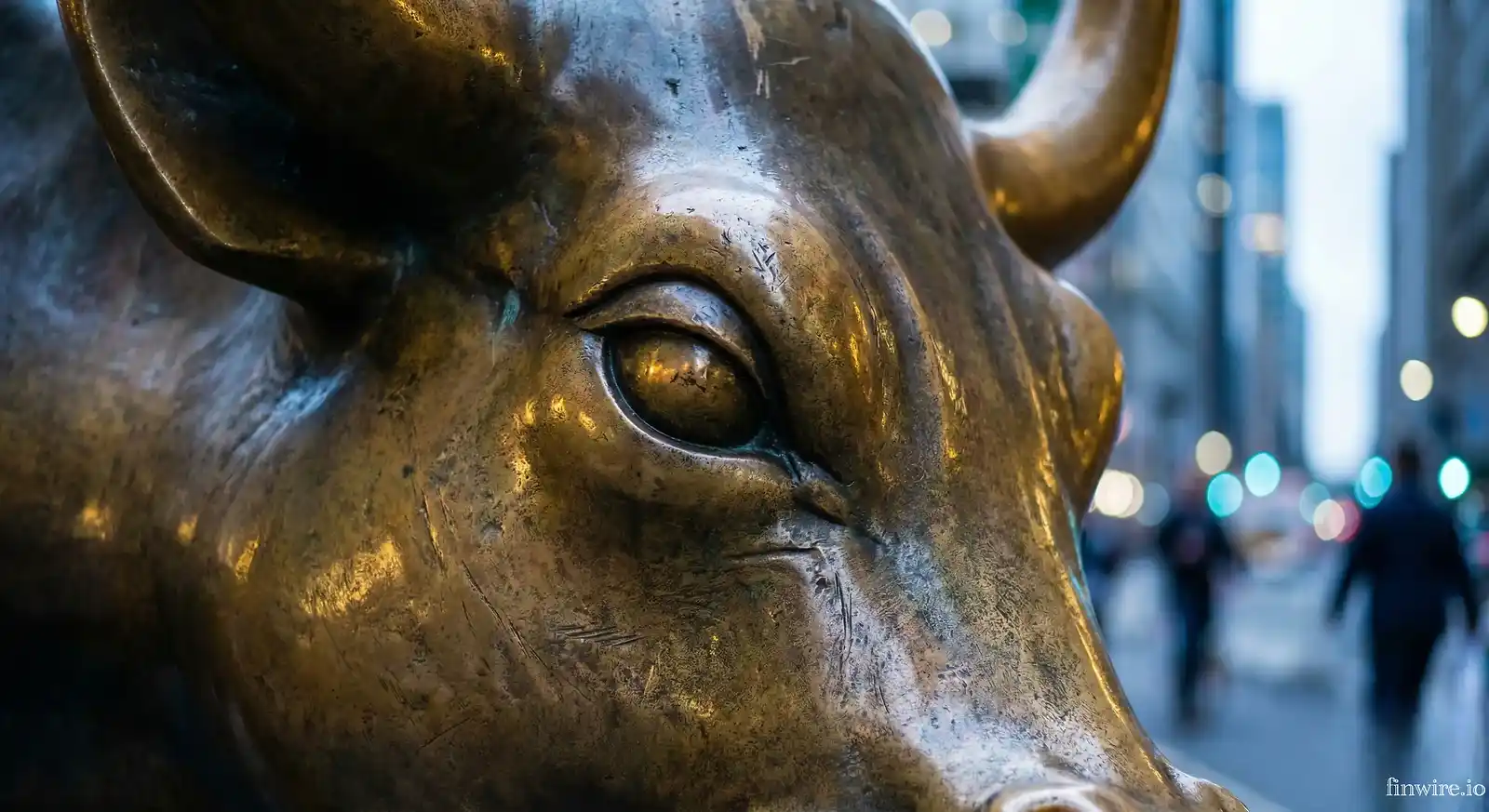
U.S. stocks on Wednesday ended in the red and government bonds sold off after a highly anticipated Treasury Department update on buyback operations disappointed investors. Sentiment had earlier already been under pressure from the global oil benchmark topping $100 a barrel for the first time in about three-and-a-half months.
There was also some caution a day ahead of key U.S. inflation reports that could solidify bets for a Federal Reserve rate hike later this month. Elsewhere, Apple stock recovered from session lows to end down 0.3%. The tech behemoth unveiled the iPhone Duo, its first foldable version of its flagship smartphone.
The benchmark S&P 500 slipped 0.5% to close at 7,638.95 points, the tech-heavy NASDAQ Composite declined 0.6% to settle at 26,253.34 points, and the blue-chip Dow Jones Industrial Average shed 0.8% to conclude at 52,381.08 points.
Bond market unhappy with Treasury buyback announcement
Treasury yields sharply gained as fixed-income traders dumped bonds after the Treasury Department said it would buy back up to $6 billion in 10-year to 20-year maturities, up from $2 billion previously. The department last month said it would increase the buyback sizes to at least $4 billion, while media reports said the expectations had been for at least $10 billion.
The benchmark U.S. 10-year yield was last up 4.2 basis points to 4.846%. It had been up 1.2 basis points to 4.816% before the announcement. The shorter-end, more rate-sensitive 2-year yield was up 2.7 basis points to 4.425%.
The Treasury’s move had been seen as surprise intervention action to cap a surge in yields amid a sustained rout in government debt.
U.S. Treasury Secretary Scott Bessent on Tuesday said the move had been aimed at curbing a "fever" in the bond market. "When you’re speculating, you want to speed things up. You want to make as much money as you can as quickly as you can," he said at a Breitbart News event.
"I don’t believe that I can change the equilibrium price, but nothing’s ever in equilibrium. You’re either moving away from it or you’re moving toward it. And...when there’s a disequilibrium, my job is to try to push things back towards equilibrium," Bessent said.
The bond market sell-off had been driven by a combination of factors including inflationary concerns due to soaring oil prices, jitters over the massive amount of debt being issued by companies to fund their artificial intelligence infrastructure buildouts, and worries over ballooning U.S. national debt.
"The U.S. bond market, since the president came in, is the best performing in the world," Bessent said. "And, if it were this idea, ’Oh, everyone’s worried about the credit of the U.S.,’...you would sell U.S. bonds and buy German bonds. And it’s the opposite. We’re the best performing," he added.
Bessent also noted that the bond market had "never been this co-related to energy prices."
"So, that just tells me that when the energy prices come down, interest rates are going to come down," the Treasury Secretary said.
Speaking of rates, the odds of the Fed delivering a quarter-point rate hike on September 16 remained elevated at about 60%, according to the CME FedWatch tool, after a blockbuster August jobs report last week led to a sharp recalibration in Fed monetary policy outlook.
All eyes are now on Thursday’s August producer price index (PPI) report and Friday’s consumer price index (CPI) data for further cues on rates. Hotter-than-anticipated readings could decisively tilt odds towards a Fed hike.
"So far, September is living up to its reputation as the most disappointing month of the year for equity markets. The weakness is due to a combination of things, with the outlook for higher interest rates and increased global turmoil at the top of the list," Peter Tuz, president at Chase Investment Counsel, told Investing.com.
"I am still of the opinion that we will not see a rate increase coming out of the September meeting, but the figures coming out tomorrow will influence that significantly. Energy, obviously, will be up, but I am still thinking that if the ’core’ rate does not go up significantly, there will be no rate hike due in part to the upcoming mid-term elections," he added.
Brent tops $100 for first time since late May
Turning to the Middle East, oil prices remained one of the main concerns for market participants. Brent crude futures were last up 3.9% to $101.69 a barrel, topping the $100 level for the first time since May 26.
The advance came as military engagements between the U.S. and Iran showed no signs of ending, following a resurgence in such kinetic action last week for the first time since July. U.S. Central Command on Tuesday said it had destroyed five Iranian crude oil carriers in response to the targeting of a U.S. Navy warship by the Islamic Revolutionary Guard Corps.
Iran’s state media said Tehran responded to the strikes by hitting two American vessels, eight oil tankers, 10 U.S.-backed ships, and a U.S. military base in Jordan. Tehran suggested that the bombardments caused heavy damage, but Jordanian officials said that 18 of 20 Iranian missiles were intercepted, while the remaining two fell on unpopulated areas.
The return to military action has come after a period of stalemate between the U.S. and Iran, as both sides wrestle for control over the Strait of Hormuz. Hopes for an imminent resolution to the fighting has faded. Speaking during a visit to Colombia, U.S. Secretary of State Marco Rubio indicated that the tit-for-tat strikes are unlikely to cease soon, warning Iran that it will "lose tankers" when it tries to "hit U.S. naval ships."
Against this backdrop, oil flows through the strait have fallen close to record lows. As per TankerTrackers.com, the five Iranian tankers struck by the U.S. have, on a combined basis, exported 45 million barrels of Iranian crude oil and refined products since May 2019.
“Brent crude pushing above $100 a barrel has had a psychological effect on the market, pushing a hypothetical inflation worry gauge to ‘serious’ status and dragging down financial assets,” Dan Coatsworth, head of markets at AJ Bell, said.
“The oil price has now jumped by 28% since early August. This type of ascent could leave businesses and consumers feeling sick at the thought of sharp cost increases and potentially higher borrowing costs if central banks choose to fight inflation with interest rate hikes," he added.
Apple’s iPhone Duo priced at $1,999
Away from the Iran war, Apple stock hit a session low after the world’s second largest company unveiled a foldable iPhone at its annual product launch event, in the first major redesign to the product since 2007.
The device, called iPhone Duo, will start at $1,999, making it Apple’s most expensive iPhone. Pre-orders will start on October 16 and it will be available from October 23. Apple also showcased the new iPhone 18 Pro and iPhone 18 Pro Max, containing an updated Siri voice assistant with AI features.
The stock recovered some of its decline and closed 0.3% lower.
The launch event is the first for new top boss John Ternus, who took over from veteran CEO Tim Cook at the start of this month.
"Apple’s event is important to Apple, but not so much to the overall markets. What I find more interesting than the foldable phone is the likelihood that its price might crack $2,000! It made me wonder about the elasticity of demand for Apple’s products," Chase Investment Counsel’s Tuz told Investing.com.
Ayushman Ojha and Scott Kanowsky contributed to this article