U.S. stocks post weekly gains, showing resilience despite elevated oil and yields
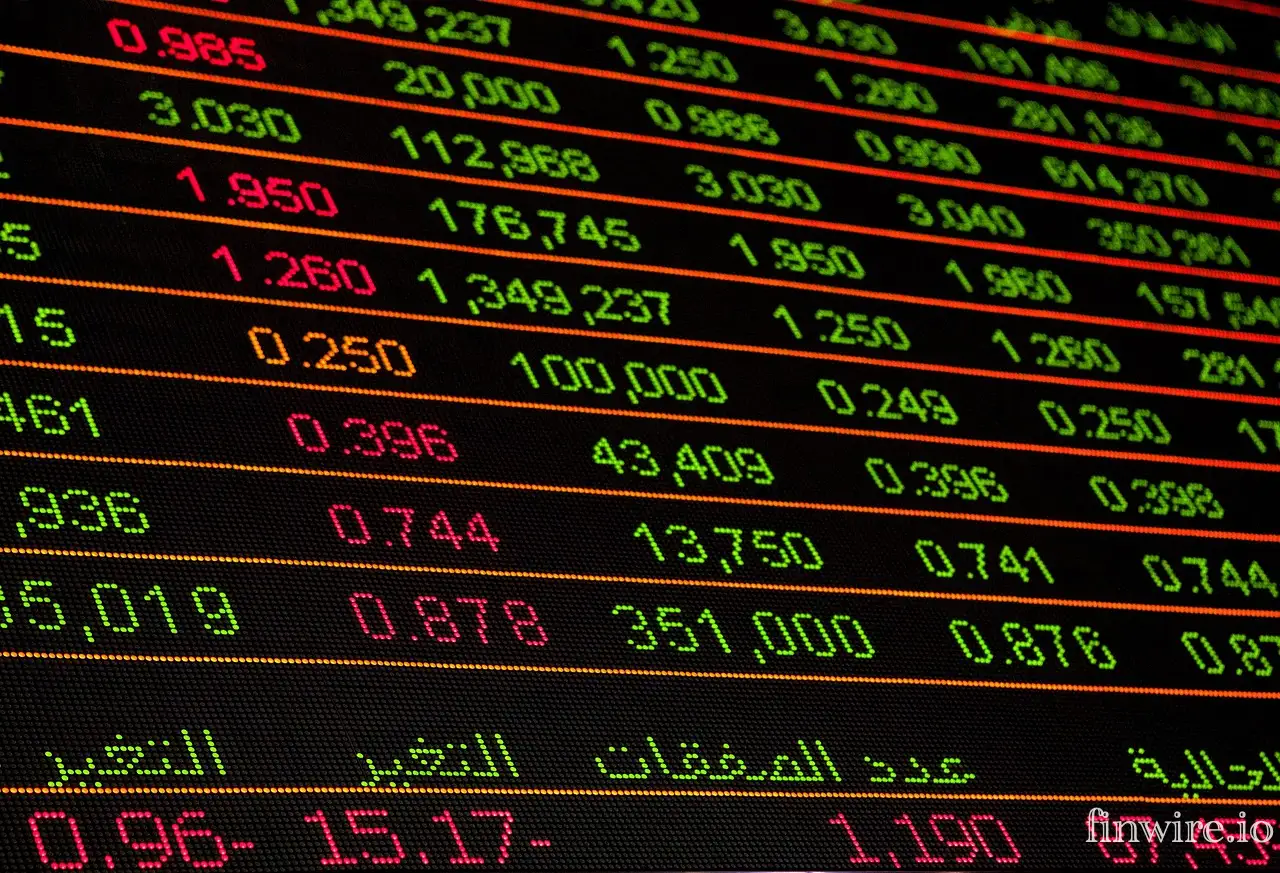
Wall Street on Friday shook off a bout of early seesawing and ended higher, helped by a reprieve in oil prices. An extended sell-off in U.S. Treasury bonds also eased up somewhat, mainly in shorter-term maturities.
It’s been a volatile week for U.S. stocks, with market participants digesting a rally in the artificial intelligence trade, conflicting geopolitical signals, a rise in Federal Reserve rate hike expectations, and the bond market rout. Still, the three main averages posted weekly gains.
The benchmark S&P 500 added 0.5% to close at 7,741.83 points, the tech-heavy NASDAQ Composite gained 0.5% as well to settle at 27,068.72 points, and the blue-chip Dow Jones Industrial Average rose 0.9% to conclude at 51,828.59 points.
Wall Street shows resilience despite soaring oil prices and yields
The beginning of this week was marked by a solid rally in the three main averages, with the S&P posting its best day since early August. It was driven by the AI trade, which roared back to life partly due to growing traction over Meta Platforms’ new personal AI agent, Muse.
Meta has soared more than 30% so far this month and almost 14% this week alone. The social media giant officially launched Muse on September 8, and in the days since, the AI agent has become one of the most popular free apps available for consumers, surging to the top of Apple’s App Store.
Capable of executing autonomous, multi-step tasks—such as booking travel, managing calendars, and making e-commerce purchases—in the background on behalf of users, the demand for Muse has also led to investor concerns for individual sub-sectors such as travel aggregators, telecom, and ride-hailing.
Financials has been the hardest hit, as Muse is able to automatically audit bank statements, move cash to higher-yield accounts, and renegotiate fees.
Meta’s outsized gain this month has led an advance in the Magnificent Seven, with all members of the club except Amazon in positive territory for September. That in turn has allowed the broader market to remain near record levels despite bearish developments in geopolitics and the fixed-income space. The S&P is currently 0.7% below its last record close, while the NASDAQ Composite scaled fresh peaks this week for the first time since early June.
"The S&P 500 has remained remarkably resilient in the face of mounting macro headwinds. Despite oil prices topping $100 per barrel, 10-year Treasury yields climbing above 5%, and a renewed shift toward tighter monetary policy, the index continues to hover near record levels," Adam Turnquist, chief cross-asset strategist at LPL Financial, said.
"Much of that resilience can be attributed to the resurgence of mega-cap stocks. After significant underperformance in the first quarter, the Magnificent Seven Index...has staged an impressive comeback, powering the index back to record-high territory and reclaiming leadership relative to the broader market," he added.
U.S. 10-year and 30-year pinned at multi-year and multi-decade highs
While U.S. stocks remain resilient, the bruising sell-off in Treasury bonds this week has put traders on edge. Longer-term instruments in particular have hit levels not seen since the great financial crisis, with the benchmark U.S. 10-year yield scaling its highest since June 2007 and the 30-year yield its highest since June 2004.
The bond rout has been driven by a combination of energy-driven inflation worries, concerns over the massive amounts of debt being used to fund AI infrastructure buildouts, and a hawkish repricing of Fed rate odds.
The Fed last week hiked rates for the first time in over three years and signaled more policy tightening this year. Fed speakers have given more hawkish signals since the hike, including Governor Michael Barr and Philadelphia Fed President Anna Paulson, both voting members of the Federal Open Market Committee (FOMC).
As per the CME FedWatch tool, the odds of a quarter-point rate hike by the FOMC in October currently stand at around 64% versus nearly 58% a week ago.
"This week has been all about rates, and that will likely remain the key driver in the near term. From our perspective, the bull market deserves the benefit of the doubt during this seasonally choppy period," Keith Lerner, chief investment officer and chief market strategist at Truist, told Investing.com.
"We’ve already seen interest rate-sensitive groups such as homebuilders, REITs, retailers, and utilities come under pressure relative to the S&P 500, which remains only about 1% below its recent high," he noted.
"The encouraging development is that the market has experienced a meaningful internal reset in both prices and valuations. The percentage of stocks trading above their 50-day moving average has fallen to roughly 26%, a sign of broad-based, indiscriminate selling," Lerner said.
"While the near-term path is set to remain volatile, we view this pullback as an opportunity rather than a reason to become defensive. And while higher rates are creating challenges for borrowers, they are also restoring something investors haven’t had for years: meaningful income opportunities," he added.
Oil halts two-day climb
Turning to geopolitics, oil prices fell on Friday after a media report that the U.S. and Iran were exploring a phased deal to reopen the Strait of Hormuz. Traders chose to focus on the report and looked past the lack of any official diplomatic breakthrough between Washington and Iran this week.
Crude benchmarks have seen a volatile few days. Coming into this week, hopes had grown for any kind of diplomatic progress between the U.S. and Iran as delegations from both countries attended the United Nations (UN) General Assembly in New York. But the mood was clouded after President Donald Trump and Iranian counterpart Masoud Pezeshkian exchanged fiery speeches as the UN.
The harsh rhetoric was overlooked after Trump on Tuesday confirmed that indirect talks between U.S. representatives and the Iranian delegation on the sidelines of the UN had taken place.
But U.S. Secretary of State Marco Rubio on Wednesday tempered expectations, saying he wouldn’t characterize the discussions as a "major breakthrough" but more a "continuation of conversations that have occurred in the past."
Iran’s foreign ministry spokesperson Esmaeil Baqaei on Thursday said a round of messages had been exchanged with the U.S. through Qatari mediation, in which Tehran had laid out its conditions to return to negotiations.
Those conditions include the "cessation of aggressive U.S. actions, including the naval blockade and economic terrorism; ending the war on all fronts; release of Iran’s frozen or restricted assets; acceptance of a safe shipping route in the manner agreed upon between the two coastal governments," Baqaei said.
Meanwhile, President Xi Jinping’s first state visit to the U.S. since 2015 ended on Friday. Energy market participants had hoped that, with China being Iran’s biggest trading partner a key buyer of the country’s crude oil, there would be some discussions on the issue between Xi and Trump.
"We made it very clear to them weeks ago that any help that they would give Iran, whether it be direct or indirect, whether it be intelligence or parts or military equipment, was totally unacceptable. President Trump made that very clear again yesterday," David Perdue, the U.S. Ambassador to China, told CNBC on Friday.
Akamai, Costco notable movers
Looking at Friday’s U.S. stock movers, Akamai Technologies ended 3.2% higher after the company signed an $11.6-billion cloud-service deal with Claude-maker Anthropic.
Costco posted an uptick in profit and sales in its fiscal fourth-quarter, highlighting solid demand from U.S. consumers despite broader economic headwinds. Shares added 2.9%.
Ambar Warrick and Scott Kanowsky contributed to this article