U.S. retail sales rebound to post 1.2% gain in August
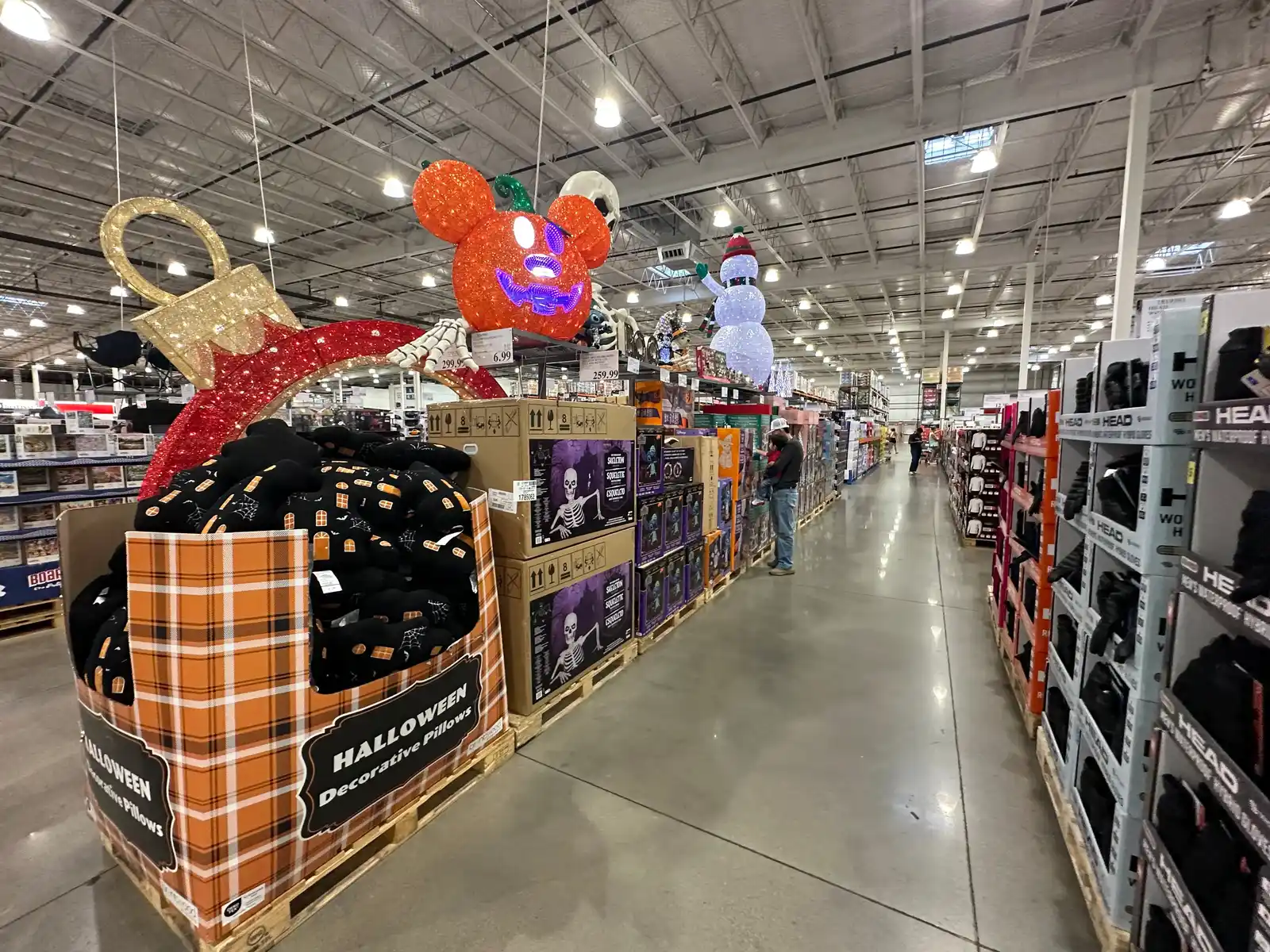

Halloween items are displayed in a Costco warehouse in Sheridan, Colo., this week. U.S. consumers continue spending on a wide range of goods, despite high gas prices.David Zalubowski/The Associated Press
Consumers may be griping about higher prices at the pump and elsewhere, but they keep spending, helping to power the economy, according to the latest government snapshot.
Retail sales rose a better-than-expected 1.2 per cent last month after recording a revised 0.5-per-cent dip in July, according to Commerce Department data released Wednesday. Economists were anticipating a 0.7-per-cent gain for the month, according to FactSet.
The decline in July was notable because there had been few signs of fatigue from U.S. consumers. Americans spent heavily during the World Cup and Amazon Prime Day sales this summer. That followed heavy retail traffic in April and May as Americans dipped into their government tax refunds.
U.S. consumer inflation picks up in August, bolstering case for Fed rate hike
Even excluding business at gas stations, retail sales rose 1.1 per cent in August, underscoring the resilience of the American consumer. The government figures aren’t adjusted for inflation.
The report showed that American consumers were spending on a wide range of goods from furniture and clothing to cars.
Business at motor vehicle and auto parts dealers rose 0.6 per cent last month, according to the report.
Sales at clothing and accessories stores were up 0.7 per cent, while furniture and home furnishings stores saw a 0.9-per-cent increase. Online retailers registered a 2.6-per-cent gain.
The data offers only a snapshot of consumer spending and doesn’t include activities like travel and hotel stays. But the lone services category – restaurants – also registered a solid gain.
The so-called control group–which excludes food services, autos, building materials and gas station sales and is used to calculate economic growth – rose a strong 1.4 per cent last month from the prior month.
Many Americans continue to spend despite skyrocketing gas prices that have accompanied renewed fighting in the Middle East. The average price for a gallon of regular gasoline rose overnight to US$4.37 on Wednesday, according to motor club AAA. That is about 47-per-cent more than a gallon cost before the war began, when it cost less than US$3.
Diesel, which has an outsized impact because it’s used for shipping, transportation and manufacturing, has risen even faster, up 68 per cent.
The Labor Department reported Friday that consumer prices rose 3.4 per cent last month from a year earlier, and they’re up 0.4 per cent from July, quadrupling the 0.1 per cent registered in the previous month.
Still, Americans have grown more selective about what they buy, according to retailers who posted their quarterly financial results in the past few weeks, but some, like Walmart and Macy’s, are using some of their tariff refunds from the government to lower prices.
Macy’s received US$116-million in tariff refunds from the government, Macy’s CEO Tony Spring said, and some of those proceeds are being used to lower prices on certain big-ticket items like furniture and fine jewelry.
Executives at the National Retail Federation, the nation’s largest retail trade group, said that retail sales have been better than expected this year.
Mark Mathews, chief economist at the NRF, also noted he’s seeing a softening of the K-shaped spending trends – the upper part of the K refers to higher-income Americans seeing their incomes and wealth rise while the bottom part points to lower-income households struggling with weaker income gains and steep prices.
“We have a consumer that’s willing to spend, and up until this point, we have had a consumer who’s been able to spend,” Mathews said. “Now looking forward that looks a little bit more challenged because if gas prices remain high, then you know you have to start questioning where the consumer is going to fund that spending growth from.”