TSX gains ground as energy stocks jump after Venezuela strike
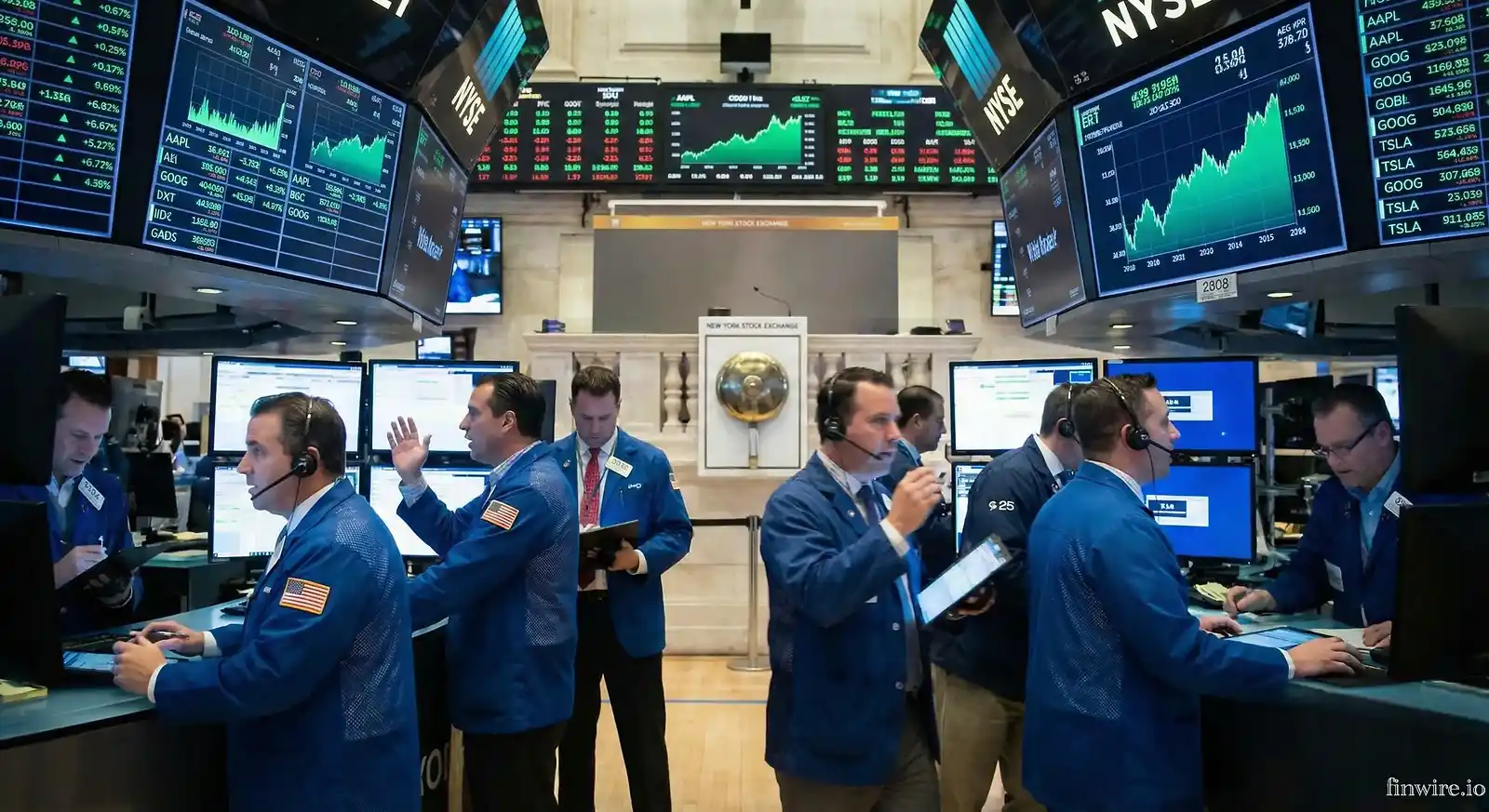
Canada’s main stock index opened higher on Monday, lifted by mining stocks as the turmoil in Venezuela drove investors towards safe-haven assets, including gold and other precious metals.
Toronto’s S&P/TSX Composite index was up 0.55 per cent at 32,050.90 points as of 9:31 a.m. ET.
Wall Street’s main indexes opened higher on Monday as technology stocks recovered and oil companies surged following the capture of Venezuelan President Nicolas Maduro by the United States in a military strike.
The Dow Jones Industrial Average rose 93.4 points, or 0.19 per cent, at the open to 48,475.81. The S&P 500 rose 33.7 points, or 0.49 per cent, at the open to 6,892.19, while the Nasdaq Composite rose 214.0 points, or 0.92 per cent, to 23,449.669 at the opening bell.
U.S. President Donald Trump said on Sunday, a day after Maduro was captured, that a second strike was possible if remaining members of the administration do not cooperate with his efforts to get the country “fixed.”
Investors bet the move against Venezuela’s leadership would allow American firms access to the world’s largest oil reserves. A U.S. embargo on Venezuelan oil remained in full effect, Trump said.
Exxon Mobil and Chevron were up 2.3 per cent and 5.5 per cent, respectively. ConocoPhillips, SLB, Halliburton gained between 6 per cent and 8 per cent.
Despite the dramatic weekend developments, the reaction in oil markets remained relatively muted, as traders resisted making the kind of large bets typically associated with such shocks.
“The muted reaction (in oil prices) suggests that traders were looking beyond immediate geopolitical developments and focusing instead on the outlook for future production, sanctions and investment flows,” said David Morrison, senior market analyst at Trade Nation.
Some defence-related stocks also rose after Washington’s military action over the weekend. Drone-related stocks AeroVironment and Kratos gained over 3 per cent each.
Wall Street’s main indexes rounded off the previous week with losses as investors largely sold off tech stocks.
But the sector stabilized on Monday, with Nvidia up 2.1 per cent and Broadcom 1.2 per cent higher in early trading.
“The risk mood has risen, as the (Venezuela) action is seen as a one-off and stock markets globally have been encouraged by expectations of lower energy costs,” said Bob Savage, head of markets macro strategy at BNY, in a note.
Last week’s losses were contrary to expectations of a “Santa Claus rally” - a seasonal phenomenon in which markets tend to get a late boost over the last five trading days of December and the first two of January, according to the Stock Trader’s Almanac.
The three main indexes posted double-digit gains in 2025 for the third consecutive year, a run last seen during 2019-2021. The Dow posted its eighth monthly gain on the trot in December, the longest such streak since 2017-2018.
This week, investor focus will be on a series of labor market data, including the monthly nonfarm payrolls on Friday, that could influence the Federal Reserve’s monetary policy in 2026.
Markets are pricing in about 60 basis points of interest rate easing this year, as per data compiled by LSEG.
A December reading of manufacturing activity by the Institute of Supply Management is due after markets open.
A STOXX benchmark of Europe’s biggest companies rose 0.3 per cent while MSCI’s broadest index of Asia-Pacific shares outside Japan rose 1.3 per cent to a record high.
“The removal of Venezuelan President Nicolas Maduro by the U.S. is unlikely to have meaningful near-term economic consequences for the global economy,” said Neil Shearing at Capital Economics. “But its political and geopolitical ramifications will reverberate.”
Oil prices see-sawed within a narrow range as an OPEC+ vote to keep output unchanged was offset by concern over market disruption from events in oil-producing Venezuela. Brent crude futures were last up 0.5 per cent at $61.06 a barrel.
Defence stocks led gains in Europe after the U.S. military strikes stoked fresh concerns about geopolitical risks, with an index of defence shares up 3.7 per cent to hit its highest in three months.
“Given the unexpected turn of events in Venezuela over the weekend, it remains to be seen whether the Trump administration has an appetite for more regime changes,” said Vasu Menon at OCBC in Singapore.
“The strategic calculations are unfolding against the backdrop of a mid-term election year, and developments are unpredictable. This uncertainty could keep oil prices supported. A more fraught geopolitical environment may buoy haven assets like precious metals.”
Gold prices rose on Monday, with spot prices up 2 per cent at $4,418 an ounce, still short of last year’s record high of $4,549.71.
Safe-haven bonds also held steady, with the yield on the euro zone’s benchmark German 10-year Bund down 1.5 basis points at 2.9 per cent, having risen 3 basis points last week. The yield on U.S. 10-year Treasury bonds held at 4.1651 per cent.
The U.S. dollar index, which measures the dollar strength against a basket of six currencies, was last up 0.09 per cent at 98.642, extending recent gains into a sixth consecutive day, as investors looked more at a slew of economic data due in the U.S. than events in Venezuela.
The data rollout this week begins with ISM manufacturing figures on Monday and culminates with the monthly non-farm payrolls report on Friday.
Against the yen, the dollar was flat at 156.6 yen. Bank of Japan Governor Kazuo Ueda said on Monday that the central bank will continue to raise interest rates if economic and price developments move in line with its forecast after raising rates last month by 25 basis points to 0.75 per cent.
Bitcoin was last up 2 per cent at $93,038, while ether was up 1 per cent at $3,176.
Reuters