TSX dips as tech, financial declines outweigh commodities rally
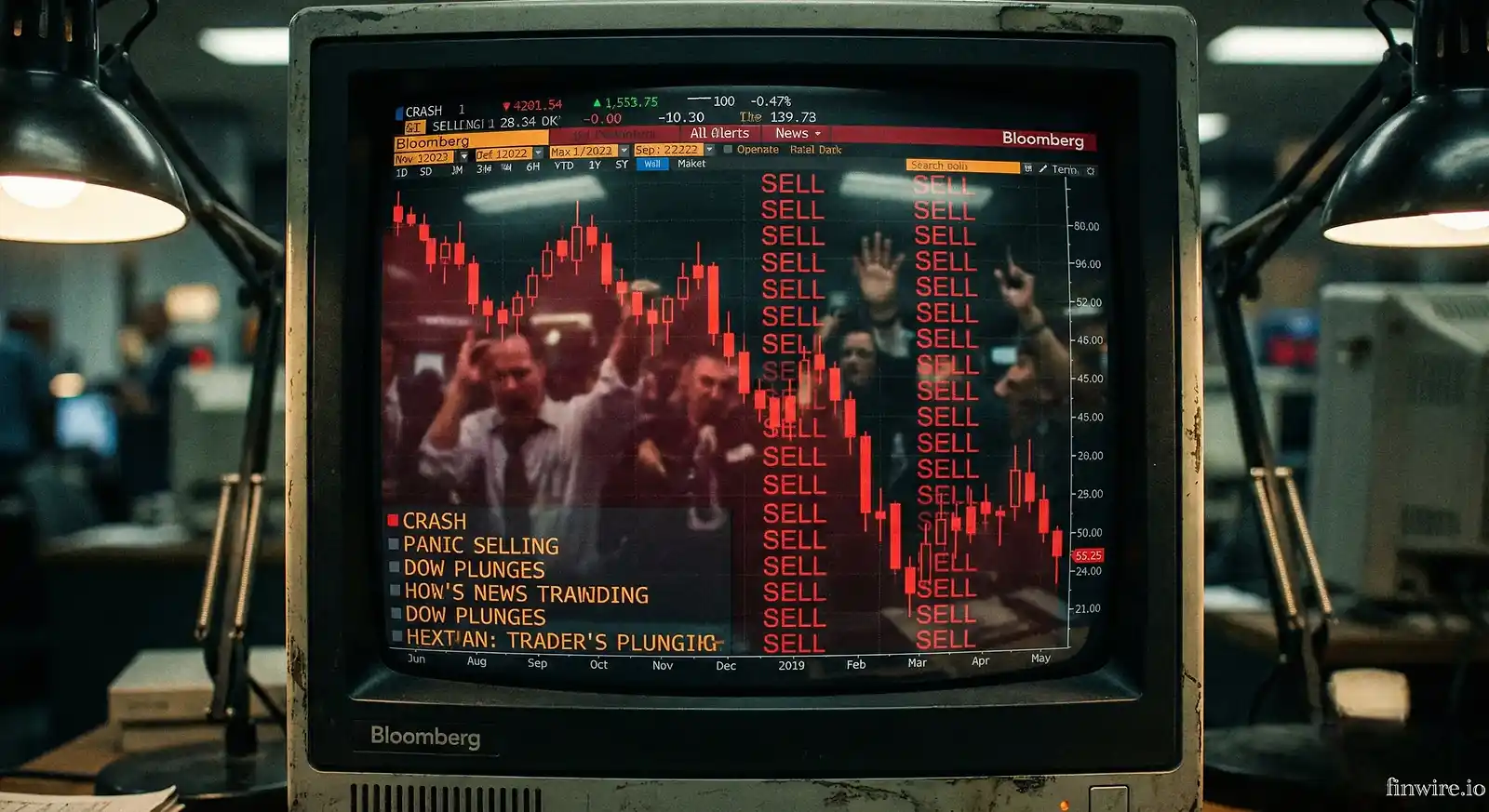
Canada’s main stock index dipped on Wednesday, as technology stocks retreated and earnings from major U.S. banks failed to excite investors, while lingering global geopolitical risks kept the commodities rally going.
The S&P/TSX Composite index was down 81.36 points, or 0.25 per cent, at 32,789.00 as of 11:46 a.m. ET.
Banking and technology stocks drove losses on U.S. indexes, with shares of major lenders Bank of America, Wells Fargo and Citigroup falling after reporting fourth-quarter results.
TSX’s financial index lost 0.3 per cent.
Technology stocks were the biggest losers on Wednesday, slumping 4.4 per cent following sharp declines in their Wall Street peers. Meanwhile, escalating tensions in Iran and a U.S. probe into Fed Chair Jerome Powell continued to fuel safe-haven demand, pushing gold and silver prices to record highs.
“The uncertainty of everything, whether it’s geopolitical risk or comments that the president is making within the United States about companies, sectors - all have really added fuel to the gold fire,” said Allan Small, senior investment advisor at Allan Small Financial Group with iA Private Wealth.
The broader materials sector, which houses precious metal miners, advanced 0.8 per cent after gold and silver rose to fresh highs.
TSX’s energy sub-index added 0.3 per cent, tracking a fifth straight day of gains in oil prices, as the resumption of crude exports from Venezuela did little to ease worries about potential disruptions to Iranian supply.
Also in focus is Canadian Prime Minister Mark Carney’s visit to China on Wednesday, as the North American nation seeks to diversify trade away from the U.S. U.S. President Donald Trump said on Tuesday that while the U.S.-Mexico-Canada trade agreement was irrelevant for his country, “Canada would love it.” The agreement is up for review this year.
Telecommunications company Cogeco Communications and industrial manufacturer Velan are scheduled to announce their quarterly results later in the day.
U.S. stock indexes are falling on Wednesday following mixed profit reports from several big banks.
The S&P 500 sank 1 per cent and was on track for a second straight loss after setting its all-time high. The Dow Jones Industrial Average was down 248 points, or 0.5 per cent, and the Nasdaq composite was 1.5 per cent lower.
Wells Fargo helped pull the market lower after falling 4.5 per cent. The San Francisco-based bank reported weaker profit and revenue for the latest quarter than expected, with analysts citing lower trading fees and other miscellaneous items.
Bank of America fell 4.7 per cent despite reporting a stronger profit than analysts expected, with some consternation about the size of its upcoming expenses. Citigroup, which is in the midst of a turnaround under Chair and CEO Jane Fraser, fell 3 per cent following its own profit report.
Companies across industries need to report strong growth in profits to justify how high their stock prices have run recently. Analysts are looking for businesses across the S&P 500 to report earnings per share for the final three months of 2025 that are roughly 8 per cent higher than a year earlier, according to FactSet.
Biogen sank 5 per cent after the biotechnology company said it expects to take a hit to its profit for the fourth quarter of 2025 due to research and development expenses and other costs that it acquired.
The heaviest weights on the market were tech stocks, which gave back some of their huge gains made over recent years from the frenzy around artificial-intelligence technology. Nvidia fell 2.3 per cent, and Broadcom sank 4.6 per cent.
Still, nearly as many stocks on Wall Street rose as fell, and the strongest forces keeping the S&P 500 from steeper losses were Exxon Mobil and other oil companies.
Exxon Mobil rose 1.9 per cent, and Chevron climbed 1.7 per cent as the price of a barrel of benchmark U.S. crude added 0.9 per cent to bring its gain for the year to more than 7 per cent.
Oil prices have rallied as protests have swept Iran, which is a member of the OPEC group that helps set crude prices. The protests could lead to disruptions in production and squeeze supplies of crude.
Besides the rise in oil prices, gold’s price also rose 0.4 per cent toward a record in another signal of nervousness across financial markets.
In the bond market, Treasury yields sank as investors sought investments seen as safer. Several reports on the U.S. economy also came in mixed.
One said that shoppers spent more at U.S. retailers in November than economists expected. That could be an encouraging signal about the main engine of the U.S. economy, but economists pointed to some concerning signals were underneath the surface.
A separate report said prices rose modestly at the U.S. wholesale level in November. It followed a report on Tuesday that said inflation at the U.S. consumer level was close last month to economists’ expectations, though it remained above the Federal Reserve’s 2 per cent target.
A third report said sales of occupied homes were stronger last month than economists expected. Taken altogether, the data did little to change Wall Street’s expectation that the Federal Reserve will cut its main interest rate at least twice this year to shore up the job market, likely beginning around June, according to CME Group.
The yield on the 10-year Treasury fell to 4.14 per cent from 4.18 per cent late Tuesday.
In stock markets abroad, Japan’s Nikkei 225 rallied 1.5 per cent to another record expectations grew that Prime Minister Sanae Takaichi may call general elections soon.
Indexes were mixed elsewhere. Stocks rose 0.6 per cent in Hong Kong but fell 0.3 per cent in Shanghai after a report showed China’s trade surplus surged 20 per cent in 2025 to a record despite President Donald Trump’s tariffs.
Reuters and The Associated Press