This company wants to connect buyers with discounted condos – if they sign an NDA
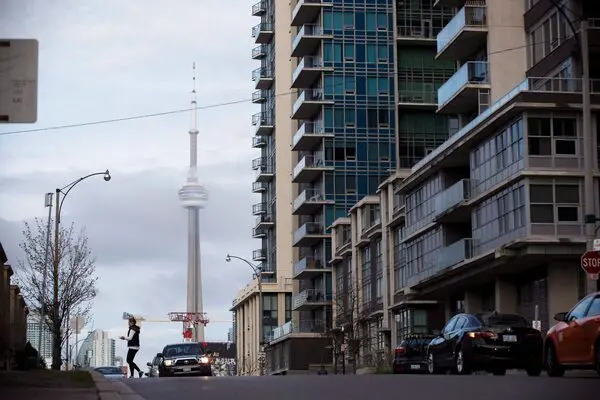

Consumer advocates warn signing an NDA to access deals carries risks.COLE BURSTON/The Canadian Press
A small upstart operating in the Greater Toronto Area promises to connect individual buyers with deeply discounted, unsold condos – provided they sign a non-disclosure agreement, or NDA.
The company, called QuietMarket, sprung up as the condo-market crash has left developers with a large amount of unsold inventory in cities like Toronto and Vancouver. In some cases, large purchasers, ranging from provincial and federal governments to investment funds, have been buying up swaths of units at discounts of roughly 40 per cent from their original selling price.
QuietMarket’s co-founder, Cara Hirsch, who has worked in Toronto’s real estate sector for more than 15 years, says she wants to leverage her industry connections to bring similar deals to the average consumer. The company has created an online marketplace forunsold Toronto-area condos at discounted prices that are not publicly listed.
But to access the deals, prospective buyers need to sign an NDA, something that consumer advocates say carries risks.
Canadian housing policy wants you to live in shoebox condos in the middle of nowhere
QuietMarket users fill out quick surveys about their budget and the location and size of the condo they’re looking for. They are then shown limited details about available units, including square footage and the neighbourhood, before they are prompted to sign an NDA, according to a trial of the platform by The Globe and Mail. The agreements prohibit users from disclosing the details of the deal in perpetuity.
The site had roughly 100 units available across the GTA as of October, ranging from studios to multibedroom apartments priced at levels that the company said were up to 50 per cent below their 2022 listing prices.
The units are screened for quality and the prices are generally at least 10 per cent cheaper than what’s on offer in the resale market, Ms. Hirsch said. She estimated that only 8 per cent of condo inventory that is brought to her company makes it onto the platform.
QuietMarket has facilitated almost 20 condo sales so far, Ms. Hirsch said. Realtors aren’t necessary for a transaction, but buyers are welcome to use them. QuietMarket doesn’t charge a fee directly to consumers and is instead paid out by the developer, she added.
The NDAs are key to facilitating the deals, she said.
Condo developers have been turning to non-disclosure clauses to grant big discounts on certain units without causing drops in the estimated value of other units in the same project or that of properties already sold. But critics say the practice creates a marketplace where listing prices don’t reflect actual home values and consumers don’t always understand what they’re signing.
Barbara Captijn, a real estate consumer advocate, reviewed a sample agreement provided by QuietMarket and noted that the language in the document is more limiting than other NDAs she’s seen in the pre-construction market.
QuietMarket’s agreement requires buyers to keep the details of a sale secret in perpetuity, something that could complicate a buyer’s ability to discuss issues with the property in a dispute with the developer, Ms. Captijn said. She added that NDAs she has seen in the past have allowed consumers to talk about their deal after three years.
Condo developers are offering big discounts in exchange for signing NDAs
She cautioned that the NDA mightleave a purchaser liable if their agent or real estate lawyer was to accidentally divulge details of the sale.
Ms. Hirsch at Quietmarket said the company’s NDAs use all-encompassing language because they have to be applicable to a wide array of developers and units, ranging from unsold new homes to projects that are still being built.
She added that QuietMarket would support customers through any disputes in a purchase and that any realtors representing a buyer would need to sign an NDA as well.
Julie Macfarlane, distinguished professor emerita specializing in law at the University of Windsor and the co-founder of advocacy group Can’t Buy My Silence, cast doubt over whether much of the document would be legally enforceable. She added that developers would be unlikely to sue because of the reputational damage they’d face.
However, Prof. Macfarlane, who also reviewed a sample NDA, said the average condo buyer is generally not informed enough to understand the repercussions or the enforceability of what they’re signing.
Recent buyer Dayan Henson, 53, said he was happy with the purchase process and unconcerned with the NDA. He bought a brand new apartment with two bedrooms and two bathrooms in the Annex, a desirable neighbourhood in downtown Toronto. The 750-square-foot condo was originally listed at $1.18-million, but Mr. Henson purchased it for $663,000 – a 44-per-cent discount.
“The savings relative to what prices were two years ago were insane,” Mr. Henson said.
Toronto realtor Sundeep Bahl encouraged prospective buyers to compare QuietMarket’s listings with the resale market. In some cases, he said, better deals areavailable for relatively new condos – especially for “power of sale” deals in which a financial institution is selling a condo that it has seized from a financially distressed owner.
“There are a lot of power of sale listings going on, and they offer much more of an opportunity to buyers,” Mr. Bahl said.