The Democratic sweep could be good news for wind and solar stocks


Renewables had their moments, even as Trump railed against them. Could they do better under a green-leaning Congress?

Windmills dot the horizon on a hilltop near Whitehouse, Pa. The bullish bet after the U.S. midterms is that green-leaning Democrats will open doors to more wind and solar power generation, David Berman writes.Gene J. Puskar/The Associated Press
Republican control of Congress wasn’t bad for renewables stocks. Democratic control could be even better.
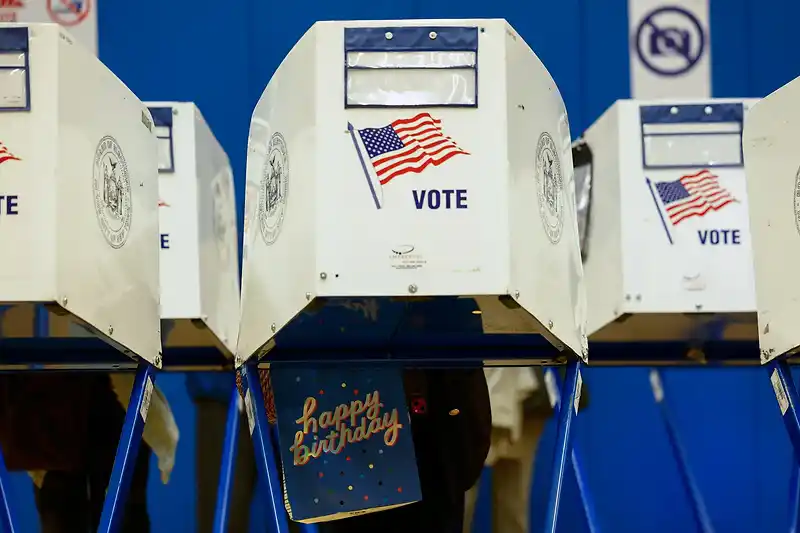
That was the initial take after midterm election results this week put the Democratic Party back in charge of the U.S. House of Representatives and the Senate.
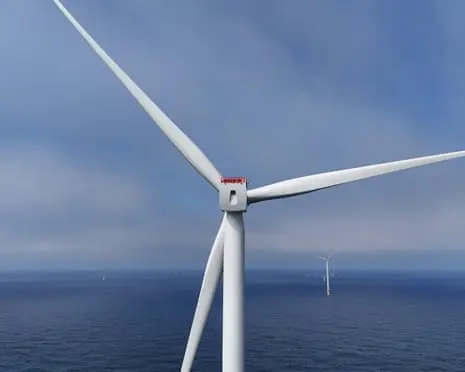
The bullish bet: Green-leaning Democrats will open doors to more wind and solar power generation in the United States, removing Republican roadblocks and making renewables stocks winners in this new political era.
Among U.S.-based companies, First Solar Inc., which makes solar modules, and Enphase Energy Inc., which makes the solar microinverters that convert direct current into usable electricity for the home, soared by double digits early Wednesday.
The initial euphoria crossed borders, too.
Orsted A/S, the Denmark-based offshore wind developer, rallied. Northland Power Inc., the Toronto-based company that develops wind farms and battery storage, gained as well. Full disclosure: I own units in Brookfield Renewable Partners LP, which owns renewable power assets globally.
Okay, the clean energy rally turned into a rout on Thursday, amid a dramatic rethink about artificial intelligence and the stock market in general.
Near-term volatility aside, though, there’s a compelling longer-term case here for investors.
It rests on a simple premise: When Republicans controlled the federal government, U.S. President Donald Trump couldn’t squelch demand for renewables, despite trying. Now, Mr. Trump will have even less success.
In 2025, the first year of Mr. Trump’s second term, renewable energy production increased by 3 per cent to a new record high, according to the U.S. Energy Information Administration.
The iShares Global Clean Energy ETF, an exchange-traded fund that serves as a decent proxy for the sector, rallied about 50 per cent over the same period. That’s despite Mr. Trump’s claims that wind and solar were making the U.S. electricity grid unstable and expensive.
Under a Democratic Congress, the U.S. government could speed up approvals for new projects and attract more development interest.
Tax credits that incentivize the construction of renewable energy could make a comeback. And federal permits to develop projects and expand high-voltage transmission systems could become easier to obtain.
“There are some very encouraging signs around permitting reform across all technologies, where renewable power would see a benefit,” David Brown, director of global integrated energy research for energy consultancy Wood Mackenzie, said in an interview.
There may be an incentive for both political parties to find common ground over renewables. That’s because the midterm results suggest voters are enraged over high energy prices caused in part by the demands of rapidly expanding data centres.
If politicians embrace affordability as a shared goal, they could encourage the construction of more renewable energy assets.
“We don’t see it as a gas versus renewables story. We see it as a gas and renewables story. We need all sorts of technologies to come together” to boost the supply of energy, said Siddhant Warrier, research analyst at Wood Mackenzie.
Ottawa proposes incentives to encourage buildout of electrical grid
The final point in favour of renewables as an investment: Despite an encouraging performance in 2025 and the first half of this year, share prices are back in the dumps and looking cheap again.
The iShares Global Clean Energy ETF has slumped more than 30 per cent since the end of May. The fund is now trading near its lowest level of the past year.
Mr. Trump’s policies toward renewable energy, while not helping matters, aren’t fully to blame for the poor performance.
Rather, his war against Iran, persistent inflation and the huge debt issuance by hyperscalers have propelled bond yields to multiyear highs this year. The yield on the 10-year U.S. Treasury bond rose above 5.3 per cent in early October and remained close to 4.9 per cent in early November.
Bryce Leung: Interest rates are rising again. The last hike cycle offers clues on what lies ahead
Rising yields have increased the borrowing costs for capital-intensive renewable energy projects and weighed on the sector’s growth prospects.
A similar downturn occurred during Joe Biden’s term in the White House, when soaring inflation overpowered the president’s green credentials and caused a three-year bear market in renewables stocks.
Admittedly, the path forward for renewables may have a few bumps.
The Federal Reserve raised its key interest rate last week and could raise it more if inflation persists. That’s hardly an ideal backdrop for the sector. As well, Mr. Trump is president for two more years, with a veto power that could kill any tax incentives proposed by Democratic lawmakers.
But with stocks at attractive levels, demand for power rising and new leadership in Washington that could curb Mr. Trump’s coal-loving impulses, the wind is now blowing in the right direction.
Related Articles
- Stock Markets News
Global renewable energy stocks rally after Democratic sweep in U.S. midterms
- Politics News
‘I never understood wind’: midterms spark hope for renewables after Trump’s hostility
- Stock Markets News
Sectors bracing for a pivot as US midterm elections loom
- World News
The sectors bracing for a potential shift in balance of power in Washington, D.C.
- Stock Markets News
2 stocks to buy and 1 to sell as Democrats push for control of Congress