Stocks fall as hot April consumer inflation data, Iran impasse weighs on sentiment
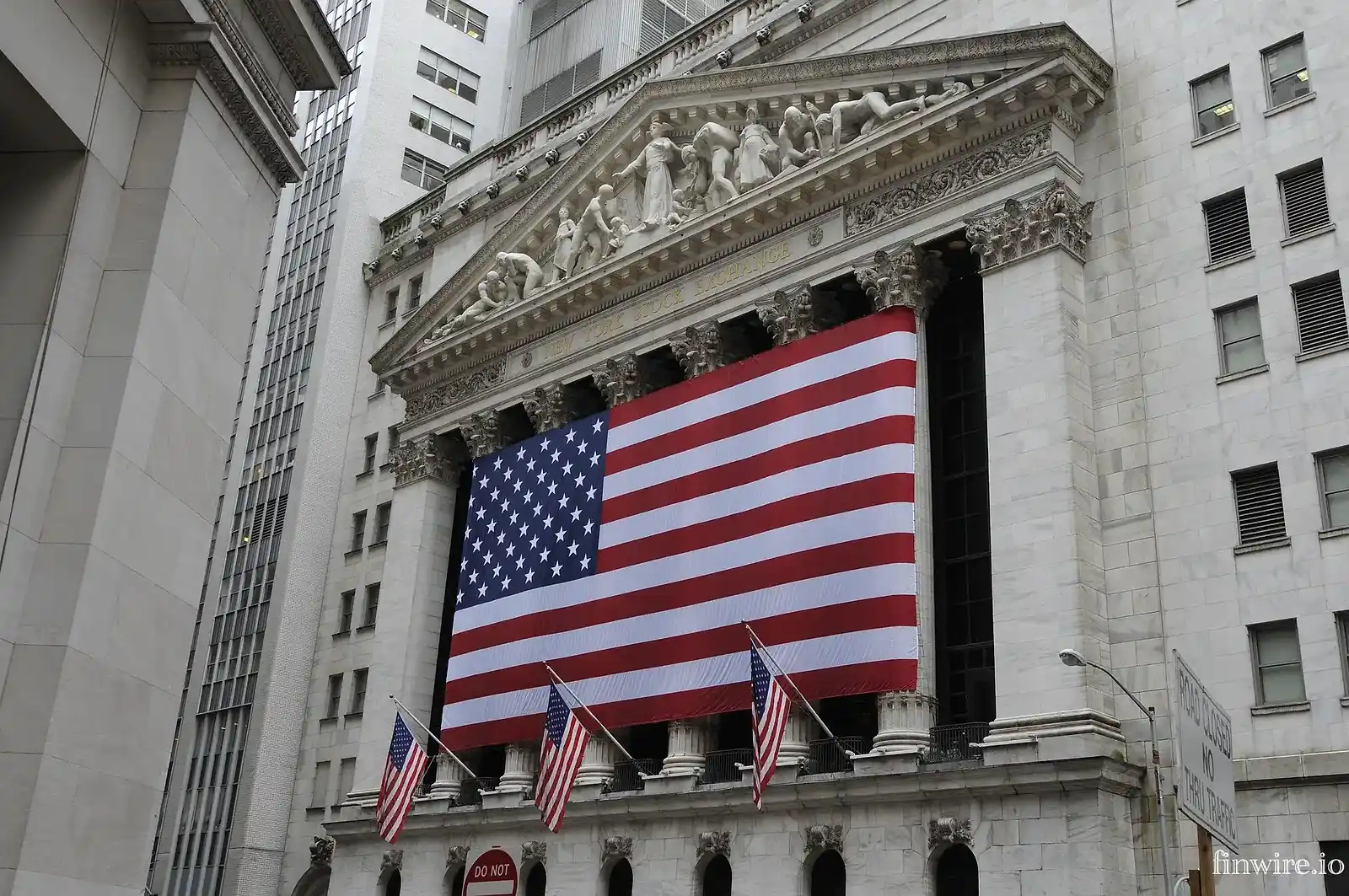
U.S. stocks fell on Tuesday, after a key inflation report came in hotter than expected amid signs of a hardening stalemate between Washington and Tehran.
At 10:36 ET (14:36 GMT), the benchmark S&P 500 index was down 0.7% to 7,356.21 points, the tech-heavy NASDAQ Composite shed 1.2% to 25,968.33 points, and the blue-chip Dow Jones Industrial Average declined 0.6% to 49,392.87 points.
Annual headline CPI hits highest level since May 2023
A key U.S. consumer inflation report was in the spotlight, with market participants keenly looking out for any impact from spiking oil prices due to the Middle East conflict.
As per the Bureau of Labor Statistics, the headline consumer price index (CPI) in April ticked up 0.6% M/M and 3.8% Y/Y, compared to consensus estimates of 0.6% and 3.7%. The 3.8% reading is the highest since a 4% rise in May 2023.
Core CPI, which excludes food and energy, was up 0.4% M/M and 2.8% Y/Y, versus estimates of 0.3% and 2.7%.
The inflation data confirmed that surging oil prices were indeed boosting consumer prices. The index for energy prices climbed 3.8% M/M in April, accounting for over 40% of the monthly headline CPI growth. However, the energy index did decelerate significantly from March’s 10.9% M/M increase. On a Y/Y basis, the energy index soared 17.9%, its highest since September 2022.
The index for gasoline prices advanced 5.4% on a M/M basis in April, much slower than March’s 21.2% gain. On a Y/Y basis, the gasoline index jumped 28.4%, its highest since July 2022.
"Tuesday’s CPI marks the second consecutive reading above 3%, suggesting that inflation is roaring back largely driven by stubbornly high oil prices, which will dominate the inflation story for the rest of the year as the conflict continues to unfold in the Middle East," Skyler Weinand, chief investment officer at Regan Capital, said.
"While this inflation is driven by oil prices and is not structural, it doesn’t change the fact that consumers are paying higher prices, and as a result, we expect the Federal Reserve to be on hold through the summer on interest rates. More time and data are needed to assess future data and determine whether the Iran conflict and tariffs continue to pressure consumer prices," Weinand added.
The April CPI report comes at a time of transition for the Fed, with incumbent chair Jerome Powell’s term coming to an end in three days. He is expected to be replaced by President Donald Trump’s pick Kevin Warsh, a former Fed governor.
"The inflation and employment data as of late suggests that the Federal Reserve’s next move should be a rate hike, and not a rate cut. Given the political pressure on the Federal Reserve and the pressure facing incoming Chair Warsh, we think a rate hike is unlikely in the near-term, but the economy can withstand higher rates given the strength in the economic data," Weinand said.
Traders raised their expectations of interest rate hikes in September, October, and December after the CPI report, the CME FedWatch tool showed.
Analysts also noted that April’s core CPI reading was influenced by an outsized jump in shelter prices.
"Shelter inflation saw a bit of an ‘artificial’ boost given rent and owners’ equivalent rent (OER) are measured on a six-month property rotation. Since they were not collected last October due to the government shutdown (and effectively ’zeroed out’), they were ‘artificially’ depressed up until the new survey period in April," Kevin Gordon, head of macro research and strategy at Charles Schwab, said.
"This is the reason you might see some headlines today that say something to the effect of ’ignore the core CPI reading,’" Gordon added.
U.S.-Iran impasse
Turning to the Middle East conflict, Trump told reporters on Monday that a ceasefire between Washington and Tehran was on "massive life support" after he rejected Iran’s response to an American peace proposal.
Trump dismissed the counteroffer, which was similar to plans previously floated by Iran, in strident terms, calling it "unacceptable" and later "a piece of garbage" that he did not even believe was worth reading fully.
"We don’t have to rush anything," Trump said on Iran on Tuesday. "We have a blockade which allows them no money. It’s a very simple thing: we cannot let them have a nuclear weapon — because they’d use it," the president told radio talk show host Sid Rosenberg.
Meanwhile, there were indications that brinkmanship was returning to the conflict. According to CNN, Trump, impatient with dithering negotiations, was now seriously mulling restarting major combat operations.
Some observers have suggested that Trump’s much-anticipated upcoming trip to China and meeting with President Xi Jinping could help crack the stalemate, adding that China, a major importer of Iranian crude, may act as a guarantor of any long-term peace agreement.
But with uncertainty looming over the crisis and, crucially, the Strait of Hormuz remaining all but shuttered to tanker traffic, oil prices climbed once again. Brent crude futures, the global oil benchmark, were last up 3.5% to $107.84 a barrel, while U.S. West Texas Intermediate crude futures gained 3.9% to $101.87 a barrel.
As they have been throughout much of the more than two-month old conflict, oil prices are well above pre-war levels, fueling worries over an inflationary spike that could dent global economic activity.
eBay rebuffs GameStop
Looking at individual stock moves, GameStop fell 0.4%, after eBay rejected the video game retailer’s $56 billion takeover offer, calling it "neither credible nor attractive." Shares of eBay dipped as well.
Elsewhere, Under Armour stock slumped more than 18%, after the athletic apparel company’s quarterly results and guidance disappointed investors.
Hims & Hers Health tumbled about 10% after the telehealth company logged lower-than-expected first-quarter revenue and a surprise loss in the wake of changes in its weight-loss products.