Stocks are up and bonds are down. Uh-oh, it could be time to rebalance

Nuthawut Somsuk/iStockPhoto / Getty Images
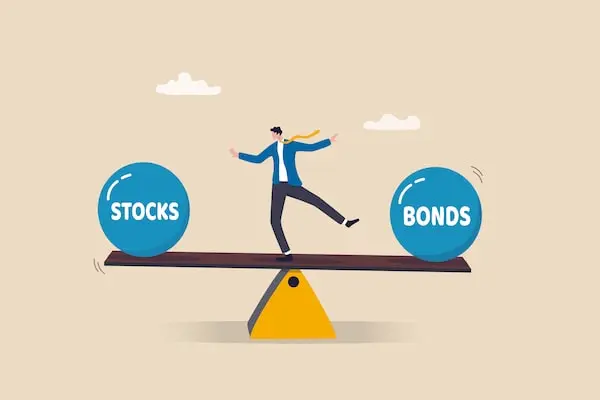
If you are the type of investor who likes to maintain a defined balance between stocks and bonds in your portfolios, 2026 is shaping up to be a doozy for rebalancing efforts.
That’s because stocks and bonds have produced vastly different returns so far, and both markets face significant headwinds.
The iShares Core Equity ETF Portfolio (ticker: XEQT) – a Canadian-listed exchange-traded fund that provides one-stop exposure to over 8,000 stocks worldwide, hedged to Canadian dollars – is up 14.5 per cent in 2026.
Bonds are another story (and a big one).
The yield on the 10-year U.S. Treasury bond blasted through a 19-year high of 5.2 per cent last week. This illustrates the broader struggles of the global government bond market as investors react to inflation, rising government debt levels and massive bond issuance by hyperscalers.
As a result, ETFs that provide cheap and diversified access to the bond market have been hit pretty hard.
The iShares Global Government Bond Index ETF (ticker: XGGB), an all-bond fund with a 41-per-cent weighting toward U.S. Treasuries, has slumped 5.4 per cent this year (not including distributions).
That puts the performance of stocks and bonds, as represented by these two funds, about 20 percentage points apart in 2026 alone. That is substantial and means that diversified portfolios could be in need of a serious tweak to maintain desired weightings.
Rebalancing today would suggest selling some stocks and buying bonds. Tax implications aside, it doesn’t have to be more complicated than that.
“I have retired clients who have had the bulk of their money in equities and have three to four years’ worth of living expenses in bonds. If they’re feeling vulnerable in this environment, I’ll absolutely sell some stocks and buy some bonds,” said Matt Manara, executive vice-president and portfolio manager at Avenue Investment Management.
The trick is how, given the challenges in the bond market.
Relax, the income part is safe. U.S. and Canadian governments are unlikely to default on their bonds, making them essentially risk-free and ensuring investors can count on receiving income without interruption.
Bond prices, though, could remain under pressure. Some observers caution that the issues weighing on bonds this year – particularly government debt levels – could endure for some time. But staying put in a portfolio that is heavily tilted in favour of stocks comes with risks as well.
The frenzy over artificial intelligence is still going, raising concerns about stock valuations. Even Canadian bank stocks have been on a tear this year, pushing their valuations to unusually high levels.
Fortunately, there are solutions to this conundrum. One safety-first approach, which I mentioned in a column on Saturday, involves buying short-term bonds – or even money market funds, which are essentially cash equivalents – that are less sensitive to rising interest rates.
There are plenty to choose from. Two examples: The Vanguard Canadian Short-Term Bond Index ETF (ticker: VSB), which invests in a mix of government and investment-grade corporate bonds; and the BMO Short Corporate Bond Index ETF (ticker: ZCS), which is focused on corporate debt issues.
But investors with different risk profiles and investment horizons are clearly going to have vastly different approaches to their portfolios.
Are you rebalancing? How are you doing it? Let me know at dberman@globeandmail.com.
Subscribe to the On Money newsletterAre you reading this newsletter on the web or did someone forward the e-mail version to you? If so, you can sign up for On Money here.
David’s personal finance reading list
These are strange times for the markets and the economy
Ben Carlson, a portfolio manager who blogs at A Wealth of Common Sense, lists the many challenges facing the stock market... which is near a record high: “Some things make sense right now. Some things don’t seem to make any sense at all. Charlie Munger once said, ‘If you’re not confused, you don’t understand what’s going on.’”
Paid out of pocket for a fender bender? Fine, but the law says you have to tell your insurer
A recent poll found that 43 per cent of drivers pay for repairs out-of-pocket, rather than through their insurance companies. According to the CBC: “Keeping quiet amounts to material misrepresentation and a violation of your contract with the insurer.”
A simple way to take advantage of higher yields
Here’s another example of how some observers are taking advantage of rising bond yields without saddling themselves with unnecessary risk: “Right now, the two-year Treasury is pricing in the risk of a more aggressive series of rate increases than what the Fed itself is currently contemplating.” (For subscribers to The Wall Street Journal).
Podcast fansSubscribe to Stress Test on Apple podcasts or Spotify.
Chart of the day
Revised numbers show Canada’s population has generally been growing – contrary to previous counts that pointed to consistent and sizeable decreases.
Today’s financial tool
You can’t get too much information about your retirement plans. This tool, from Stanford University’s Initiative for Financial Decision Making, is delightfully simple: Plug in your desired income in retirement, your estimated number of years in retirement and an expected average annual return, and the tools coughs up a required balance.
In the social sphere
Watch
Michael Hartnett, the Bank of America strategist, sits down for an interview to discuss the headwinds now facing the artificial intelligence trade. It’s topical, given rising bond yields and upcoming U.S. midterm elections. “The Wall Street threat is bonds; the Main Street threat is voters,” Hartnett said.
The money-free zone
My favourite comedies don’t make me howl with laughter. Rather, they make my jaw drop. This was definitely the case with the two seasons of the HBO series How To with John Wilson. Now, Wilson has returned with a feature film, The History of Concrete. I anticipate more jaw-dropping.
ICYMI
Globe and Mail stories from the last few days
- New Aeroplan perks are coming, but are they worth the higher fees?
- Canada’s competition watchdog is examining product pricing, saying negotiations between suppliers and retailers that set suggested limits on product discounts may prevent savings for shoppers.
- Rising mortgage rates have dashed hopes of a housing market comeback this year.