Premarket: Wall Street poised for weekly gain as futures climb on Middle East peace hopes
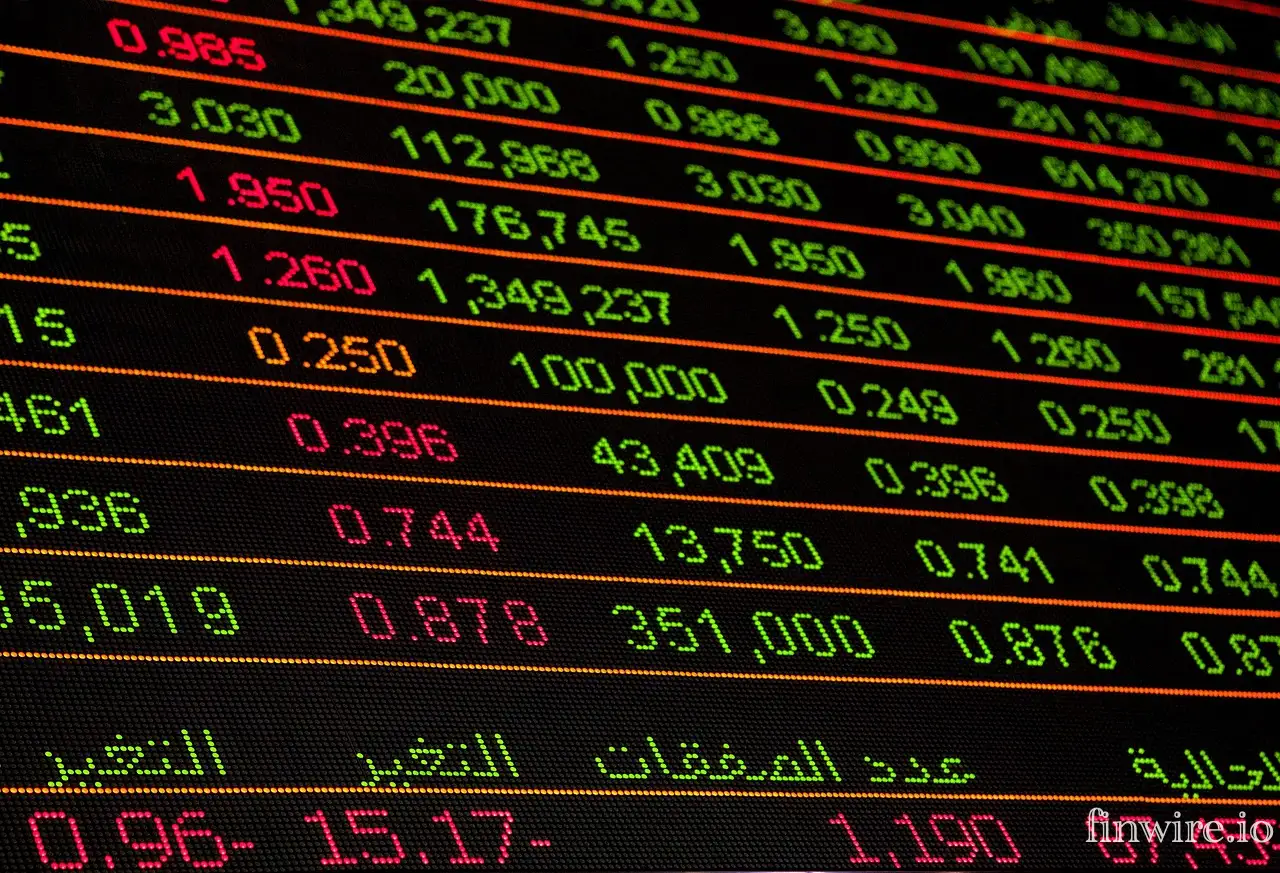
U.S. stock index futures rose on Friday and were set for a strong weekly close as investors welcomed signs of easing Middle East tensions.
Sentiment improved after U.S. President Donald Trump said Washington could soon secure a peace agreement to end the war with Iran, while urging the Tehran-backed Hezbollah group to respect a 10-day truce that had taken effect between Lebanon and Israel.
The prospect of de-escalation encouraged investors to buy risk assets, including battered technology and software stocks. Analysts said a broader risk-on move could persist even without an immediate peace deal, provided investors remain confident that a resolution is ultimately within reach.
“A resolution is more likely than not over the coming weeks even if the path is unlikely to be a straight line,” analysts at Deutsche Bank wrote.
At 6:47 a.m., Dow E-minis were up 157 points, or 0.32 per cent, S&P 500 E-minis were up 13.25 points, or 0.19 per cent, and Nasdaq 100 E-minis were up 26.75 points, or 0.1 per cent.
However, caution around the weekend talks between U.S. and Iranian officials lingers and any breakdown could reignite volatility.
Moreover, passage through the Strait of Hormuz remains disrupted, keeping oil prices nearly 36 per cent above pre-war levels even as the S&P 500 and the Nasdaq Composite fully recovered their earlier losses.
Both indexes marked a second straight record close on Thursday, and all three were on track for a third consecutive weekly gain.
With no major economic data scheduled for release on Friday, investors are likely to focus more on corporate earnings, which so far this week have pointed to a resilient U.S. consumer.
Notable movers in the premarket session included Netflix, which slipped 10.3 per cent after forecasting current-quarter earnings below expectations. The slide comes as co-founder and longtime chairman Reed Hastings steps down, ending a 29-year tenure.
Alcoa fell 2.7 per cent after the aluminum producer reported first-quarter profit and revenue below analyst estimates, citing elevated costs and softening demand.
Fifth Third Bancorp fell 1.8 per cent after reporting first-quarter earnings.
Central bank commentary will also be in focus, with San Francisco Fed President Mary Daly, Richmond Fed President Tom Barkin, and Federal Reserve Governor Christopher Waller scheduled to speak.
However, recent remarks from Fed officials have had limited impact on rate expectations.
Markets are currently pricing in the central bank to hold interest rates throughout 2026, according to LSEG-compiled data, a stark shift from pre-war odds when they expected two cuts.
World stocks held near record highs on Friday and were set for their third straight week of gains, while benchmark oil prices were pinned below $100 a barrel ahead of a crucial weekend that could pave the way for a near-term resolution of the Iran war.
Investors have been quick to take an optimistic view of any signs of denouement this month, even though the Strait of Hormuz - through which a fifth of the world’s oil and gas supplies typically flow - remains largely closed.
That optimism has kept oil prices below $100 per barrel though they remain well above the pre-war levels. Brent crude futures were down around 1 per cent on Friday to $98.5 a barrel. U.S. West Texas Intermediate crude futures fell 1.2 per cent to $89.1 a barrel.
In stocks, MSCI’s world share index, which tumbled in March due to the war, hit a record high on Thursday and has risen 8.5 per cent so far in April.
“The debate is ‘has this gone too far too fast?’, and ‘what in the world are equities thinking rallying so hard when oil is still at $100?,’” said Ben Laidler, head of macro and equity strategy at Bradesco BBI.
“But that misses the point,” Laidler said, “(Investors) are forward-looking. Relative valuations look pretty good, earnings remain very strong, and it’s a rare geopolitical event that hasn’t been a buying opportunity.”
He said to continue rallying from here, stocks would need some validation of their recent moves from continuing de-escalatory steps in Iran bringing oil prices lower and from first-quarter earnings.
“Expectations are quite high and we need to deliver on them,” he said.
Europe’s broad STOXX 600, which has underperformed U.S. and Asian peers, was a whisker higher as were U.S. S&P 500 futures.
Asia stocks dipped earlier in the day, but still posted weekly gains.
Government bond markets have regained some of their lost ground, but much less than stock markets have. Investors see less chance of a Federal Reserve rate cut this year than they had pre-war and still see the rate hikes from the European Central Bank they rushed to price in in early March.
The U.S. benchmark 10-year Treasury yield was little changed on Friday at 4.31 per cent, down from late March highs close to 4.5 per cent but well above pre-war levels around 4 per cent.
The euro zone benchmark German 10-year Bund yield was 3.03 per cent, like its U.S. peer, off its recent high but around 40 basis points higher than late February.
For Andrew Chorlton, CIO for public fixed income at M&G, the last two weeks have been surprising in how quickly markets have been willing to look through the conflict and energy shock.
“There’s quite a strong contrast between what policymakers and central bankers are saying about the risks that this (conflict) is creating versus what the market is implying,” he said.
“That seems somewhat complacent,” Chorlton added. “It seems unlikely that there shouldn’t be some additional risk premium priced in, either to growth or to inflation.”
The U.S. dollar benefited from safe-haven flows in March, but has since given up those gains. The euro last bought $1.1782, just below the seven-week high it touched in the previous session.
The yen was slightly weaker at 159.1 per dollar as investors took stock of comments from Bank of Japan Governor Kazuo Ueda, who steered clear of signalling a rate hike was on the cards this month.
The remarks will keep traders guessing on the timing of the next rate hike, with the lack of a clear signal leading markets to reduce bets of a rate increase at the BOJ’s April 27-28 policy meeting.
Gold was steady at $4,789 an ounce.
Reuters